

Our strategy
and performance
Investing in best-in-class rescue assets and infrastructure
Investing in best-in-class rescue assets and infrastructure
Every new rescue base, every vessel launched, and every piece of equipment deployed extends the geographic and operational reach of the NSRI's lifesaving capability.

How we create and preserve value
Our manufactured capital comprises physical assets, including rescue bases, vessels, equipment and technology, that enable the effective, fast delivery of our services.
We ensure world-class operational capability by striving for operational excellence and exemplary readiness standards, leveraging emerging technologies as a strategic priority to support insight-driven management and innovation.
Our assets need to remain fit for purpose, in working order and modern. We invest in:
Expanding the reach of our safety beach cameras.
Improving communication and radio systems.
Facilitating the construction of new rescue vessels as required by expansion or replacement programmes.
Creating new facilities, as identified by operational requirements, either by construction, acquisition or long‑term leases.
Maintaining rescue stations and vessels designed for future service.
Improving and implementing the modular Survival Swimming Centres, aiming for decentralised ownership and maintenance.
The ORC fleet renewal programme, at approximately R26 million per vessel with a 40-year working lifespan, represents a generational investment in manufactured capital funded through the Launch a Legacy campaign.
| Value created and preserved over time | |||||
| Key metrics tracking our performance | 2025 | 2024 | 2023 | ||
| Vehicles | 115 | 105 | 104 | ||
| Vessels | 116 | 114 | 111 | ||
| Rescue stations | 59 | 59 | 57 | ||
| Survival Swimming Centres | 4 | 4 | 4 | ||
| Number of beach safety cameras | 11 | 6 | 6 | ||
| PRB locations | 2 063 | 1 996 | 1 813 |

The PRB programme forms part of our community programmes and is discussed in detail in the communities section.
Capital expenditure 10-year trend
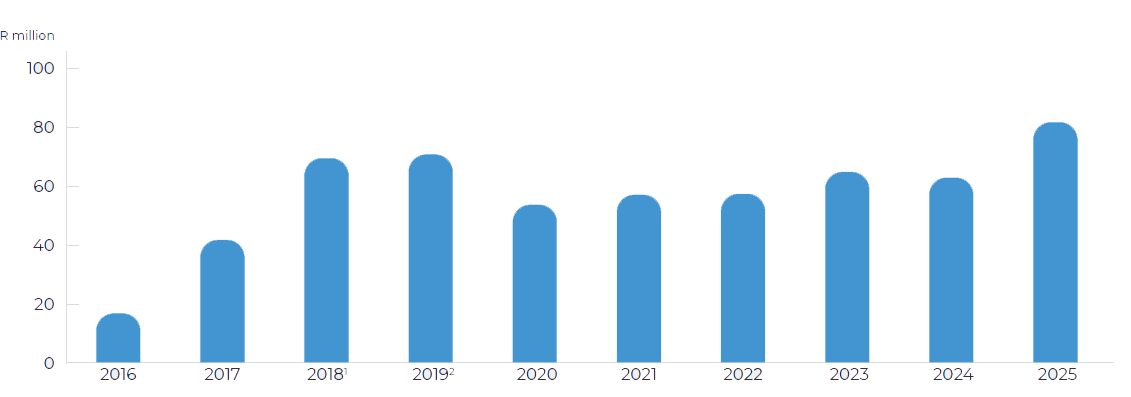
| 1 | Includes call centre acquisition. |
| 2 | Includes VSC acquisition at 2 Longclaw Drive in Cape Town. |
Value of all
NSRI
assets
(2024: R390.8 million)
Maintenance
of
assets
(2024: R12.2 million)
Capital investment
in
buildings
(2024: R32.2 million)
Capital investment in
fleet
(vessels and vehicles)
(2024: R28.5 million)
Fleet
renewal
programme
over eight years
- Reactive maintenance stretches budgets at older stations.
- Power constraints affect base operations and communication infrastructure.
- Some station infrastructure is still dependent on third-party landlords, limiting upgrades.
- Lack of long-range connectivity negatively impacts effective communications during rescue missions.
- Replace the SafeTRX platform with a custom-built NSRI app to enhance public engagement, donor loyalty features and improve beach and coastal safety tools.
- Continue to manage at least four major initiatives simultaneously across our footprint to ensure technology investments drive measurable impact for volunteers and donors without compromising quality or focus.
Read about the fundraising partnerships we secured to support asset investment.

CASE STUDY
Extending our reach inland:
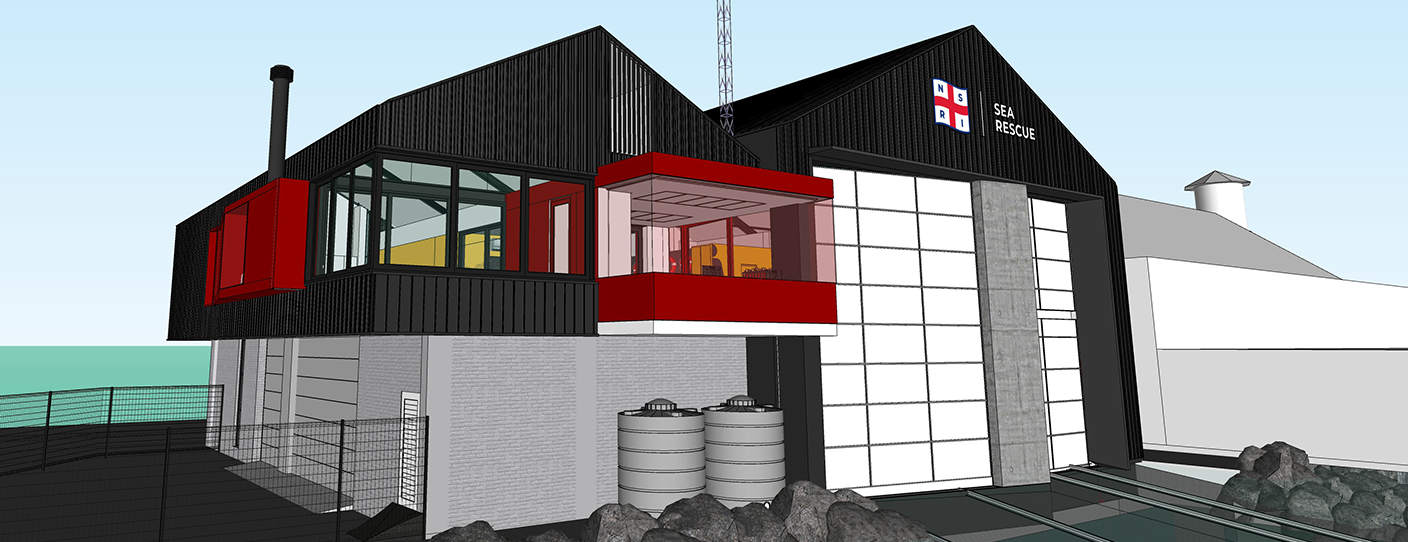
Building rescue capability where it did not exist
Assets
Our pace of investment into station infrastructure has continued into 2025. The Class 1 fleet replacement programme is on track to be completed by Q3 2026 – with the completion of both rescue station construction and accompanying ORC for Station 4 Mykonos and Station 8 Hout Bay. This will mean that eight of our 10 Class 1 craft are now less than eight years old, effectively having replaced all of our early-1980s Brede-class vessels.
Beyond the large offshore vessel programme, investigations and investments continued afoot at various locations to prudently assess where we can offer our services for maximum effect. Often missed as “business as usual”, increased maintenance attention and spend have resulted in refurbishments/major maintenance attention at many stations. Notably, significant work was carried out at Station 5 Durban, Station 9 Gordon's Bay, Station 15 Mossel Bay, Station 16 Strandfontein, Station 19 Richards Bay, Station 41 Ballito, as well as at Station 47 Kei Mouth. However, at least every station and facility received some kind of maintenance attention during the year.
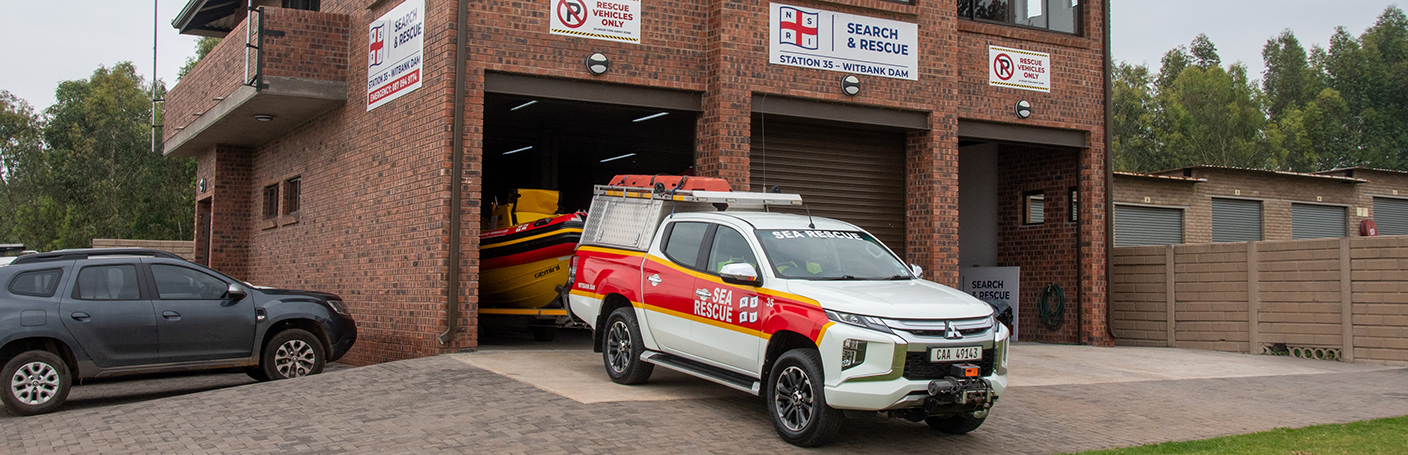
In 2025, we listed the first new purpose-built inland rescue station in Witbank. Investigative work for future base builds also took place for Station 2 Bakoven, Station 9 Gordons Bay, Station 16 False Bay, Station 37 Jeffreys Bay, Station 39 Rocky Bay, Station 42 Kleinmond, Station 47 Kei Mouth, Station 49 Mdumbi and Station 51 Gariep Dam.
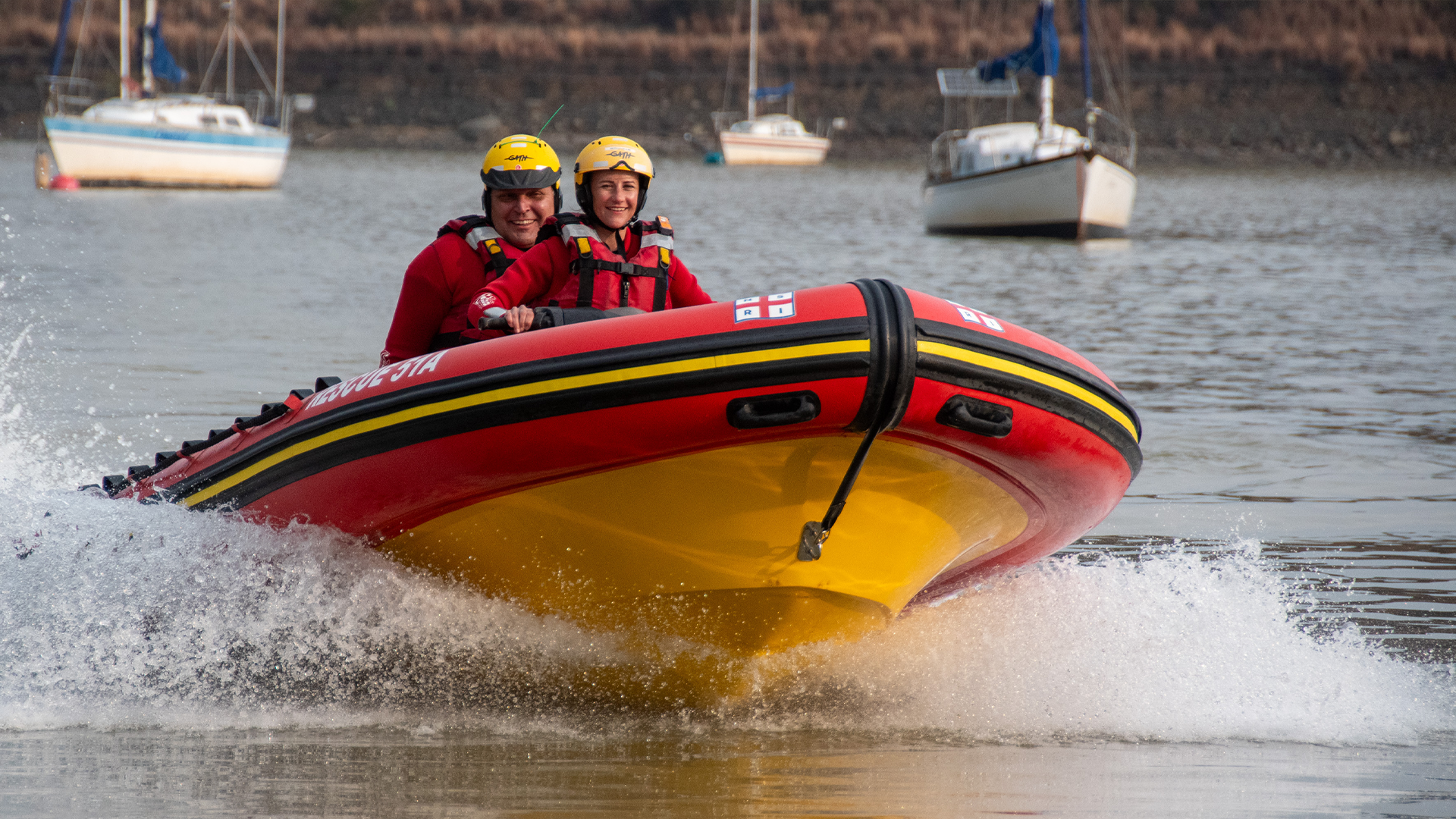
New satellite stations opened at Fish Hoek (Station 10 Simon's Town) and Eersterivier (Station 36 Oyster Bay), while Kenton-on-Sea (Station 11 Port Alfred) and Nature's Valley (Station 14 Plettenberg Bay) also expanded our footprint. Jet-powered rigid inflatable boats (JetRIBs) were allocated at all these satellite stations. Active investigations are underway for build projects at Kenton-on-Sea, Nature's Valley and at existing satellite sites at Sedgefield in the coming years.
Three stations (Station 44 St Helena Bay, Station 46 Storms River (which were satellite stations in 2024) and Station 49 Mdumbi (an auxiliary station in 2024) came online as fully independent operational stations, reflecting our deliberate expansion into previously underserved areas. We made a strategic decision to focus on developing Station 49 Mdumbi as a flagship location covering the important, geographically exposed Wild Coast between East London and Port Edward, downscaling operations at Station 28 Port St Johns, which is currently in auxiliary status. We also rationalised our resource allocation at various other stations, for example, moving Station 45 Matzikama to a dedicated lifeguard operation.
| Station infrastructure | 2025 | 2024 | 2023 | Trend | |||
| Rescue bases | 59 | 59 | 57 |  |
|||
| Rescue stations | 43 | 46 | 46 |  |
|||
| Auxiliary stations (in development without vessels) | 3 | 5 | 5 | |
|||
| Satellite stations | 13 | 8 | 8 |  |
|||
| Drowning prevention (extension of an established station with a vessel) | |||||||
| Survival Swimming Centres | 4 | 4 | 4 | |
|||
| Beach safety cameras | 11 | 6 | 6 | |
|||
| Rescue assets | |||||||
| Rescue vessels | 116 | 114 | 110 | |
|||
| Class 1: all-weather rescue vessels designed to operate more than 50 nautical miles offshore | 10 | 10 | 10 | |
|||
| Class 2: Rigid inflatable boats (RIBs) exceeding 10 m in length and fitted with a cabin | 3 | 3 | 2 | |
|||
| Class 3: large RIBs from 7.3 m to 8.8 m in length | 21 | 21 | 21 | |
|||
| Class 3: smaller RIBs from 5.5 m to 6.5 m in length | 25 | 25 | 25 | |
|||
| Class 4: RIBs less than 5 m in length (and JetRIBs) | 57 (45) | 55 (40) | 50 (35) | () |
|||
| Vehicles (mobiles, tractors, quads/all-terrain vehicles) | 115 (72, 24, 19) | 105 | 104 | |
Assets value |
|||||||
| Asset allocation | As at 31 December 2025 |
Percentage of total non-current assets value |
As at 31 December 2024 |
Percentage of total non-current assets value |
|||
| Land, building and investment properties | R152 186 012 | 45% | R149 348 984 | 45% | |||
| Vessels | R152 465 133 | 45% | R155 263 853 | 46% | |||
| Vehicles | R23 954 307 | 7% | R22 879 711 | 7% | |||
| Equipment | R6 335 612 | 2% | R6 998 951 | 2% | |||
| Other financial assets | R163 453 | 0% | R238 893 | 0% | |||
| Total non-current assets excluding other financial assets | R335 104 517 | 100%* | R334 730 392 | 100% |
| * | Restated due to rounding variances. |
Fleet renewal and maintenance
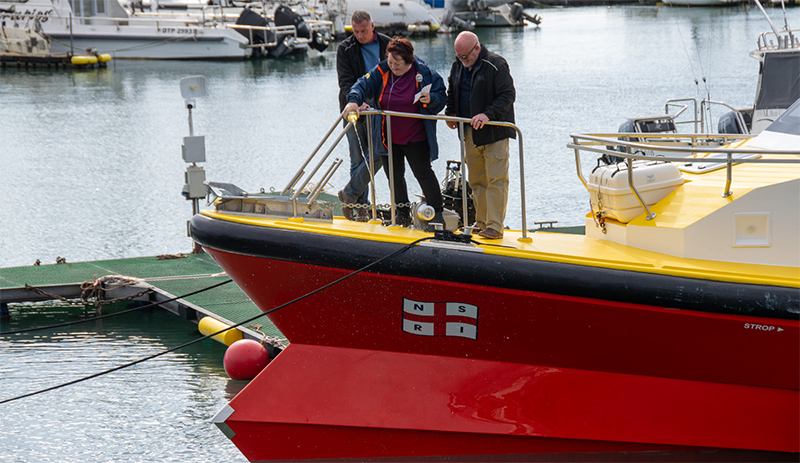
The ORC fleet renewal programme is modernising the NSRI's rescue capability. These self-righting, purpose-built vessels are designed to operate 50 nautical miles offshore and beyond, replacing 1980s-era craft and fundamentally upgrading the NSRI's Class 1 capability.
Alongside the ORC renewal programme, we keep existing assets operational with extensive fleet maintenance and refurbishment, including refits on five rescue vessels (engine and gearbox replacements) and navigation system upgrades. Rescue 19A underwent major refurbishment, Rescue 18 was re-engined, and new JetRIBs were delivered to four stations.
The year also saw several official vessel and station blessings, including the Film Industry Fund Rescuer III at Station 16 Strandfontein, the Spirit of Santam III at Station 5 Durban, the JetRIB Janine at Station 34 Yzerfontein, the Bay Guardian ORC at Station 6 Gqeberha, and the Spirit of St Francis III & Spirit of ScottSam, as well as the upgraded station facilities at Station 21 St Francis Bay. These events recognised the generous support of donors, volunteers and communities whose contributions make these lifesaving assets possible.
We reinforced technology infrastructure, which supports our stations, by upgrading communication systems with the expansion of satellite radio range and the implementation of the Halo Radio system improving real-time coordination across the NSRI's footprint.
Deployment of 11 beach safety camera systems, managed by eight dedicated volunteers, added a surveillance and early-warning layer at high-traffic beach areas.
Major infrastructure projects
We demonstrate our commitment to world-class rescue readiness and responsible stewardship of donor-funded resources through significant capital investment and operational capability enhancement.
We completed construction at the end of February 2026 so that the station could take delivery of a new ORC vessel.
The reconstruction of the demolished station began in August, with completion scheduled for the end of July 2026. We appointed a Community Liaison Officer to improve site access control and create local employment opportunities while construction is underway.
We completed alterations in October 2025, improving ablution and storage facilities.
Building plans for a new boathouse at Kenton-on-Sea (Station 11 Port Alfred) for the station await municipal approval. The new station will house a JetRIB and rescue vehicle to significantly improve response times.
We appointed an architect, quantity surveyor and structural engineer for the construction of the station, with a lease from the City of Cape Town agreed in-principle.
The new satellite station was commissioned.
This community will be served by the site we identified, with in-principle approval from Bitou Municipality. Conversations with local stakeholders continue.
Upgrades helped improve monitoring, operational capability and workspace ergonomics.
Funded by the sale of the Glengariff property, improvements created on-site accommodation for up to 10 visiting employees and volunteers.