

Our strategy
and performance
Building trust, collaboration and community resilience
Building trust, collaboration and community resilience
Each relationship nurtured creates a multiplying effect – one corporate partnership funds vessels that save lives, generating stories that attract more donors, who fund more programmes, creating an ever-expanding circle of impact.

How we create and preserve value
The relationships, trust and shared value the NSRI builds with stakeholders strengthens water safety and rescue efforts. Our activities have a significant economic and social impact in the areas where we operate – supporting industries, businesses and communities alike.
As a strategic priority, we aim to engage with donors and other stakeholders to strengthen our brand, uphold our reputation and serve our communities with unwavering commitment. We do this by investing in:
Community programmes, particularly in under-resourced and remote areas, to expand water safety education, survival swimming instruction, monitoring PRBs and operating remote beach safety cameras beyond rescue operations.
Expanding our partnerships with research institutions, municipalities and local communities for public benefit.
Sustaining corporate and donor relationships through transparent and impactful reporting, personalised and innovative fundraising campaigns, and legacy building.
Amplifying our brand to reinforce public trust and recognition through consistent service delivery, rescue outcomes, grassroots education initiatives and targeted awareness campaigns.
Creating a future pipeline of skilled, community-based rescuers and educators, especially in underserved communities.
| Value created and preserved over time | |||||
| Key metrics tracking our performance | 2025 | 2024 | 2023 | ||
| Media exposure | |||||
| YouTube views | 7 864 340 | 2 136 529 | 518 145 | ||
| YouTube watching hours | 43 052 | 26 400 | 5 000 | ||
| Articles published by media (non-paid) | 5 017 | 5 628 | 3 910 | ||
| Training impact | |||||
| BravoBravo Training Academy participants | 17 042 | 15 728 | 12 589 | ||
| Survival swimming lessons | 25 043 | 25 588 | 17 998 | ||
| Cumulative lives saved using a PRB | 239 | 206 | 176 |
Learners who received water safety education
(2024: 877 485)
People rescued
(2024: 1 629)
Seasonal lifeguards employed
(2024: 270)
providing youth employment and economic support
Partnerships
municipalities to provide lifeguard services at 55 locations
(2024: 8 and 50)
- Rural and inland communities where some areas remain underserved have limited awareness of drowning prevention, what we do and how we can help.
- We face Protection of Personal Information Act, 4 of 2013 (POPIA) compliance risks if not consistently managed across all channels.
- There is a risk of misinformation and brand misrepresentation during crisis events.
- Leverage the NSRI’s reputation and public trust to attract new supporters, volunteers and partners.
- Use data-driven insights to better measure and communicate social impact and the value of donor contributions.
Contributing to South Africa’s economy
The NSRI injected
R283 846 080
into the South African economy in 2025 through operating and capital expenditure(2024: R249 562 497).
We estimate that our volunteers contributed over R500 million in unpaid service value to South African communities.
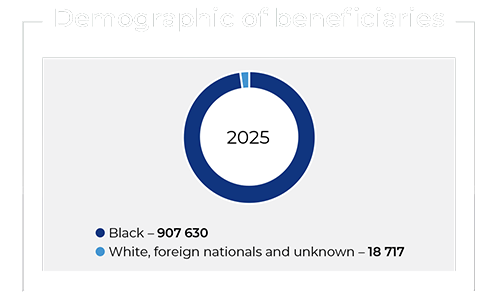
According to the Factual Findings Report by Cecil Kilpin & Co. for 1 January 2025 to 31 December 2025, 97.98% of the NSRI’s work directly benefits black beneficiaries (2024: 98.76%)
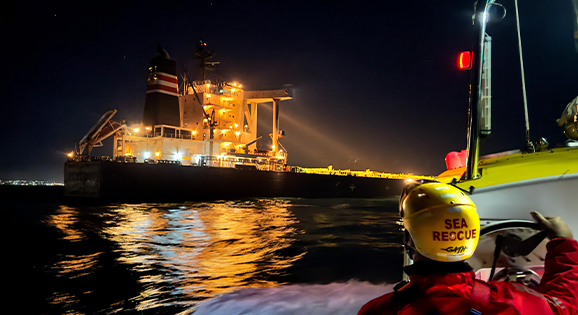
The NSRI also plays a vital role in safeguarding key sectors of the South African economy, particularly tourism and the commercial fishing industry, by providing reliable maritime rescue services, preventative support and emergency medical response. From protecting visitors at coastal hotspots to assisting fishing vessels operating in challenging offshore environments, our presence fosters trust and supports operational confidence for those working on or near water.
In 2025, our crews conducted 63 medevacs from tourist vessels and working boats, often under challenging conditions.
Social media
Our presence on social media is one of the many avenues we use to build trust in the communities we serve

Time to Change the Score Learn more about this campaign.
World Drowning Prevention Day Learn more about this campaign.
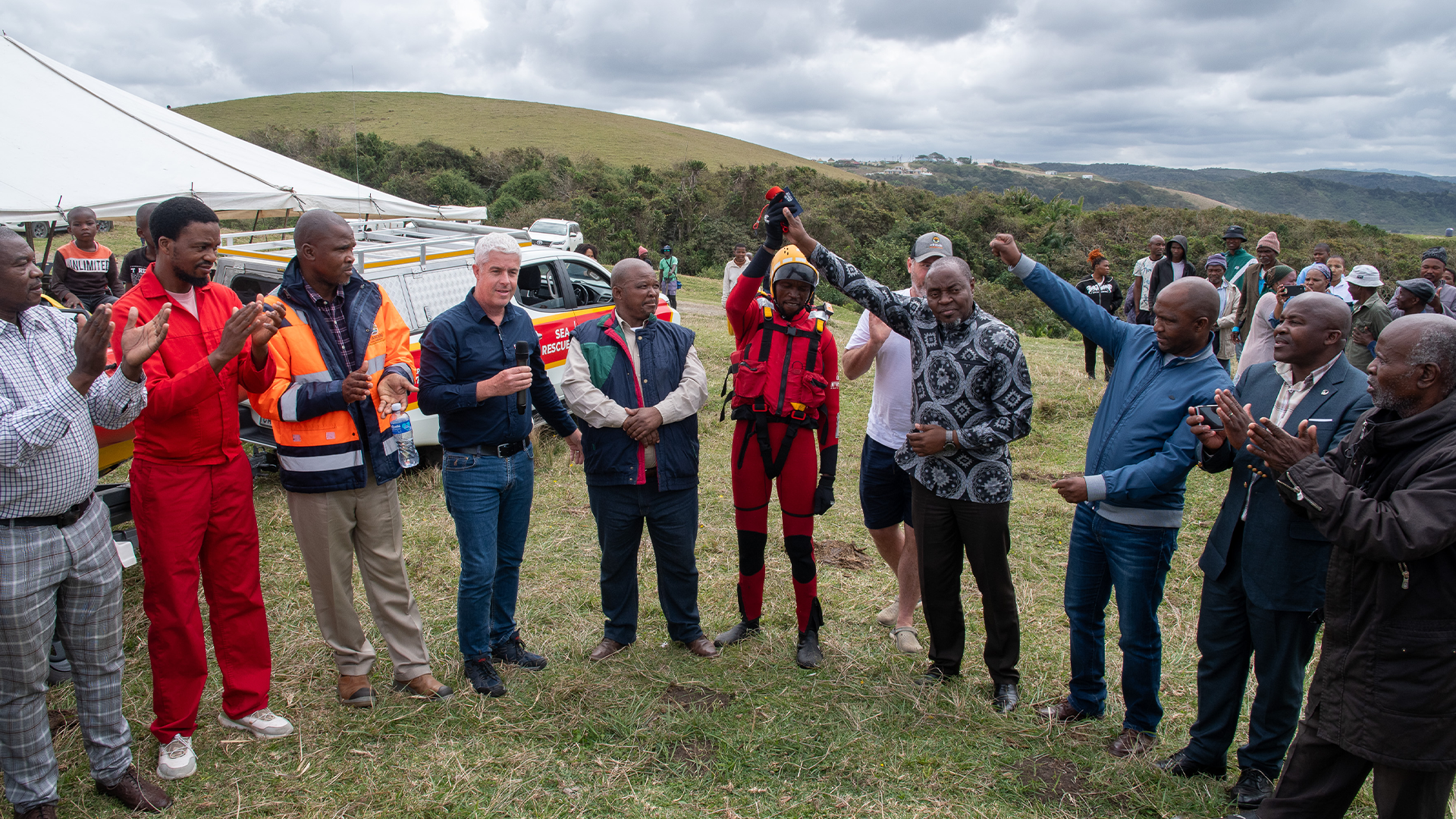

CASE STUDY
Building sustainable
rescue capability:
From community initiative to operational station
Community programmes
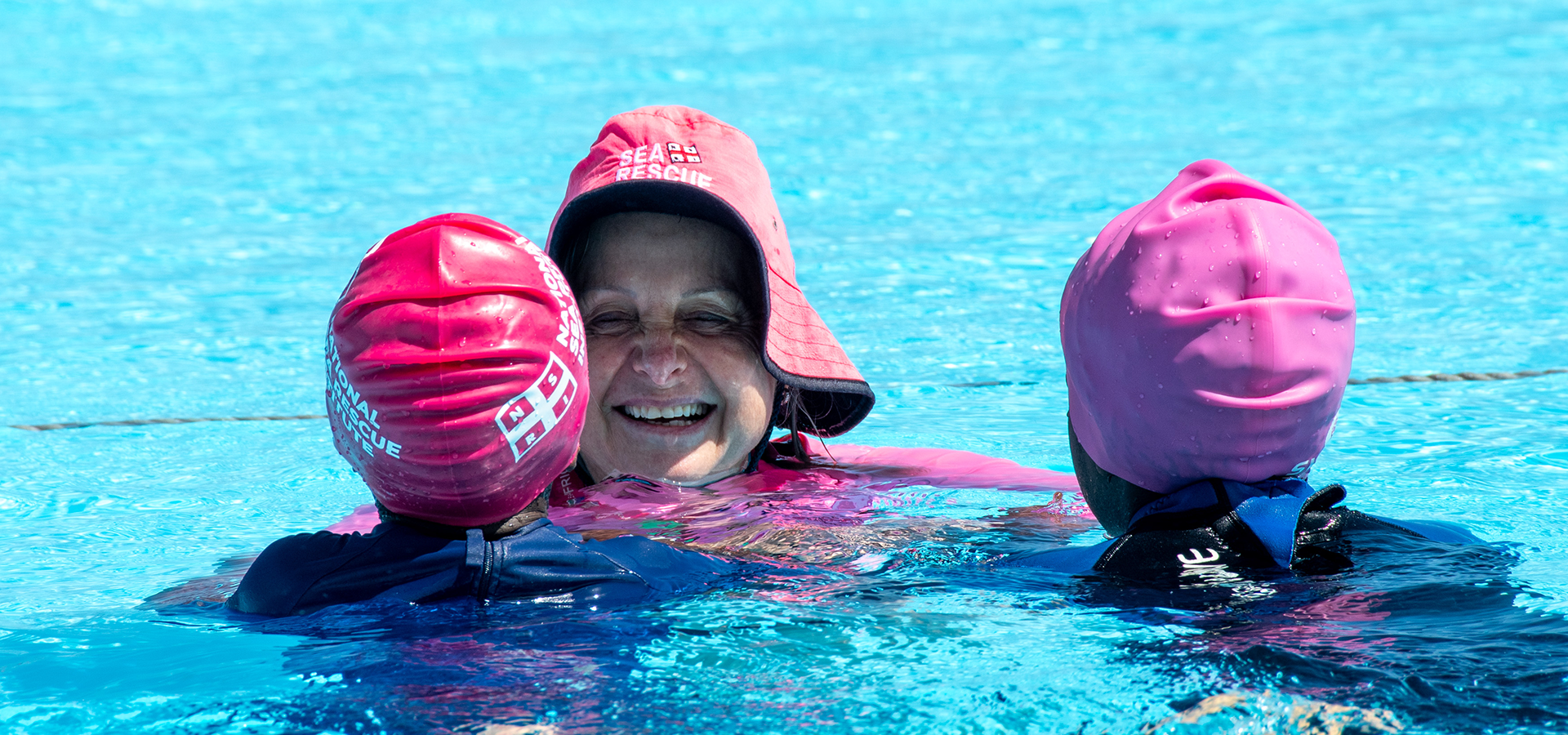
Our community programmes include water safety education, survival swimming, the PRB programme and drowning prevention research. Despite seasonal and infrastructure challenges, donor funding enabled targeted drowning prevention interventions in high-risk coastal, inland, rural and underserved communities.
Key investments strengthened leadership and delivery capacity, advanced donor-funded projects such as the Fisherfolk and Drakenstein Lifeguard Training initiatives, and expanded partnerships with municipalities, NGOs and community organisations.
We also launched an initiative to inspect and rate venues for water-related activities to improve drowning prevention alongside individual education.
Our survival swimming training content is under development for 2026 delivery to ensure the programme stays current and evidence-based.
- Two new videos educate people on child resuscitation and the importance of actively supervising children around water.
- The beach safety camera communications, including weather warnings, provide enhanced public awareness and prevention messaging throughout the year.
- Multilingual station recruitment advertisements expand our reach into previously underserved communities.
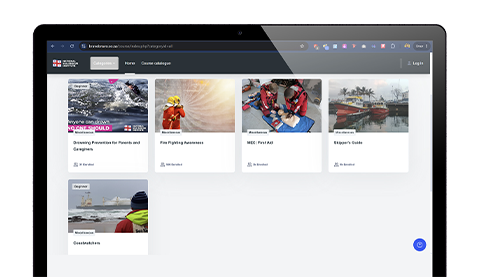
- The BravoBravo online course for parents was launched.
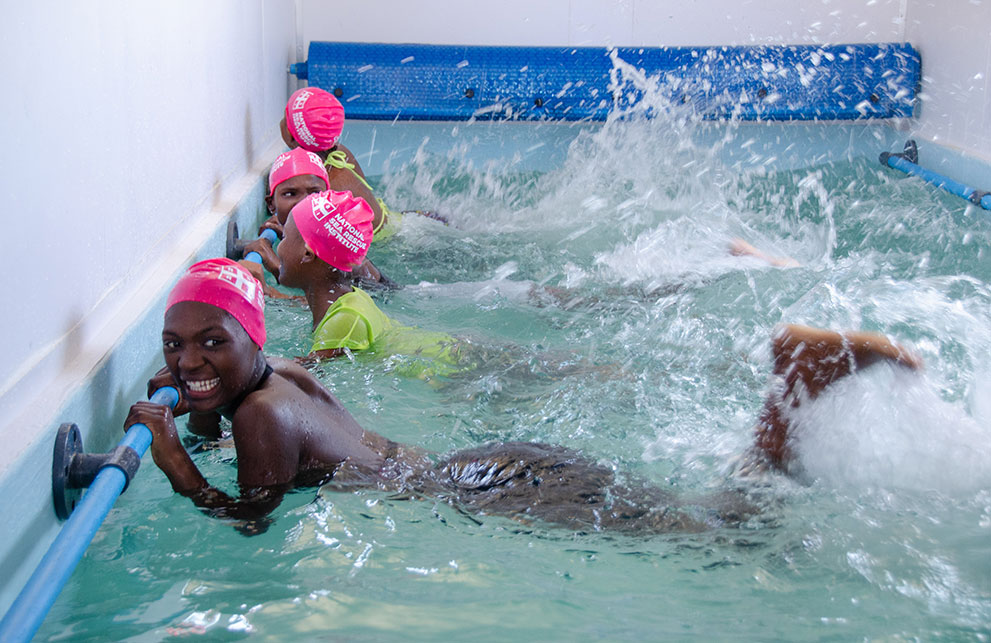
Over the year, our water safety education lessons and survival swimming lessons directly improved skills, awareness and safety outcomes. We use community-based infrastructure to overcome access constraints. This includes survival swimming containers located on school premises, enabling year‑round, timetable‑aligned lessons, while volunteer-led sites operate across six provinces.
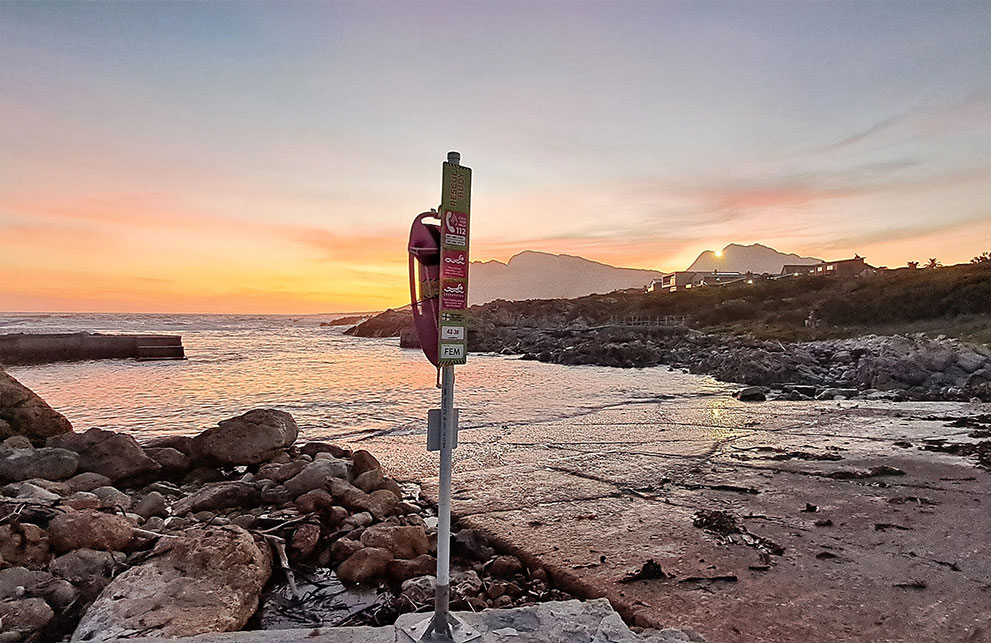
We provide permanent, publicly accessible safety assets through our PRB programme at known high-risk water sites.
Launched on World Drowning Prevention Day, the BravoBravo online course for parents provides accessible digital water safety education beyond physical programme delivery.
The e-learning platform continued to deliver seamanship and water safety training at scale, and the first aid course was developed to draft completion with a learner manual, task book and assessments ready for Quality Council for Trades and Occupations accreditation and public training rollout.
PRB programme
The programme remains a cornerstone of the NSRI’s drowning prevention strategy. During the year, the programme reached a milestone of 239 lives saved, highlighting its critical role in enabling rapid bystander intervention during drowning-inprogress incidents.
(2024: 183)
(2024: 30)
All PRBs were fully sponsored by individual and corporate donors
Each PRB installation (comprising a buoy, pole and signage) costs approximately R2 000
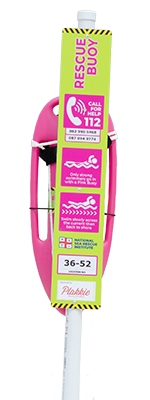
We continue to foster community stewardship to reduce theft and enhance PRB availability. This includes raising public awareness, engaging with local volunteers and exploring new technologies such as integrating PRBs with beach safety cameras and using smart sensors to trigger real-time alerts when a buoy is removed.
We are also undertaking a descriptive study of the PRB programme to track demographics, incident details and utilisation patterns since 2017.
Collaborating to save more lives
Notable developments in the NSRI’s partnership ecosystem during the year included:
Eastern Cape government departments
We received a letter of intent to integrate drowning prevention education into the curriculum.
uShaka Marine World
We collaborated with uShaka Marine World to engage with 5 078 people in Sodwana Bay.
Durban Metro Police
We partnered with the officers to create public awareness at the Inanda Dam.
South African National Parks (SANParks)
This partnership received a Kudu Award for the Station 46 Storms River, which responded to 37 incidents over 18 months and trained 18 SANParks Rangers, with one ranger qualifying as active crew and progressing towards coxswain status.
Corporate volunteer programme
The new programme helps us expand our reach and embed drowning prevention awareness into new workplaces and community networks. We received commitments from companies for their employees to be trained as classroom‑based water safety educators.
Spirit of Ubuntu
This initiative emerged as a significant new fundraising and engagement platform in 2025. With over 65 executive engagements conducted and Italtile confirmed as the first R1 million sponsor, this initiative represents a new model for high-value corporate engagement that connects South Africa’s business community with NSRI’s mission at the executive level.
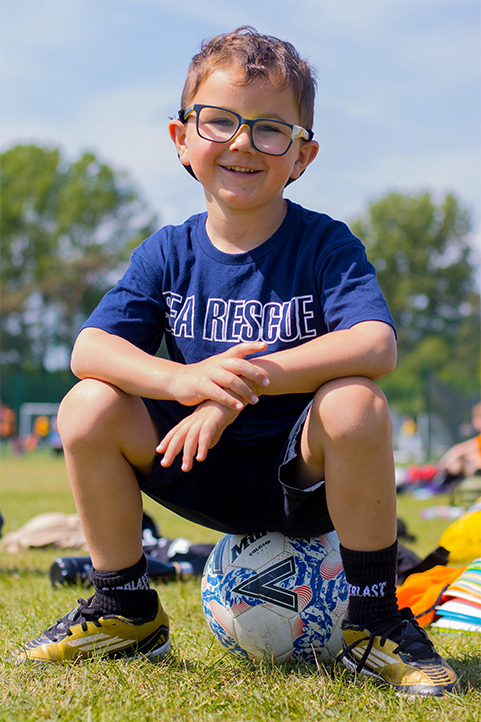
By choosing NSRI branded supporter gear, you can make a real impact. It’s not just about looking good – it’s about supporting a lifesaving cause. Every item purchased helps fund the protective gear that NSRI volunteers need to continue their selfless work.
Shop our supporter gear here.
Contributing to research and thought leadership
We are committed to deepening our understanding of drowning epidemiology to ensure that prevention efforts are guided by evidence rather than assumptions. Our relationships with universities and both local and international search and rescue teams contribute to the direct application of research and alignment with global best practice. These relationships enhance legitimacy and advance collective knowledge to improve the global response to rescue and drowning prevention.
We contribute to the International Maritime Rescue Federation’s Climate and Future of Search and Rescue guide. We continued our work with the University of Cape Town, the University of Stellenbosch, the Council for Scientific and Industrial Research and Plymouth University.
The Fisherfolk Community Project, funded by the Lloyds Register Foundation, identified that 1 477 annual drowning deaths occur in South Africa, with a disproportionate impact on marginalised fishing communities. The study recommended structured adult swimming lessons, targeted awareness campaigns and provision of safety equipment. These findings directly inform the NSRI’s community programme strategy.

Read more about our data-driven stakeholder engagement and decision-making.
Youth development
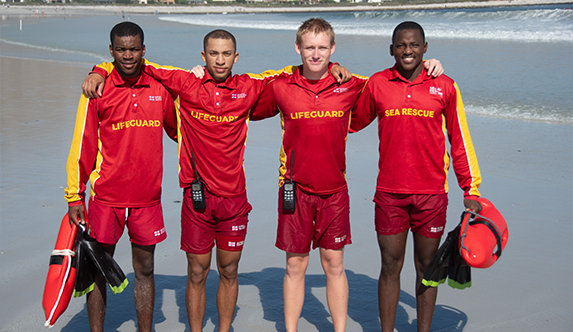
Lifeguarding continues to be a crucial avenue for youth development, training and employment in under-resourced coastal communities. These initiatives promote drowning prevention and equip young people with lifesaving qualifications, leadership experience and employment opportunities – strengthening ties with local communities and enhancing long-term social resilience. In efforts to encourage careers in the maritime industry, the NSRI sponsors two bursary students at the Lawhill Maritime Centre at Simon’s Town School.
Fundraising partnerships
The following new and established partnership agreements were cemented in the last year:
New agreement to supply four Jimnys as prizes and four loaned promotional vehicles for the Cars4Good 2026 campaign.
After 23 years, extended their support by introducing an annual industry golf day in honour of NSRI.
Extended their support by sponsoring their third JetRIB, Spirit of Santam III, for Station 5 Durban.
Proceeds of the 27th annual auction funded a new JetRIB, Rotarian Wares, for Station 16 Strandfontein.
A Western Cape Disaster Management grant of R408 000 enabled swiftwater training and provided JetRIB Janine for Station 34 Yzerfontein.