


CASE STUDY
Building sustainable
rescue capability:
From community initiative to operational station
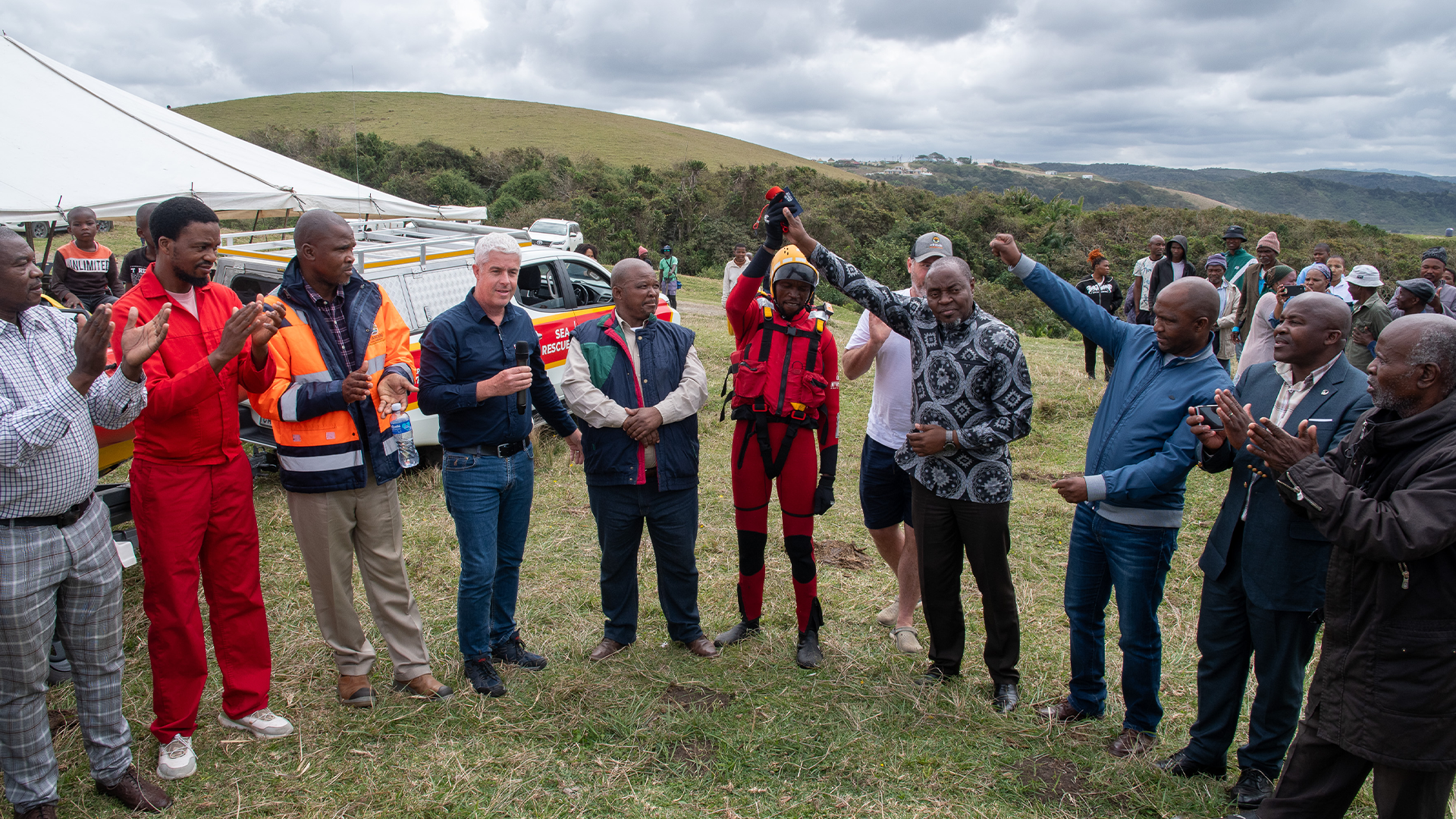
On the morning of its official launch, the NSRI Station 49 Mdumbi volunteers were already doing what they were trained to do. Before the ceremony began, a 67-year-old surfer was separated from his board in heavy surf. Two volunteers, out training on their JetRIB, quickly switched to rescue mode and, within minutes, brought him safely to shore. It was a clear demonstration of why this station matters.
This moment captured the purpose of the new rescue station, building rescue capability where it previously did not exist and ensuring help is close when needed. Mdumbi lies along a remote stretch of the Eastern Cape coastline, and for many years, formal rescue services in this area were limited. The development of Station 49 is part of our broader strategy to extend coverage to underserved communities and improve water safety along the coastline. A key part of this development has been collaboration. Working with the Nyandeni Local Municipality, we helped establish a framework to support both operations and long-term sustainability. The municipality has committed to land, authorisation and local governance support and the NSRI contributed training, equipment and operational systems. This partnership reflects a practical approach where a rescue came first, followed by formal agreements that support continued growth.
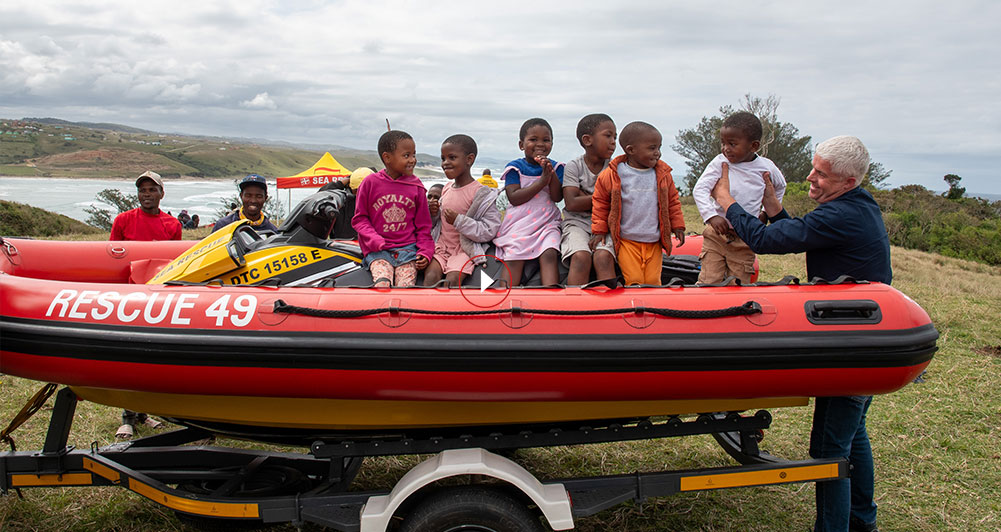
The station’s story began in 2020, when a volunteer trainer started teaching local youth lifeguarding skills in informal conditions. A small initiative has grown into a structured volunteer team with the training, equipment and support needed to operate as a fully fledged rescue station. Today, the station is equipped with a JetRIB and a 4x4 rescue vehicle. This enables the crew to respond to incidents along this section of the coast quickly and with confidence. The station is led by a multi-skilled volunteer team, with responsibilities shared across administration, operations, training and water safety education for the children in the area. This structure supports continuity and builds leadership within the community.
The impact of establishing this station is both immediate and long term. In the short term, lives can be saved. The rescue on the morning of the launch showed that trained local volunteers, supported by the right equipment, can respond effectively, even in challenging conditions.
Over time, the station will strengthen safety in the area through ongoing training, lifeguarding and water safety education. It also creates opportunities for skills development and local involvement in rescue services. The next phase is the construction of a permanent rescue base. This will provide secure storage for equipment, a central operations hub and a foundation for expanding training programmes in the region.
Station 49 Mdumbi shows what can be achieved through sustained effort and partnership. A grassroots initiative has developed into an operational rescue station, built around local people and supported by national systems. It is a model that can be applied in other remote areas.
By building capability in this way, we are not only extending our reach, but strengthening the connected NSRI system of prevention, lifeguarding presence and rescue response. Together, these elements ensure that safety begins long before an incident occurs and that, when it does occur, trained teams are ready to act. The result is a more resilient approach to water safety that protects lives today and builds safer communities into the future.

Read more about Mdumbi Sation 49 on our website.
The Wall: Back from the Edge
NSRI opens Wild Coast station at Mdumbi.