

Our strategy
and performance
Developing and sustaining our people for the future
Developing and sustaining our people for the future
By nurturing a future-fit organisation, we build an institution that is stronger, more resilient and more capable over time.

How we create and preserve value
Our employees and volunteers are the NSRI’s most valuable assets. Their skills, experience, motivation and well-being enable us to deliver far-reaching services, including rescues, prevention and education initiatives.
As a strategic priority, we strengthen people and culture by:
Growing and sustaining our volunteer base
- We strengthen our traditional rescue model while expanding volunteer opportunities in community programmes.
- Station commanders, serving three-year terms, receive hands-on leadership development and mentorship and take responsibility for recruiting and developing volunteers.
- Ongoing structured training pathways and other educational resources ensure ongoing development and support for volunteers.
Strengthening support functions
- ICT solutions, human resources and finance systems stabilise our operations and improve efficiency and consistency.
Driving authentic transformation
- We promote equality, diversity and gender equity.
- We sustain meaningful gains in employee diversity and leadership representation by prioritising inclusive recruitment and retention of a workforce reflecting South Africa’s diverse population.
Lifeguarding as a pathway to employment
- We address the critical need for lifeguards through short-term contracts, supported by cross-skilling at coastal and inland operations, while we explore a permanent employment model that will enable year-round lifeguard deployment.
Prioritising well-being
- We have a partnership with Life Healthcare to provide accessible wellness support.
Enabling our people
- We provide training and development, technology adoption and an agile culture with structured onboarding and initiatives that foster a sense of belonging aligned with our mission.
Enhancing cohesion across functions
- We foster a collaborative and responsive culture that supports operational excellence and service delivery.
Value created and preserved over time |
|||||
| Key metrics to track our performance | 2025 | 2024 | 2023 | ||
| Employee costs | R105 505 838 | R101 711 484 | R89 913 598 | ||
| Employee-to-volunteer ratio | 1:8 | 1:8 | 1:7 | ||
| Training sessions | 2 619 | 2 392 | 2 687 | ||
| Volunteers trained | 746 | 948 | 1 016 | ||
| Employees trained | 181 | 151 | 103 |
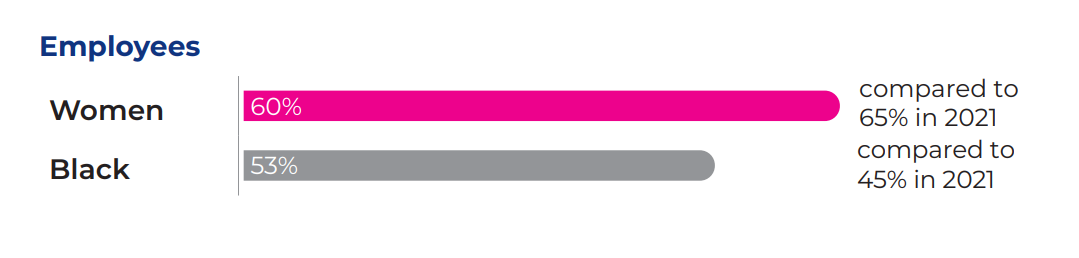
Employees 2025
From 193 in 2024
Black* employees
Up from 51% in 2024
Race breakdown
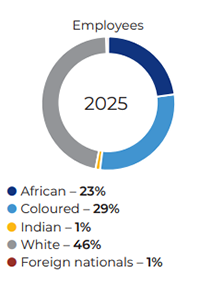
Transformation progress for 2025
Volunteers 2025
From 1 509 in 2024
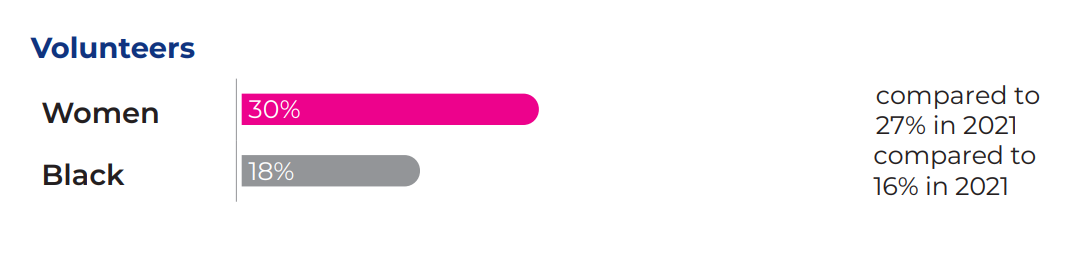
Black volunteers
Up from 17% in 2024
Race breakdown
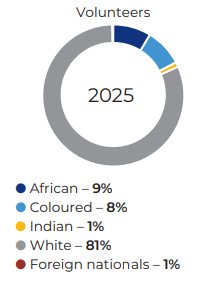
Transformation progress for 2025
We invested 1.05%
(R1 079 440) of our salary bill in external training and development of employees and volunteers in 2025
(2024: 1.08% or R988 757).
360% coxswains(2024: 351) |
458% rolesserved as prevention and support volunteers (survival swimming, PRB, beach safety camera operators, coast watchers, governance) (2024: 337) |
||
698 sea crew(2024: 677) |
|||
140 shore controllers(2024: 127) |
575 trainees(2024: 402) |
- Volunteer leadership structures formalised for community programmes in the Western Cape and the Eastern Cape.
- Renewed role structure with risk management aligned to Occupational Health and Safety Act, 85 of 1993.
- Implementing harassment and whistleblowing policies with anonymous digital reporting to the CEO and Chairperson via the volunteer portal and intranet.
- Introducing a formal new staff induction programme including a full-day onboarding session, interactive organisational challenge and updated NSRI e-learning modules.
| * | These are roles served and not directly reconcilable to the number of volunteers due to multiple roles served. |
- Volunteer recruitment and retention was flagged as a top risk (especially in rural areas).
- High-stress incidents and exposure to trauma are placing mental health strain on crews.
- Continue reviewing employment policies, onboarding and internal communication to ensure alignment with best practice, legislation and the NSRI’s values and strategic objectives.
- Integrate payroll data into human resources and finance systems to enhance efficiency, accuracy, compliance and insight for evidence-based recruitment, remuneration and workforce planning.
- Develop and implement a new training and development strategy, including internships, aligned with performance management, inclusivity and holistic wellness, to strengthen technical capability, leadership skills and succession planning.
- Advance measurable employment equity and B-BBEE outcomes through targeted diversity, skills development, supplier engagement and management control initiatives.
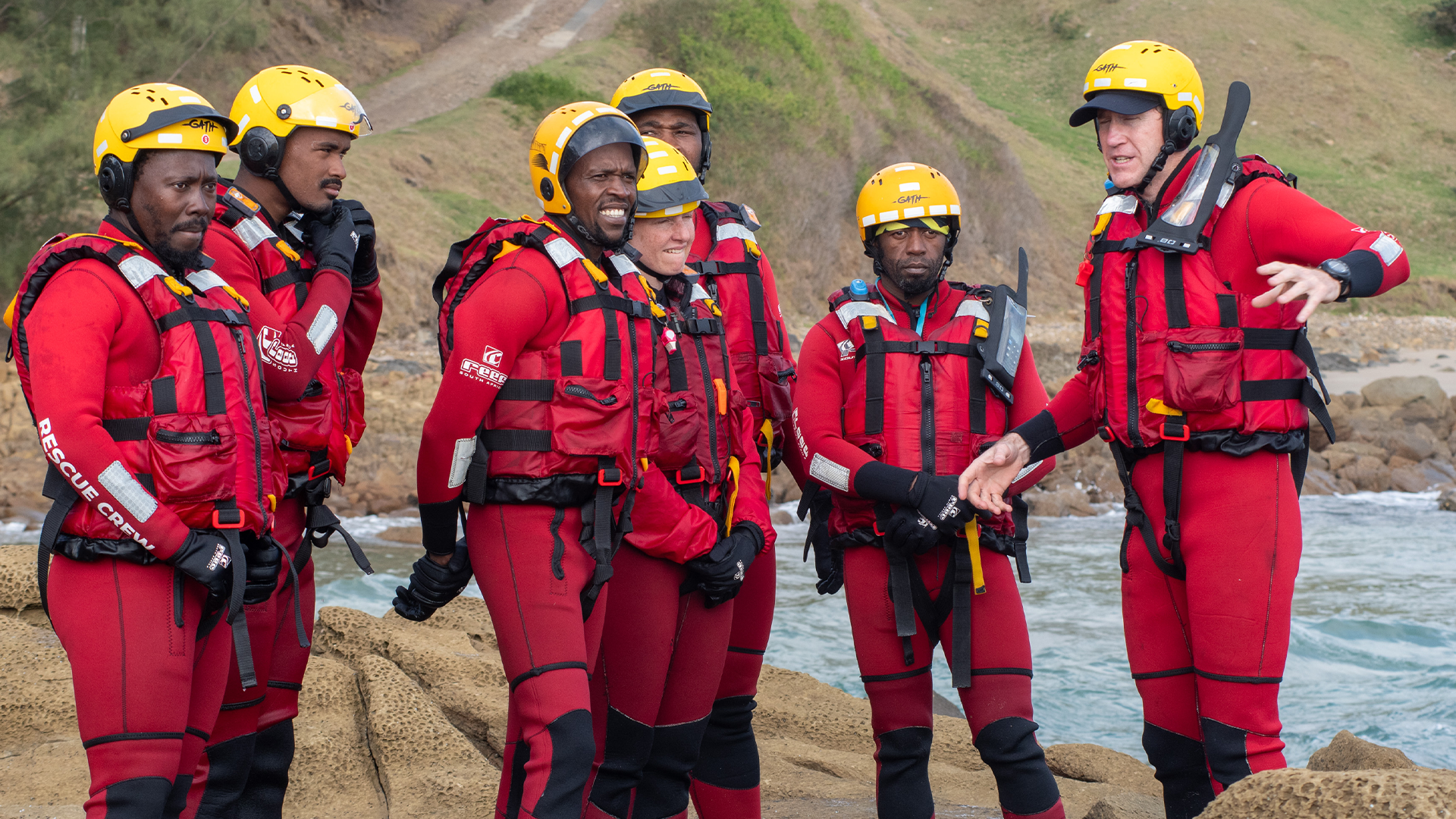

Sustaining our volunteer model
Volunteers are recruited locally through targeted station drives aligned to operational needs. The VSC ensures smooth coordination across operations and community-facing programmes.
Volunteer base
operational
affiliates
community programme instructors
seasonal lifeguards and team managers for 2025/26 season
Recruitment of volunteers remains challenging, especially in rural areas, with an attrition rate of approximately 50% within five years of joining. By conducting exit interviews, we determined that the most common reasons for leaving the NSRI include emigration, changing family or work commitments and, occasionally, interpersonal challenges.
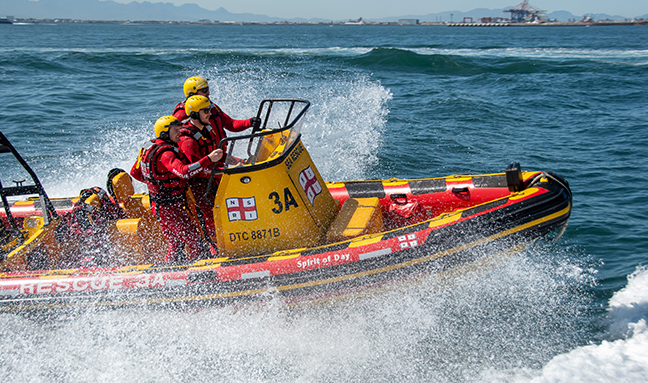
Our investment in skills development and training aims to support individual career progression for employees and volunteers, improve service delivery and enhance organisational performance.
In 2025, 746 members passed through core NSRI training courses, supported by the appointment of four new training officers and two additional South African Maritime Safety Authority-qualified examiners. This strengthened assessment capacity across key categories, reducing key-person dependency risk. The decentralised, station-level training model was further embedded with closer collaboration between training officers and stations, producing measurable increases in training hours, attendance and competency outcomes.
Volunteer training
Guided by the motto, “train as you would respond to a rescue and respond as you were trained”, our volunteer training programme ensures crew are prepared for real-world operations through a structured model:
Delivered via our internal e-learning platform
Delivered via our internal Tracked through task books and operational logbooks
Developed through scenario-based exercises and training in real-life conditions
All stations are equipped to provide foundational training, while specialised training and assessment are delivered centrally by the VSC.
The updated search and rescue protocols introduced in 2024, alongside specialist courses and inland flood and swiftwater rescue training, continue to improve rescue outcomes and operational readiness in diverse environments.
In 2025, we further improved our training and operations capability by establishing a new training team drawn from our volunteer cohort. With operational experience, the team is improving feedback and VSC responsiveness by strengthening delivery of preventative maintenance, IT support and administrative issue resolution at stations.Coxswain development
The development of coxswains remains a strategic priority, critical to the sustainability of our rescue operations. As trainees accumulate practical time on an ORC, the pool of qualifying coxswains continues to grow. We are equipping them to lead under pressure and adapt to evolving technologies.
In 2025, 46 new coxswains qualified, and 38 trainees participated in formal Class 1 to 3 development courses.
Coxswains
(2024: 351)
participated in formal Class 1 to 3 development courses
South African Maritime Safety Authority-accredited examiners
Coxswain assessment in 2025
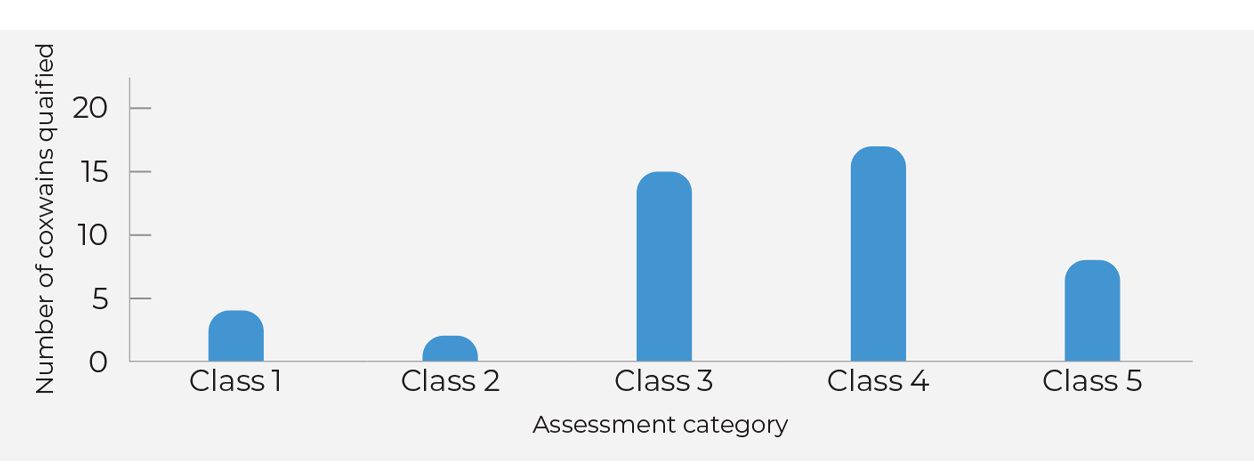
A landmark first was the Class 4 intensive development course, designed to accelerate crew development at newer, more remote stations. The course gathered participants from diverse backgrounds in cross-cultural training that demonstrated the promise of the NSRI’s expansion and the intensity of effort required to support it.

Read case study for details.
Lifeguard empowerment
Registered with the Culture, Arts, Tourism, Hospitality and Sport Sector Education and Training Authority, our lifeguard training aligns with South African Qualifications Authority standards.
In areas where our lifeguarding programme is well established, we promote experienced lifeguards into leadership roles through structured development and mentorship. This approach strengthens local leadership, supports operational continuity and reduces training costs. Training is tracked in real time using the Surf Rescue app, enabling effective monitoring, timely adjustments and accurate record-keeping.
In 2025, we began a new programme to train commercial lifeguards and build a recruitment pipeline, with tiered qualifications and bespoke standard operating procedures. This is in preparation for Club Med Tinley Manor's July 2026 opening.
Foster organisational culture and transformation
Restructuring and realignment
We improved accountability and enhanced efficiency by restructuring and realigning executive, operations, finance, fundraising and marketing roles. The fundraising and marketing restructure clarified general fundraising, centre operations, performance marketing, brand and retail accountabilities.
Job profile development
In partnership with a remuneration and human resources consultancy, we created fit-for-purpose job profiles, aligned with operational realities and strategic objectives. This provides consistency in job language and expectations, supports internal equity and market-aligned remuneration, and creates a transparent foundation for performance management.
Middle management leadership development
We performed individual and team assessments, followed by management workshops, to align leadership behaviours with organisational values.
Performance management framework
We piloted interim performance reviews across grades C3 to D and finalised executive performance agreements to align individual development and team goals with strategic outcomes.
Skills audits
We conducted an audit of all employees’ skills to inform learning and development plans.
Transformation progress
The NSRI continually addresses historical inequities in South Africa by promoting equality, non-racialism and gender equity through inclusive practices and initiatives. The growth of our workforce represents incremental gains in the representation of historically disadvantaged people.
Employees
The NSRI continued to make meaningful progress in building a more representative and inclusive workforce in 2025. Black (African, Coloured and Indian as defined by the Department of Trade and Industry B-BBEE Commission) representation among employees increased to 53%, up from 49% in 2023, reflecting consistent gains in recruitment and retention of historically disadvantaged individuals. Among this year’s 34 recruits, 91% were from government-designated groups, demonstrating alignment with the organisation’s employment equity and transformation objectives.
VolunteersThe volunteer workforce grew to 1 566 members in 2025, an increase of 14% from 1 376 in 2023. Black representation among volunteers rose to 18%, up from 14% in 2023, with notable growth in African volunteer numbers (from 78 to 136, a 74% increase over two years). Women represent 30% of our volunteers, up from 27% in 2023, with an increasing number of women taking on leadership roles. When benchmarked against international peers, the NSRI consistently outperforms on female representation, reflecting an organisational culture that actively supports gender equity across all functions.
A more representative workforce strengthens the NSRI’s presence and trust in communities where drowning risk is highest. Diverse crews open doors for water safety education, local recruitment and community resilience. Each step towards inclusion multiplies the organisation’s reach, ensuring that the lifesaving mission connects with those who need it most.
Balance delivery and well-being
Acknowledging the personal impact of rescue work, we partner with Life Healthcare to provide free access to a comprehensive wellness programme that includes trauma counselling, mental health support and confidential assistance services for volunteers, staff and their families.
Our culture of care, responsibility and transparency helps mitigate safety risk. Regular broadcasts to stations disseminate lessons on injury prevention, the use of PPE and the significance of reporting incidents and near misses.
Remuneration
Our remuneration policy promotes employment equity, including fair and responsible pay practices. It is supported by annual market benchmarking via a survey done by a remuneration and human resources consultancy and independently validated job grading. We monitor management objectives regularly to ensure delivery aligns with strategic goals and informs the organisation’s operational plan.
Our volunteers are not paid but may claim operational expenses. Our call centre team continues to operate under a performance-driven model, with fundraisers earning commission based on individual and team results. This incentivises high performance and helps secure funding.
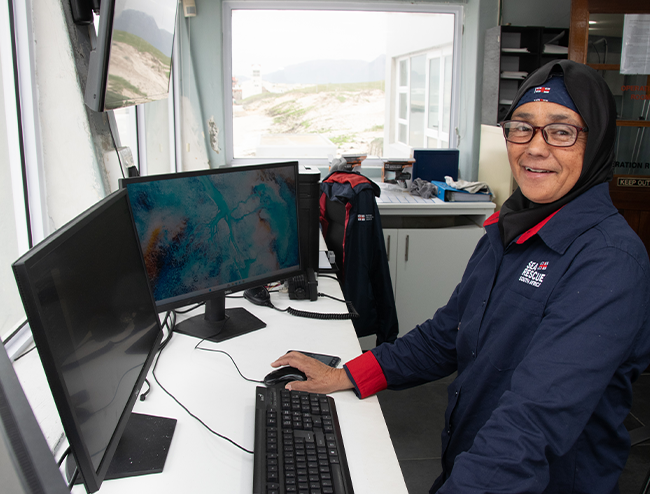

Watch the 'Women in sea Rescue' series.
Total employee costs for 2025 amounted to R105 505 838, an increase of 3.7% from R101 711 484 in 2024. The table below reflects the distribution across divisions (excludes lifeguarding).
| Division | 2025 Expenditure (R) |
% of total | Headcount* | ||
| Fundraising and marketing | 53 521 813 | 53 | 103 | ||
| Operations | 29 836 935 | 29 | 62 | ||
| Corporate services | 18 349 348 | 18 | 24 | ||
| Total** | 101 708 095*** | 100 | 189 |
| * | Headcount at 31 December 2025 and includes executives. |
| ** | Excludes lifeguards, who are employed on temporary contracts. |
| *** | Restated due to rounding variances. |
The NSRI’s Non-executive Directors are unpaid volunteers.
Executive remuneration
Total executive remuneration decreased from R11 923 220 in 2024 to R8 263 886 in 2025. The year-on-year decrease reflects changes in the composition of the executive team during 2024 and 2025. The CEO received total remuneration of R3 184 525.
The remuneration ratio between the CEO and the lowest-paid employee is 18:1, while the ratio relative to that of the median (C4 band) employee is 5:1. Information about post‑retirement benefit liabilities and executive remuneration is available in our 2025 Annual Financial Statements, available on request from the NSRI.
During the year, the Board approved the discontinuation of performance-based incentives for executives. This decision reflects a continued commitment to responsible remuneration practices, organisational sustainability and alignment with the NSRI’s public-benefit mandate.