

Our strategy
and performance
Championing environmental stewardship
Championing environmental stewardship
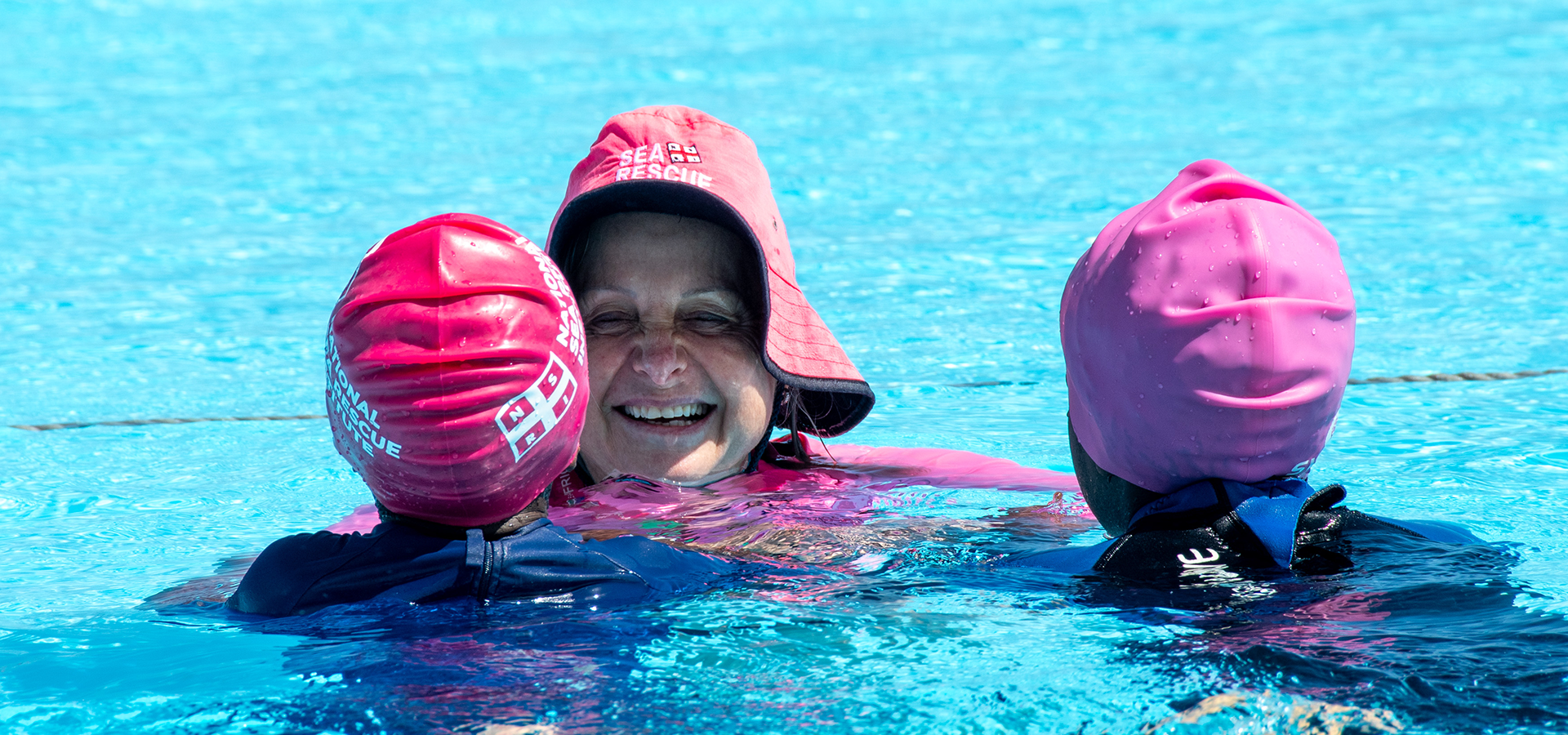
Every water safety lesson that teaches a child to respect the ocean also builds an environmental consciousness that lasts a lifetime.

How we create and preserve value
Our presence along South Africa’s coastline and inland waterways positions us as a natural custodian of these environments.
As a strategic priority, we are embedding environmental responsibility into our core rescue and prevention mission by investing in:
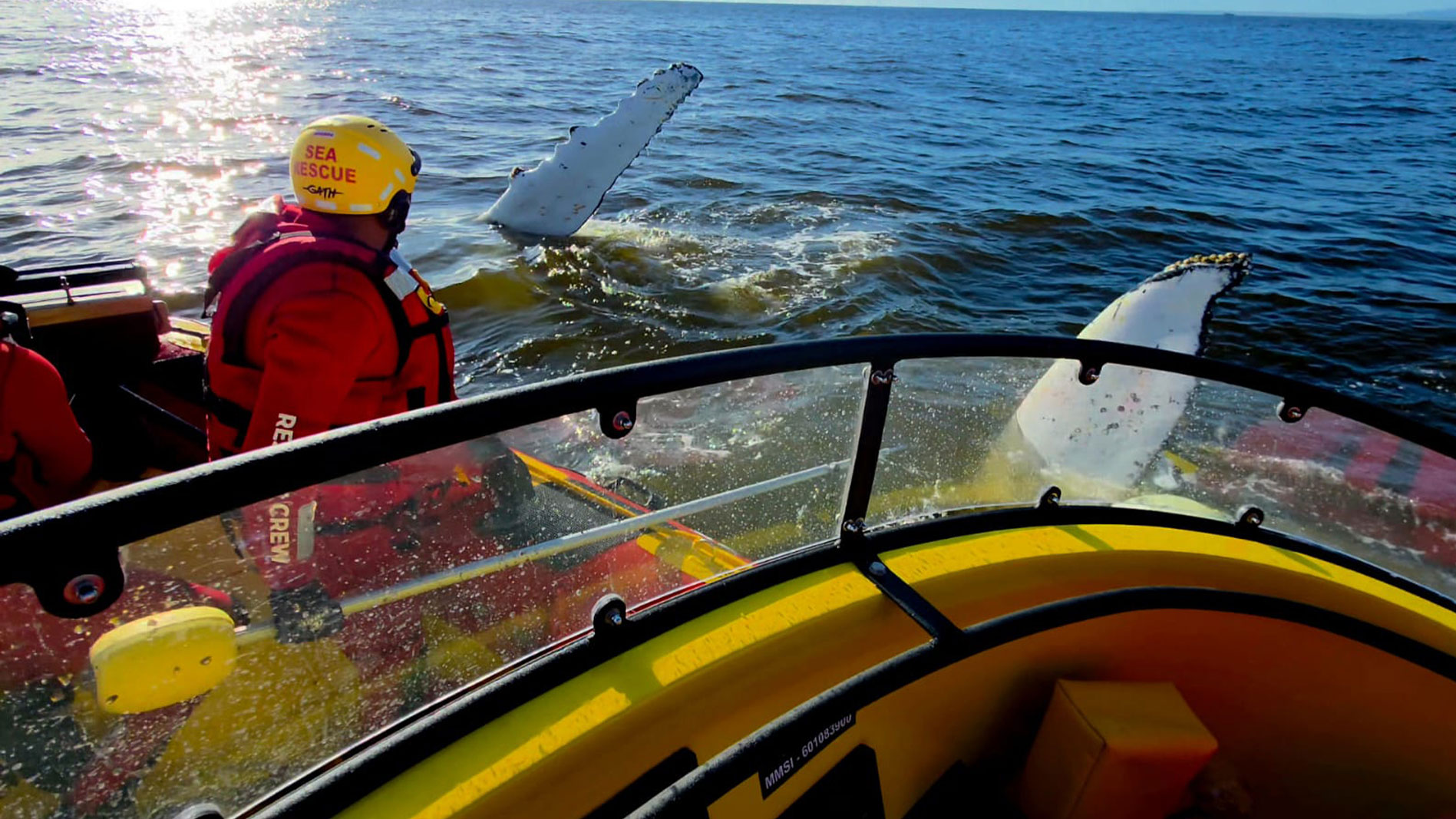
- Marine and coastal ecosystems where we operate and contribute to wildlife conservation through initiatives such as whale disentanglement and seal, turtle, seabird and dolphin rescue as well as advocacy through relevant stakeholder relationships.
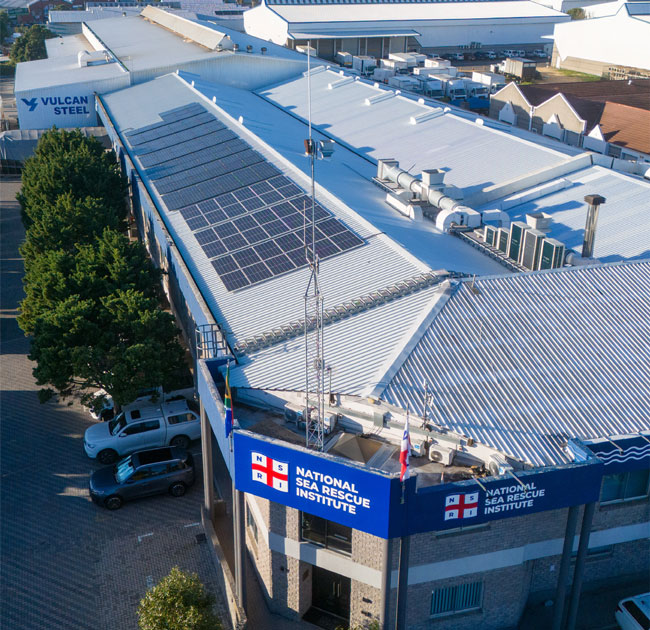
- Energy and water conservation infrastructure such as solar power at some of our rescue stations and low-emission rescue crafts, while promoting responsible practices in communities and collaborating with global organisations to prepare the NSRI for climate-related challenges.
Value created and preserved over time |
|||||
| Key metrics to track our performance | 2025 | 2024 | 2023 | ||
| Animals rescued | 70 | 72 | 97 | ||
| Electricity supplied by solar photovoltaic (VSC)1 | 57% (83.6 MWh) | 40% (58.2 MWh) | 18% (24.5 MWh) | ||
| JetRIBs introduced (four-stroke technology)2 | 5 | 5 | 8 |
| 1 | Percentage reflects the proportion of VSC electricity supplied by on-site solar photovoltaic generation. |
| 2 | JetRIBs contribute to a more environmentally sustainable rescue fleet by reducing the environmental impact associated with older two-stroke rescue craft. |
at Milnerton VSC
(2024: 58.2 MWh)
- Trained NSRI teams rescued 70 animals, including whales, birds, seals, turtles, dolphins and sharks.
- Our dependency on diesel and petrol is still high for primary operations.
- Flood events and climate extremes are increasingly disrupting operations.
- Replacing older two-stroke vessels with cleaner four-stroke JetRIBs to reduce marine pollution and lower fleet emissions.
- Installing solar panels and water tanks across stations to reduce energy costs and our environmental footprint while improving operational resilience.
- Deploying PRBs as simple, no-energy, no-emission devices that save lives.
- Our investment in whale disentanglement training and improved specialist equipment, strengthens our marine wildlife response capability.
- We demonstrated multi-station collaboration for marine conservation during a coordinated whale release operation at Yzerfontein, which involved four stations.
- Our crew’s expertise in cetacean response was highlighted by a humpback whale release in Cape Town Harbour.
- 131 Coast Watcher volunteers monitor South Africa’s coastline for environmental impacts and early warning of marine emergencies.
- 1 431 operational personnel serve as informal environmental monitors through daily station operations and coastal presence.
- Lifeguarding operations across sites extend environmental observation capacity.
- Embed environmental sustainability internally across operations, infrastructure and procurement and externally through public messaging and brand positioning.
- Integrate environmental principles into strategic decision-making and organisational values to strengthen our credibility and public trust.
- Align environmental priorities with national and global sustainability imperatives relevant to maritime and coastal operations.

Operating in nature
We operate where human activity meets the natural environment: oceans, rivers, dams, estuaries and coastlines. Our 2025 operational profile reflects this: We carried out 1 069 rescue operations in conditions ranging from calm inland dams to four-metre swells and 35-knot winds.
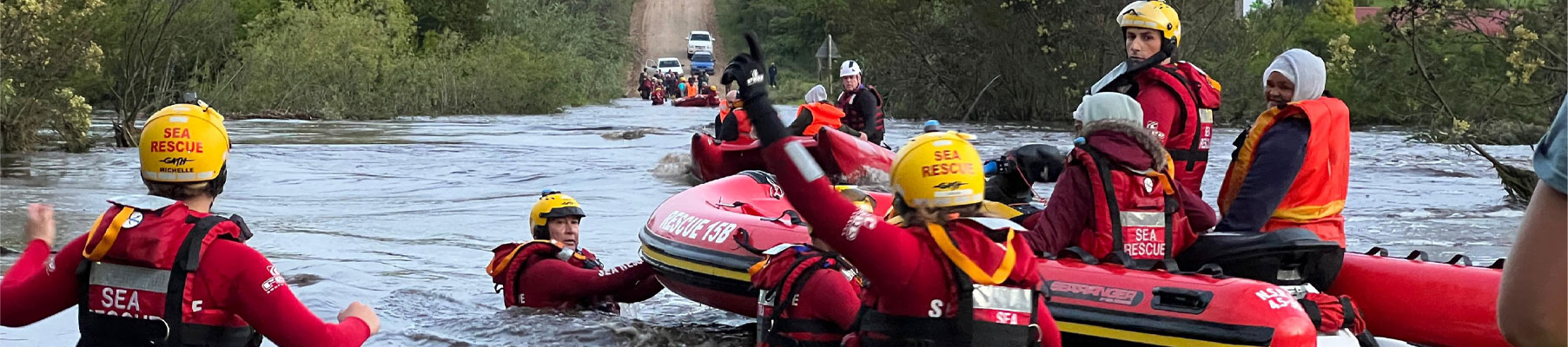
The impact of climate variability on inland communities, particularly in KwaZulu‑Natal, was evident in 26 flood and swiftwater incidents, which were less intense than previous years, but persistent.
Climate change implications are increasingly material to the NSRI’s operational planning. We maintain flood response and swiftwater capability with the expectation of ongoing or increasing frequency of extreme weather events. The South Cape flood response unit, well-stocked and supported by a collaborative stakeholder plan, is a notable model being considered for national adoption. This represents an evolution of the NSRI’s role from maritime rescue to broader water-related disaster preparedness.
Greening initiatives
The most significant environmental contribution from our fundraising and marketing team in 2025 was the strategic shift to digital-first communication. The revised magazine distribution strategy moved from physical-first to digital-first delivery, saving R609 000 per year in postage costs and materially reducing paper consumption, printing waste and the carbon footprint associated with physical distribution across South Africa.
Water supply to the pools at our Survival Swimming Centres comes from harvested rainwater collected from the roofs of the centres and surrounding school buildings into adjacent tanks. The Vredendal centre receives water from a purified borehole water system, with no municipal water connected at any site.
- Reduce reliance on the national grid.
- Allow rescue operations to remain functional during power outages.
- Supported by solar power and able to export surplus power.
- LED lighting throughout the building.
- Rainwater tanks (22 500-litre capacity) for toilet flushing, vehicle and vessel washing and irrigation.