


CASE STUDY
Environmental stewardship:
Caring for our marine environment
Our commitment to saving lives extends beyond people. It includes protecting the marine environment that supports coastal communities and livelihoods.
Healthy oceans and safe communities are closely connected. When marine ecosystems are under threat, so too are the people who depend on them.
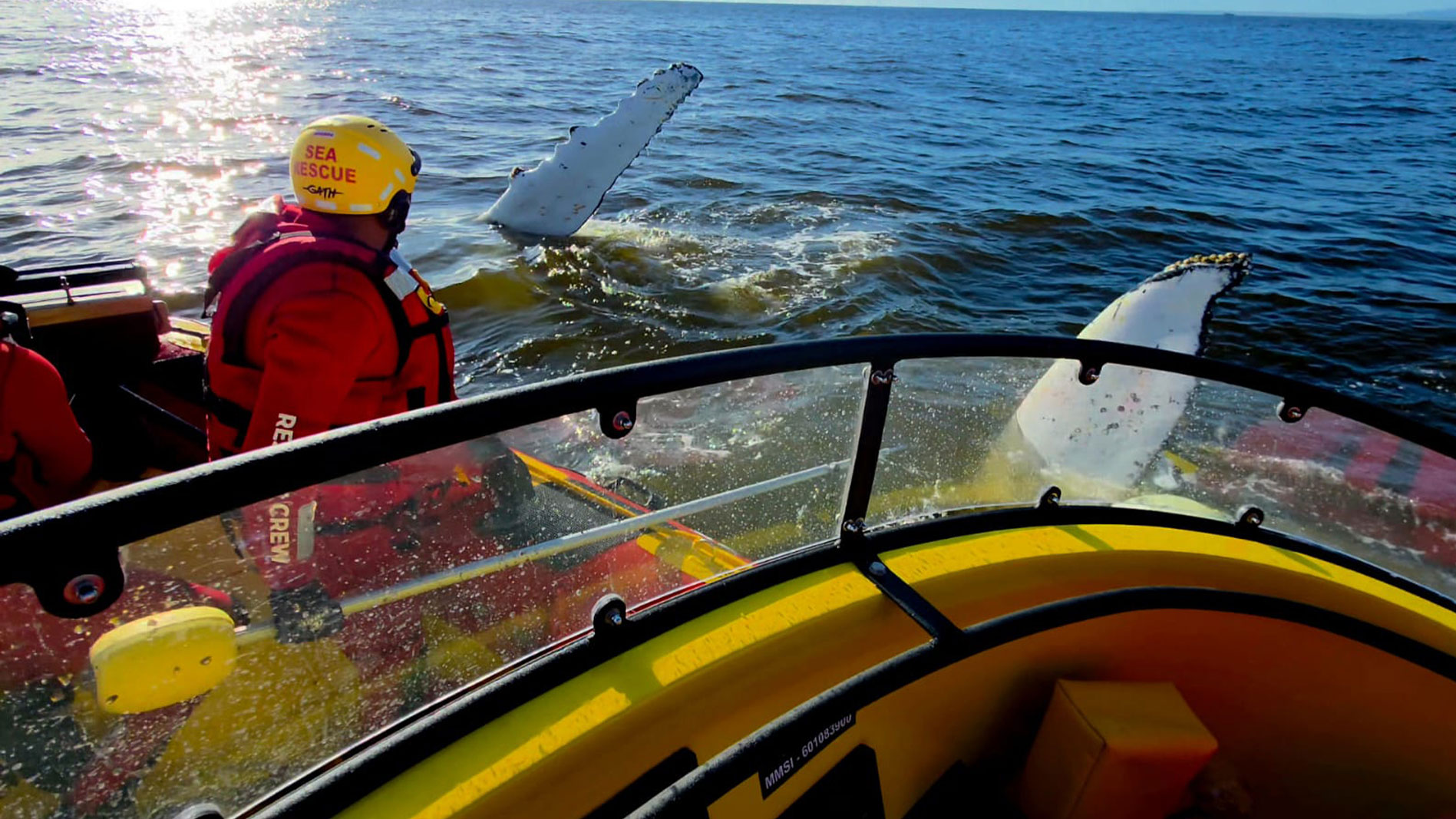
This responsibility was brought into focus during a whale disentanglement operation off the West Coast. A juvenile humpback whale was entangled in heavy fishing rope and flotation buoys. The animal was fatigued and struggling to move, and without intervention, its survival was unlikely. A fishing vessel raised the alarm, and remained on scene to provide accurate coordinates. This allowed for a coordinated response involving four NSRI stations. Our crew launched with specialised equipment and began a careful and methodical operation.
Disentangling a large marine animal requires patience, precision and discipline. The safety of the crew must be balanced with the need to reduce stress on the animal. Each movement is deliberate and each decision is measured. In this case, the whale had multiple rope wraps around its tail. The team worked alongside the animal, making a series of controlled cuts while managing its movement and maintaining a safe position. In total, eight cuts were required before the rope and buoys were fully removed. Once free, the whale swam away with strength, diving and moving off into the open water. The moment was simple, but significant because a life was saved.
This operation reflects how environmental stewardship is integrated into how we work, supported by early reporting, shared expertise and coordinated action. We depend on and nurture partnerships with fishing communities, scientists, government agencies and conservation networks. Every intervention considers both immediate and long-term outcomes.
We train crews to respond effectively and with care, use equipment designed to minimise harm and recover debris to prevent further impact.
For our donors, this work shows how their support extends beyond rescue operations. It enables training, specialised equipment and the systems needed to respond responsibly when marine life is at risk. It also reinforces a broader principle: protecting the environment is part of protecting people.
By investing in this capability, we are helping to ensure that South Africa’s oceans remain safe, productive and sustainable for future generations.
Our conservation efforts extend to protecting marine wildlife while advocating against pollution.
In partnership with the Two Oceans Aquarium in Cape Town and uShaka Marine World in Durban, we help rescue, rehabilitate and release stranded and injured turtles and actively support their conservation.
We also collaborate with the Southern African Foundation for the Conservation of Coastal Birds in rescuing and repatriating seabirds and removing deceased birds to mitigate the threat of poisoning.
While animal rescue is not our primary mandate, these interventions reflect our broader relationship with marine and freshwater ecosystems and our role as an environmental first responder.
Our partnership with SANParks at Station 46 Storms River exemplifies the mutually beneficial value of rescue capability and conservation stewardship.

Read more about the humpback whale rescue on our website.
A juvenile Humpback whale succsessfully assisted in a disentanglement operation
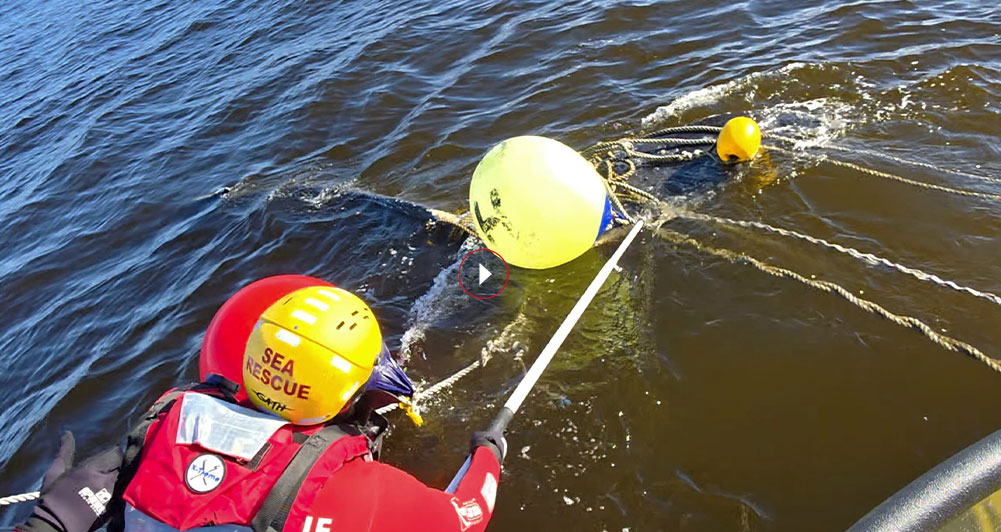
See whale disentanglement in action.