


CASE STUDY
Innovating towards safety:
Strengthening response through technology and coordination
In a rescue, every second counts. The ability to see, assess and respond quickly with the right assets often determines the outcome of an emergency. As our beach safety camera network expanded, it became clear that our EOC needed to evolve to keep up.
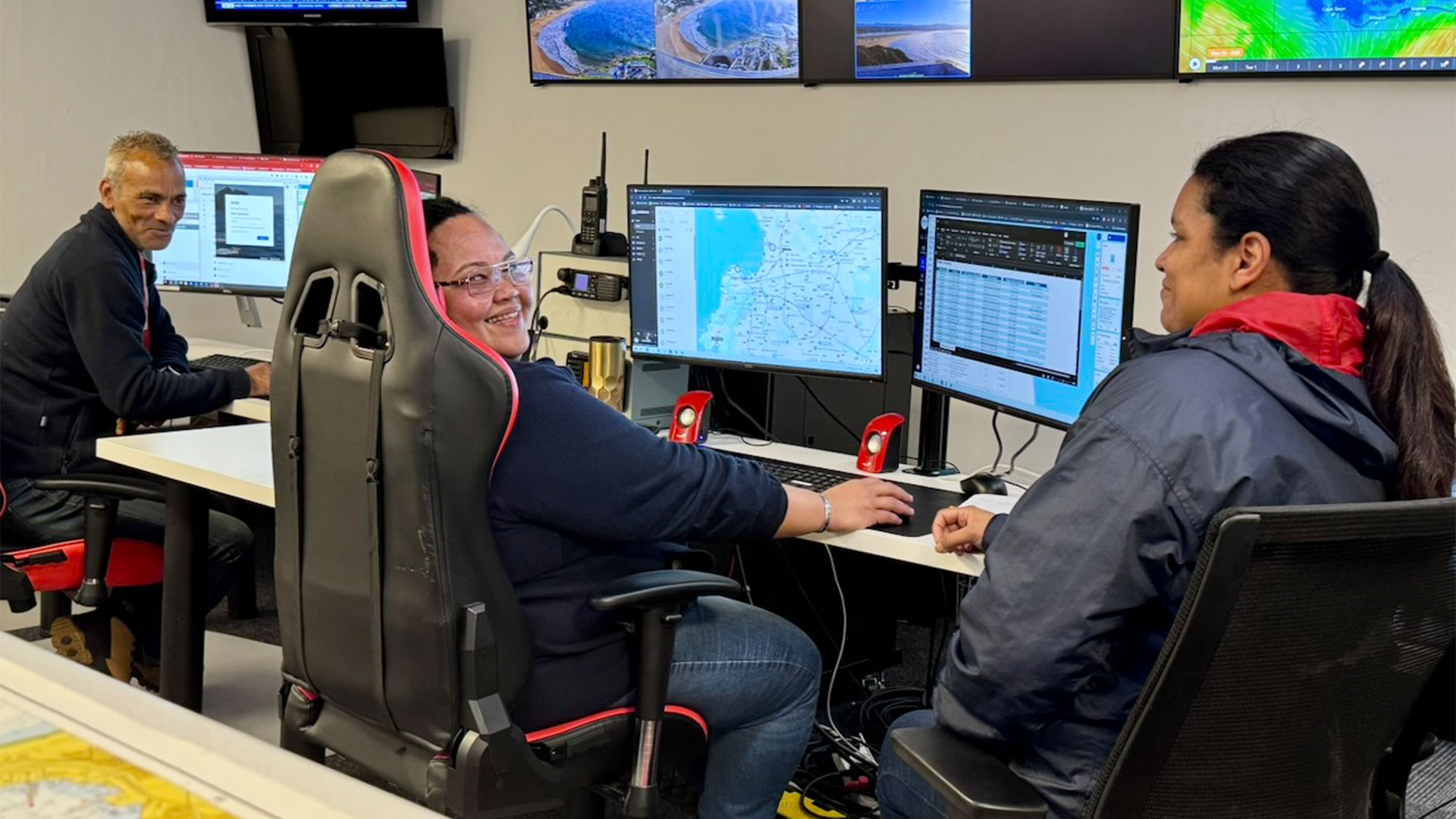
The EOC is the central point from which incidents are monitored, assessed and coordinated across the country. As more cameras were installed along the coastline, the volume of information increased. This created the need for a larger, more capable facility that could support real-time decision-making and national coordination. We responded by upgrading and expanding the EOC at our VSC in Cape Town. The new facility has nearly doubled in size and significantly strengthened our operational capability.
The redesigned control room provides clearer visual feeds from the camera network, allowing operators to identify risks earlier and monitor changing conditions more effectively. This improves situational awareness and supports faster, more informed decision-making during incidents. The upgrade has also improved how our teams work. While the previous space could only accommodate a small number of operators, the new facility supports multiple operators, a supervisor and support staff working together. This enables better communication and more efficient coordination, particularly during high-pressure situations. A revised shift structure ensures that at least two operators are on duty at all times, with the ability to scale up when needed. A dedicated supervisor supports daily operations and oversees incident coordination.
The EOC is not only a control room, it is also a training environment. The expanded space allows us to train new operators and build a broader support network. Over time, this will include remote volunteer operators who can assist with monitoring and information flow. This increases capacity and strengthens resilience during major incidents.
The impact of the upgraded EOC is already visible. The beach safety camera network has extended coverage to locations including Plettenberg Bay, Nature’s Valley and Victoria Bay. These areas include remote or high-risk environments where early detection is critical. In one instance, a remote shore controller monitoring camera feeds identified two teenagers in difficulty in a canoe near the Keurbooms River mouth at sunset. Using the live feed, the controller directed a rescue craft to the teenagers’ position and they were brought safely to shore. This is the shift in how we operate, from reacting to incidents to identifying risks early and responding before situations escalate. The technology also supports lifeguards and local teams through integrated warning systems, including alarms, live voice commands and visual signals that help communicate risks to the public.
Investing in systems and infrastructure strengthens our ability to save lives, and brings together technology, trained people and a coordinated response into a single connected network.
As our footprint continues to grow, the EOC will remain central to how we operate. It allows us to extend our reach, improve response times and support safer outcomes along South Africa’s coastline.
By building this capability now, we are preparing for the future.

Read more about the expansion of our EOC and beach safety camera programme on our website.
NSRI adds second shark alarm in Plttenberg Bay
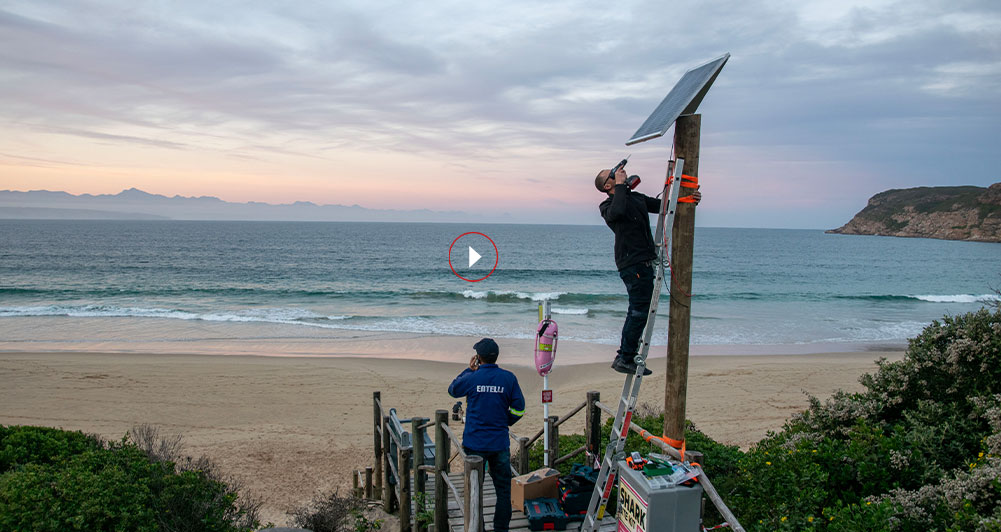
Learn more about our Shark Alarms.