


CASE STUDY
Changing the Score on Drowning:
Turning sport into sustainable fundraising
In the noise of global sport, millions of people watch, celebrate and connect. This gave us an opportunity to grab attention for something that goes largely unheard and unnoticed: the moments around drowning.
Drowning is silent. It mostly happens without a shout, without a splash and without warning. It remains one of the leading causes of accidental death globally, with a disproportionate impact in Africa. Our continent carries an estimated 22% of the global burden of drowning and records the highest regional drowning death rate, at 5.6 per 100 000 population. Against this backdrop, we developed a simple idea: use the loudest moments in sport to highlight one of the quietest crises.
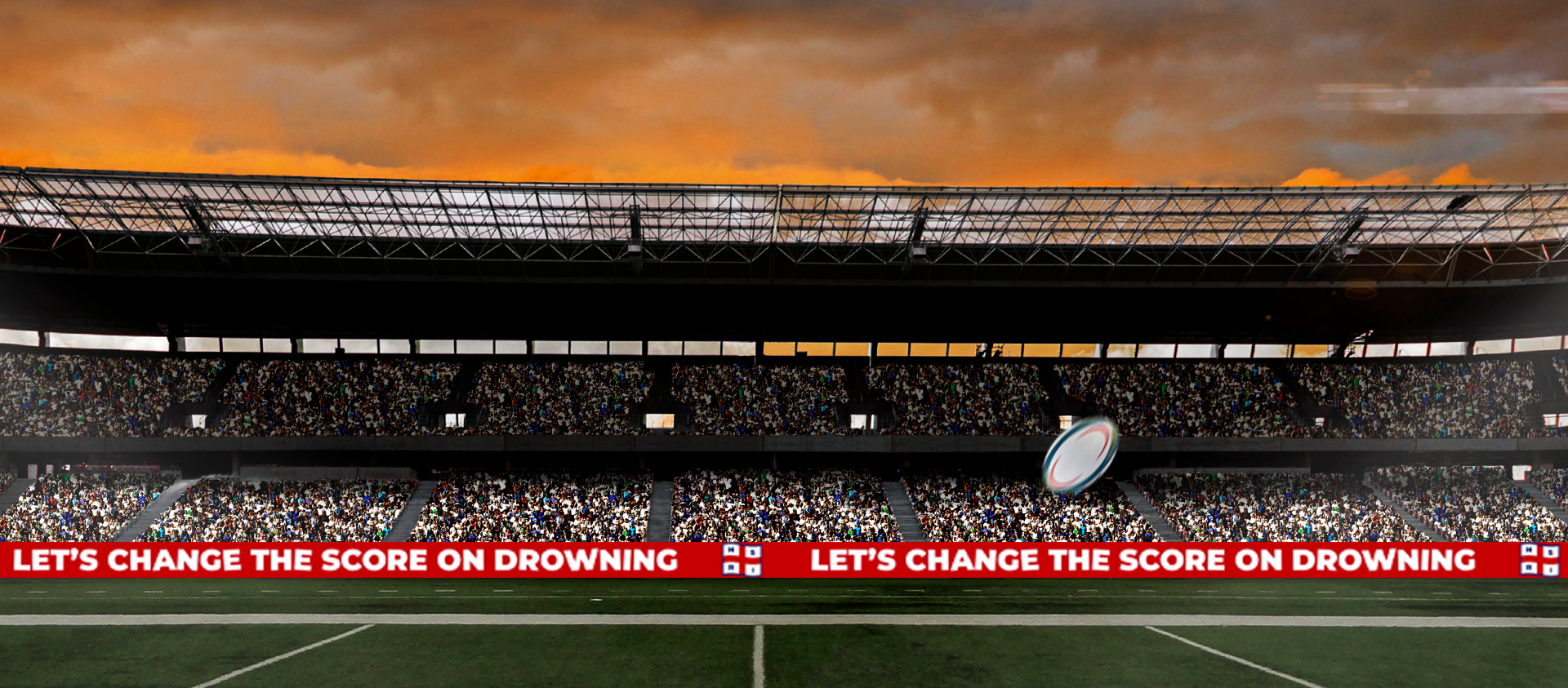
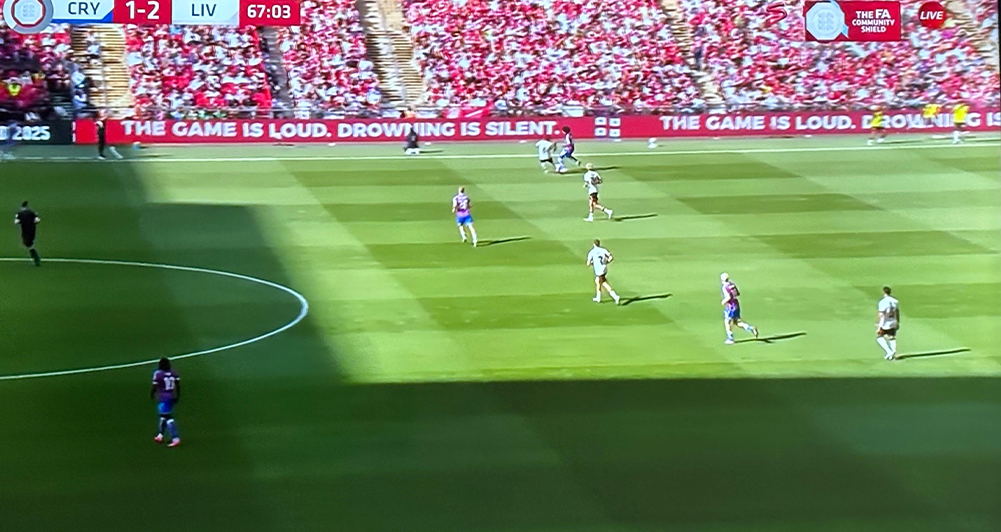
The Change the Score on Drowning campaign placed a lifesaving message directly into several high-attention sporting environments. During the FA Community Shield at Wembley Stadium, and later during a Springboks versus All Blacks rugby test match in New Zealand, pitch-side virtual LED boards carried our message and positioned a stark contrast: “The game is loud. Drowning is silent. Let’s change that score.”
These virtual LED placements extended beyond the stadium on the day; they were visible to targeted broadcast audiences across Africa. This ensured that the message reached regions most affected by drowning, connecting global sporting moments with a distinctly local and urgent public health challenge.
The campaign’s impact worked on two levels. Firstly, it raised awareness. The message on the field and international broadcast feeds brought drowning into the mainstream conversation across multiple countries, including in Africa. The campaign used the energy of sport to highlight a silent tragedy that often goes unnoticed.
Secondly, it strengthened our fundraising efforts. The campaign was designed to convert attention into action. Viewers were invited to respond to the NSRI by sending an SMS after spotting the message. In this way, we turned passive viewers into active supporters. The campaign generated more than 19 000 leads and contributed approximately R330 000 in revenue from the two events. Conversion rates reached up to 16%, outperforming broader campaign averages and bringing in new monthly donors. This supports a key strategic priority for the NSRI: building sustainable, owned fundraising channels that ensure consistent support for our prevention and rescue services.
Importantly, the campaign remained grounded in real impact. Behind every statistic is a life, a family and a community. Our work, from survival swimming and water safety education to lifeguarding and rescue, focuses on preventing these tragedies before they happen.
Our ability to respond quickly was also evident. When the opportunity to partner with the FA Community Shield arose at short notice, the team mobilised within days. This agility reflects the same operational readiness that defines our rescue work.
This case study demonstrates a scalable model, and that is, by aligning public health messaging with high-visibility platforms and pairing it with clear calls to action, we have shown how awareness can be converted into sustained impact.
In a world full of noise, the campaign achieved something simple and important: it made people notice and act and, in doing so, it helped change the score on drowning.

Read more about how the impact of sport changes the score on drowning on our website.
During the loudest game of the season, the NSRI reminds us that drowning is silent.
Learn more about this campaign