



Even experienced surfski paddlers can find themselves in trouble when conditions change or equipment fails. Here’s some advice on staying safe, being prepared and knowing when to call for help.
What began as an enjoyable paddle along the False Bay coast turned into a rescue operation for Peter Hobday when worsening conditions and a powerful wave sent him flying from his surfski.
His leg leash broke, leaving him separated from his boat in rough seas. Fortunately, his paddling partner managed to retrieve the ski and activated NSRI Safetrx. NSRI Station 10, Simon’s Town, responded, recovering Peter from the water and treating him for mild hypothermia.
Peter's experience is a reminder that even with precautions in place, equipment failure is one of the most common causes of things going wrong.
Echoing those sentiments is experienced surfski paddler and advocate Rob Mousley.
“We still get the occasional paddler going out in conditions they aren't ready for, but gear failure accounts for the majority of emergencies,” he explains.
Broken rudder lines, damaged paddles and faulty leashes can quickly turn an ordinary outing into an emergency, particularly when combined with strong winds and challenging seas.
For surfski coach Dawid Mocke, preparation begins with understanding both the conditions and your own abilities.
“Just because you have all the correct safety gear doesn't necessarily make you safe,” he says. “You're better prepared, sure, but ultimately proficiency is the number one safety tool you have.”
Paddlers should be confident remounting their skis from both sides, including in choppy conditions, before venturing into more challenging waters.
Checking the forecast is equally important, but Dawid encourages paddlers to observe what's happening around them, paying particular attention to wind strength and direction.
Before launching, inspect your surfski for damage, check steering cables and leashes, and make sure someone knows your intended route and expected return time.
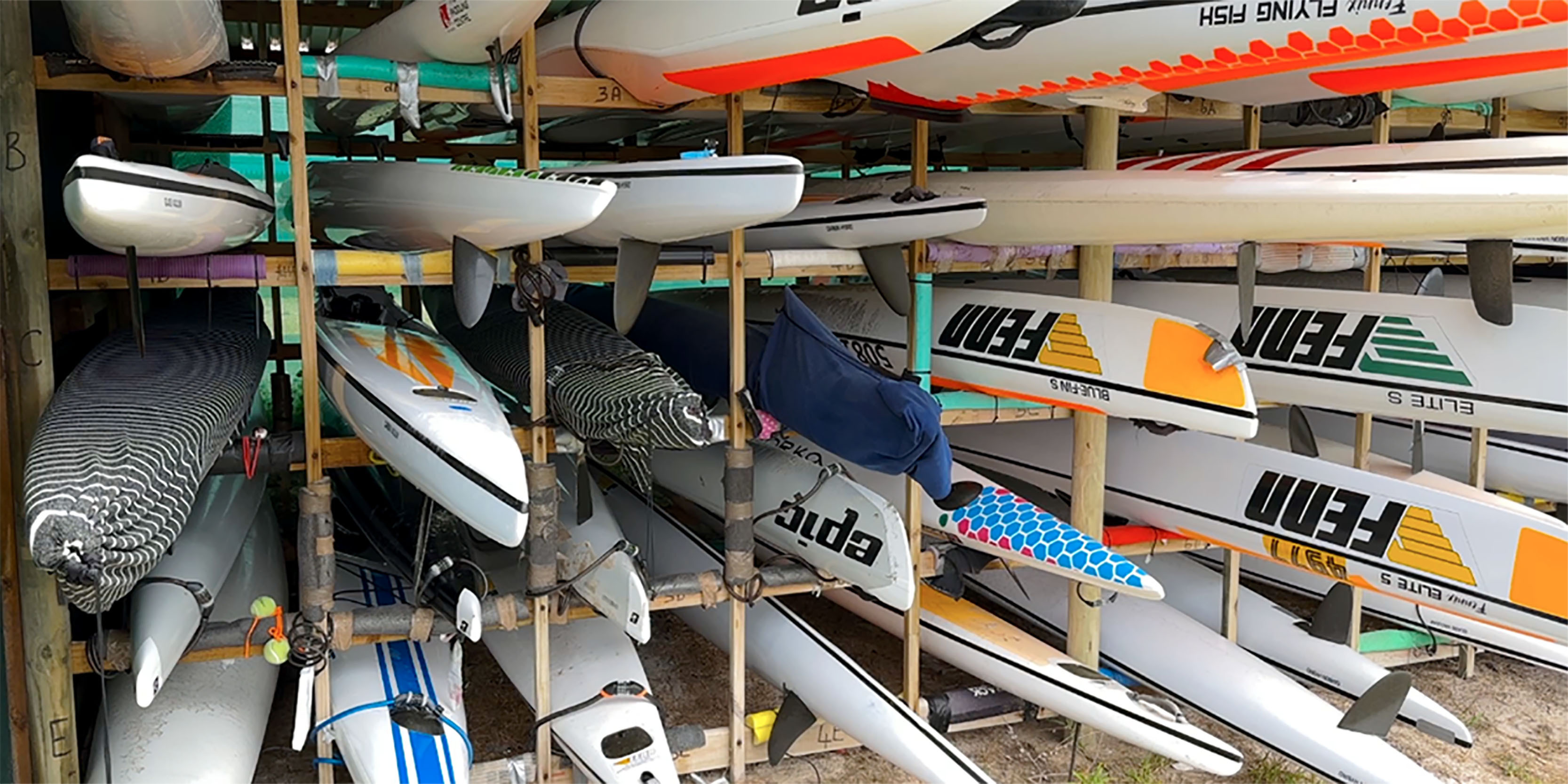
After what should be a routine inspection, Rob advocates a layered approach to safety, ensuring paddlers have more than one way to protect themselves or summon assistance.
At a minimum, every paddler should wear a personal flotation device (PFD), use a reliable leash and carry a means of communication, such as a mobile phone running NSRI SafeTrX in a waterproof pouch.
Leashes are particularly important because a surfski can drift away faster than someone can swim after it, even in moderate winds. However, Dawid stresses that paddlers should always try to maintain contact with their ski when capsizing rather than relying entirely on the leash.
NSRI SafeTrX provides a valuable way to track paddling trips and raise the alarm, but it shouldn't be the only communication option. Rob also recommends considering a VHF radio or other emergency signalling equipment, particularly for longer or more challenging routes.
Flares can also help rescuers locate paddlers, especially when a rescue vessel is nearby. They should be readily accessible, and paddlers should know how to use them.
Perhaps the most important decision a paddler can make is recognising when a situation is becoming dangerous.
"Raise the alarm sooner rather than later, even in doubt whether it's an emergency yet or not," advises Dawid.
Once help has been requested, paddlers should continue taking appropriate steps towards their own safety rather than assuming rescuers will arrive immediately.
Furthermore, he encourages paddlers to remember the three Cs.
“Always be aware of conditions (waves and wind), companions (yourself and those with you), and craft (being in working order).”
Staying aware of all three throughout a paddle can help prevent an enjoyable day on the water from becoming an emergency.
Ultimately, the message is simple: check your equipment, know your limits, carry the right safety gear, understand how to use it, and always have a backup plan

A Day Off Turns into a Lifesaving Rescue
Read More
With the summer boating season approaching, many South Africans will soon be heading out onto dams, rivers and the open sea. But before launching, it's worth asking an important question: are you properly prepared for what could go wrong? ...

It was supposed to be a quiet afternoon of studying for NSRI lifeguard Sphesihle Mngadi. Off duty and at home preparing for a test, he was taking a break to make himself some lunch when his grandfather called out from ...
When a call comes in, there is little time for hesitation. Conditions may be deteriorating, lives may be at risk, and a rescue crew must be ready to respond. Leading the rescue operation is the coxswain, whose responsibility is to ...