


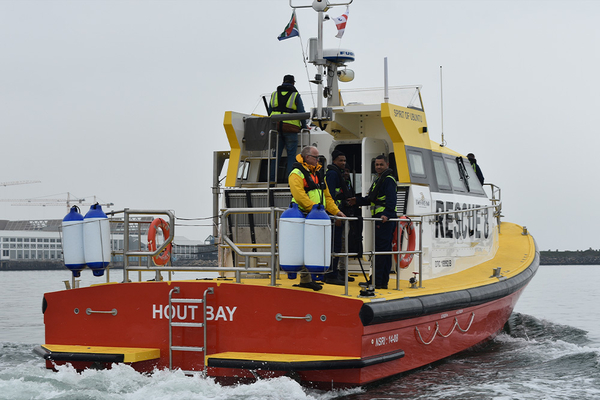
With the summer boating season approaching, many South Africans will soon be heading out onto dams, rivers and the open sea. But before launching, it's worth asking an important question: are you properly prepared for what could go wrong?
From understanding changing weather conditions to knowing how to respond in an emergency, safe boating requires more than confidence at the helm. It takes knowledge, training and preparation – and the NSRI is helping recreational boaters build that foundation.
The NSRI's free online Skipper's Guide for Small Vessels, available through its Bravo Bravo learning platform, offers aspiring and experienced boaters an accessible way to improve their knowledge of boating safety and good seamanship.
According to NSRI Regional Operations Manager and Class 1 coxswain, Dean Wegerle, the guide covers a wide range of essential topics, including seamanship, meteorology, navigation, boat handling, safety and basic first aid.
Anyone with internet access can register and work through the material at their own pace, free of charge.
Importantly, however, the guide is not a SAMSA-accredited course and does not qualify participants for a skipper's licence. Although users receive a certificate of completion, formal qualifications must still be obtained through an accredited training provider.
Instead, it provides a valuable foundation for those preparing to undertake formal skipper training, as well as an opportunity for recreational boaters to refresh their knowledge.

For NSRI Head of Fleet and Facilities Graeme Harding, proper training and meeting legal requirements go hand in hand when it comes to boating safety.
“A skipper is responsible for every person on board,” he says. “Formal training teaches the things that keep people alive when conditions change: reading the weather and the sea, handling the vessel, the rules of the road, navigation, radio procedure and what to do in an emergency.”
In South Africa, skippers operating power-driven vessels with engines exceeding 15 horsepower or sailing vessels measuring 9 metres or more require a Small Vessel Certificate of Competence. Different certificate categories determine how far from shore a skipper may operate.
Boat owners must also understand the distinction between their personal qualifications and their vessel's certification.
“The skipper's licence belongs to the person and shows they are competent to operate a vessel. The boat's certification belongs to the vessel and shows she is fit to go to sea. You need both,” Graeme explains.
Where required, vessels must also have appropriate identification markings and the necessary safety equipment.
Many boating emergencies begin with seemingly minor oversights.
Failing to check the weather, neglecting engine maintenance, carrying insufficient fuel or heading out without reliable communication equipment can quickly turn an enjoyable outing into a dangerous situation.
Lifejackets are another concern. Simply having them on board is not enough.
“In an emergency there is seldom time to put one on,” Graeme warns.
He also cautions against underestimating changing sea conditions, particularly wind, surf and cold water, which can catch inexperienced skippers off guard.
Before launching, recreational boaters should ensure their qualifications and vessel certification are current, check weather conditions and inspect their equipment.
Everyone on board should wear a lifejacket, and skippers should carry two reliable means of communication. Logging a trip using the free NSRI SafeTRX app, or sharing a route and expected return time with someone ashore, provides an additional safety measure.
Graeme also recommends following the rule of thirds when planning fuel: one third for the outward journey, one third for the return and one third in reserve.
Passengers should know where safety equipment is kept and what to do in an emergency.
Above all, boaters should recognise their limits, turn back when conditions deteriorate and call for assistance early if something goes wrong.
The message is simple: get qualified, keep learning, know your vessel and prepare before you launch.
In an emergency, contact the NSRI Emergency Operations Centre on 087 094 9774 or dial 112.

Surfski Safety: Are You Prepared?
Read More
Even experienced surfski paddlers can find themselves in trouble when conditions change or equipment fails. Here’s some advice on staying safe, being prepared and knowing when to call for help. ...

It was supposed to be a quiet afternoon of studying for NSRI lifeguard Sphesihle Mngadi. Off duty and at home preparing for a test, he was taking a break to make himself some lunch when his grandfather called out from ...
When a call comes in, there is little time for hesitation. Conditions may be deteriorating, lives may be at risk, and a rescue crew must be ready to respond. Leading the rescue operation is the coxswain, whose responsibility is to ...