


From its humble beginnings in 2006 to a nationwide drowning-prevention effort, the NSRI’s Water Safety Education programme celebrates two decades of teaching skills that save lives.
Twenty years ago, the NSRI took an important step towards preventing drownings before they happen. In October 2006, WaterWise was launched with the mission to teach children how to stay safe around water.
The programme marked a shift in thinking. What began as water safety lessons in schools has since grown into a far-reaching initiative that continues to make a difference in communities across South Africa.
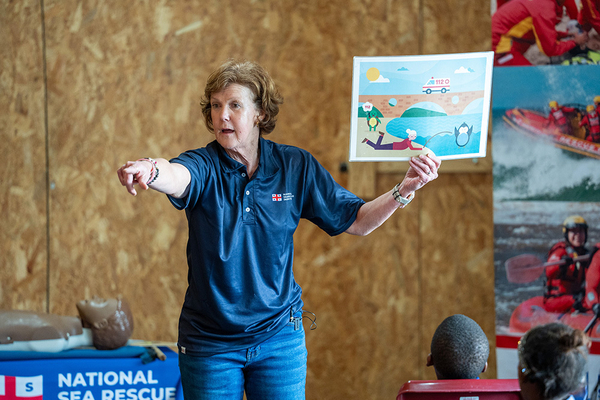
For Eoudia Erasmus, the NSRI’s very first Water Safety Education instructor, the memories of those early days remain vivid.
“At that time, my biggest hope was simply to prevent children from drowning. I wanted children to understand that water can be fun, but that it must also be respected.”
Two decades later, Eoudia is still teaching, driven by the same passion that inspired her in 2006.
Over the years, WaterWise evolved into Drowning Prevention and eventually Community Programmes, reflecting the NSRI’s expanding approach to saving lives.
Since 2006, the programme has reached more than 7.1 million people through its water safety lessons and initiatives, including repeat visits to schools and organisations – an impressive milestone in its 20-year history.
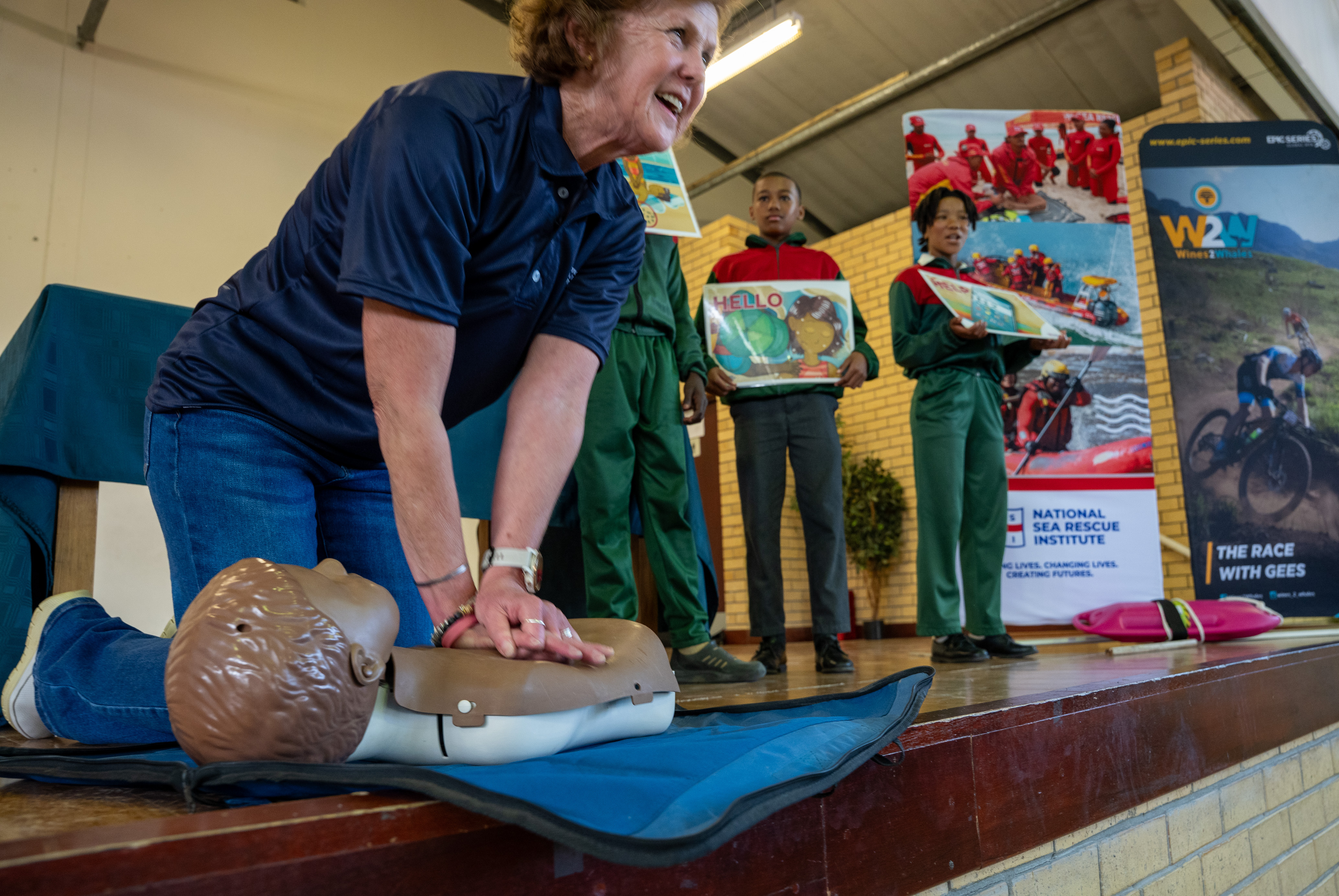
Today, the work extends beyond classroom presentations to include Survival Swimming, Pink Rescue Buoys and Water Safety for Industry, which includes helping businesses equip employees working near water with essential safety knowledge. The NSRI also collaborates with municipalities and government departments on awareness campaigns to promote water safety in communities.
According to Mthe Kweyama, NSRI’s Head of Community Programmes, the evolution has been shaped by a growing understanding of the different risks people face around water.
Teaching methods have adapted accordingly. Lessons delivered to inland communities, for example, need to address dangers such as flooding rather than focusing solely on coastal hazards.
Yet the fundamentals remain the same: recognising danger, avoiding unnecessary risks and knowing how to respond safely when someone needs help.
For Eoudia, keeping children engaged has always been essential, whether through colourful characters, stories and demonstrations or practical skills such as Hands-Only CPR.
Perhaps the greatest measure of the programme’s success lies in the moments when children put their knowledge into practice.
Six-year-old Donna-Lee survived a drowning incident after boys who had received NSRI water safety education helped rescue her and performed HandsOn CPR. In another incident, a boy from Rawsonville used two-litre bottles to help prevent a drowning.
These stories are real reminders that a single lesson can make a life-saving difference.
But the impact can also unfold over many years. Charlton Coetzee, now a Survival Swimming instructor and NSRI Coxswain, first encountered the organisation when an instructor visited his primary school. Today, he teaches children water safety and serves his community as a rescue volunteer.
Eoudia has also experienced the lasting impact of her lessons when children recognise her years later and recall what she taught them.

As Water Safety Education enters its third decade, the focus is on reaching more people and strengthening the connection between prevention and rescue.
Community Programmes is becoming more closely integrated into rescue-station life, with volunteers helping deliver lessons and instructors becoming involved in rescue operations.
Mthe hopes to see water safety education incorporated into school timetables, with greater support from the Department of Education to help instructors reach more learners. He also envisions a future in which scout groups, maritime schools, and campsite facilitators across the country are equipped to deliver water safety programmes, extending their reach beyond traditional classrooms.
Greater collaboration with schools, community organisations and the media could help bring these life-saving lessons to even more people.
For Eoudia, however, the heart of the programme remains exactly where it began.
“After 20 years, my hope is still the same as it was when I started in 2006. It is that every child we teach will be safer around water, and that fewer families will be affected by drowning.”

NSRI Shares Rescue Expertise in Madagascar
Read More
Congratulations to Spencer Oldham, Station Commander at Station 8 Hout Bay, who has won the October photograph of the month with his photograph of the Station 8 JetRIB Spirit of Gabi training at Kleinmond. It’s a photograph that puts us ...
A shared belief in the power of water – and the importance of helping people enjoy it safely – is bringing the NSRI and The Little Optimist Trust together.Recently, members of the NSRI’s Community Programmes team spent two days at ...

What began as an ordinary afternoon at Strand Beach quickly became a race against time when a swimmer was caught in a powerful rip current. As NSRI operators in the NSRI’s Emergency Operations Centre watched anxiously from their screens, an ...