


When an emergency unfolds at sea, effective coordination can mean the difference between life and death. It's a skill the NSRI knows well, and one that three of its experienced rescuers recently had the opportunity to share beyond South Africa's shores.
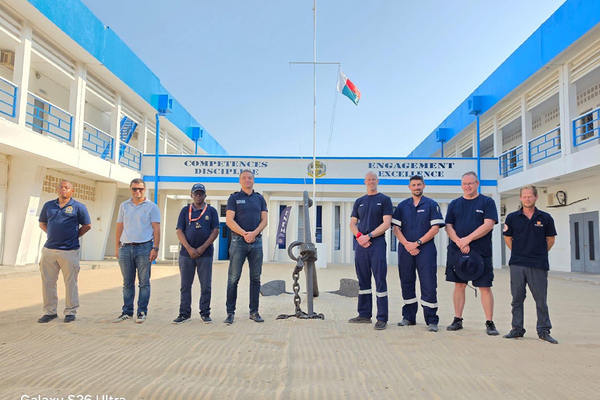
NSRI Head of Operations Charl Maritz, Regional Operations Manager Danie Verwey, and volunteer Class 1 Coxswain Andrew de Kock from Station 10 Simon's Town, travelled to Mahajanga, Madagascar, to deliver a five-day Regional On-Scene Coordinator training course.
Organised through the Indian Ocean Commission, the course brought together 22 search-and-rescue (SAR) professionals from Madagascar, Mauritius, Seychelles, Comoros, Tanzania, Mozambique and Djibouti.
The goal was to share insights on coordinating rescue operations at sea, particularly when different vessels, crews and organisations must work together.
The programme combined classroom learning, online training and practical exercises, with participants putting their new skills to the test during simulated emergencies at sea.
For many, the transition from planning an operation to taking charge on the water was challenging.
"The first practical session was difficult, as these things normally are," Danie recalls. "They were finding their feet, working with people they had only met that week, and getting used to being the ones making the calls."
But what happened next demonstrated the value of the training.
Following an honest and constructive debrief, the participants returned for their second exercise with renewed confidence. Within seven minutes of receiving an emergency call, they had appointed an on-scene coordinator. They located the casualty vessel within an hour, recovered four people and completed the operation in just over two hours.
"Same people, completely different confidence and outcome," says Danie.

Andrew was equally impressed by the participants' willingness to identify their own mistakes and learn from them.
"In just a day, they'd taken the lessons from their first exercise and translated them into a much more effective operation."
The week wasn't without its surprises. With more than half the participants not fluent in English, the NSRI team had to adapt their presentations and teaching methods to accommodate both English and French speakers.
"I found myself working quite frantically on the first morning, after the course organiser shared that very few of the attendees spoke any English at all," says Andrew.
Despite these challenges, the participants' enthusiasm and commitment stood out.
The experience also offered Charl, Danie and Andrew a valuable glimpse into the realities of maritime rescue elsewhere in the region.
Some delegations described struggling with limited funding, fuel shortages, vessels awaiting repairs, and little access to air support. Yet their determination to save lives remained unwavering.
"What stayed with me is that none of them treat any of that as a reason to stop," says Danie. "They make the best of what they have, and they go."
For Andrew, the experience reinforced his appreciation for the NSRI's volunteers, equipment and loyal supporters, while highlighting something equally important.
"I brought home a renewed appreciation for what we have in the NSRI, but also a reminder that effective rescue isn't just about equipment and resources. It's about commitment, ingenuity and the determination to help."
By the end of the week, all 22 participants had successfully completed the course and received certification.

Significantly, the Maritime SAR Council also approved the course and certified the maritime academy in Mahajanga as a training facility, establishing an ongoing training capability for the region.
For Charl, this was one of the most meaningful outcomes of the visit.
"The region now has a standing capability to train On-Scene Coordinators, rather than a once-off course."
The experience also strengthened relationships between rescue professionals across seven countries, creating opportunities to exchange knowledge and support future training initiatives.
For the NSRI, the invitation reflects growing international recognition of the expertise developed through its rescue operations at home. But the experience was as much about learning from others as it was about sharing knowledge.
"Search and rescue does not stop at a border," Charl concluded, "and neither should cooperation."

20 Years of Water Safety Education
Read More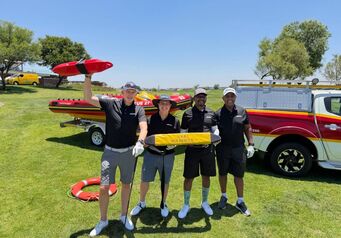
If you joined us at the DHL Golf Day at Serengeti Estates on 13 November, you'll remember the NSRI rescue boat on display at Hole 10. It might have looked a little out of place on a golf course. But ...

Dean Wegerle, NSRI regional operations manager, said: During this past weekend, preparations were made for NSRI Bakoven to assist, on Monday morning, 16 November, to ferrying 2 local sailors to an International sailing yacht taking part in the Golden Globe ...

At 14h52, Saturday, 14 November, NSRI Bakoven duty crew were activated following eyewitness reports of 2 persons swept out to sea on surf-ski's and appearing to be stranded on rocks offshore of Oudekraal, on the Atlantic Seaboard. ...