


Earlier this year, 196 young people began a journey to become stronger water-safety leaders in their communities. Now, four of them have taken a significant step forward by completing an intensive five-day lifeguard readiness programme with the NSRI.
Through an ongoing partnership between the NSRI and SCOUTS South Africa’s Western Cape Region, 196 YeboScouters participated in water-safety activities earlier this year. Twenty-five have since been trained as drowning-prevention educators, while four candidates – Yeboneer Ameer Abrahams, Academy Student Ryan Hendricks, Yeboneer Lauren Kelly, and Scouter Danielle Kriel – have progressed to the lifeguard pathway.
For SCOUTS SA Western Cape Region Scouting-in-Schools Programme Manager Tasmin Kriel, seeing them reach this point is a proud milestone.
“They have shown commitment, resilience, discipline, and a willingness to keep learning despite the challenges and responsibilities that they face in their daily lives,” she says.
Those qualities matter because becoming a lifeguard requires far more than being a strong swimmer. Lifeguards need situational awareness, emergency medical skills, teamwork, sound decision-making and the ability to remain alert under pressure. Most importantly, their work begins before a rescue is ever needed.
“A lifeguard's real skill is prevention,” explains NSRI Lifeguard Operations Manager Rebecca Carter-Smith. “Most of the job is stopping incidents from happening in the first place.”
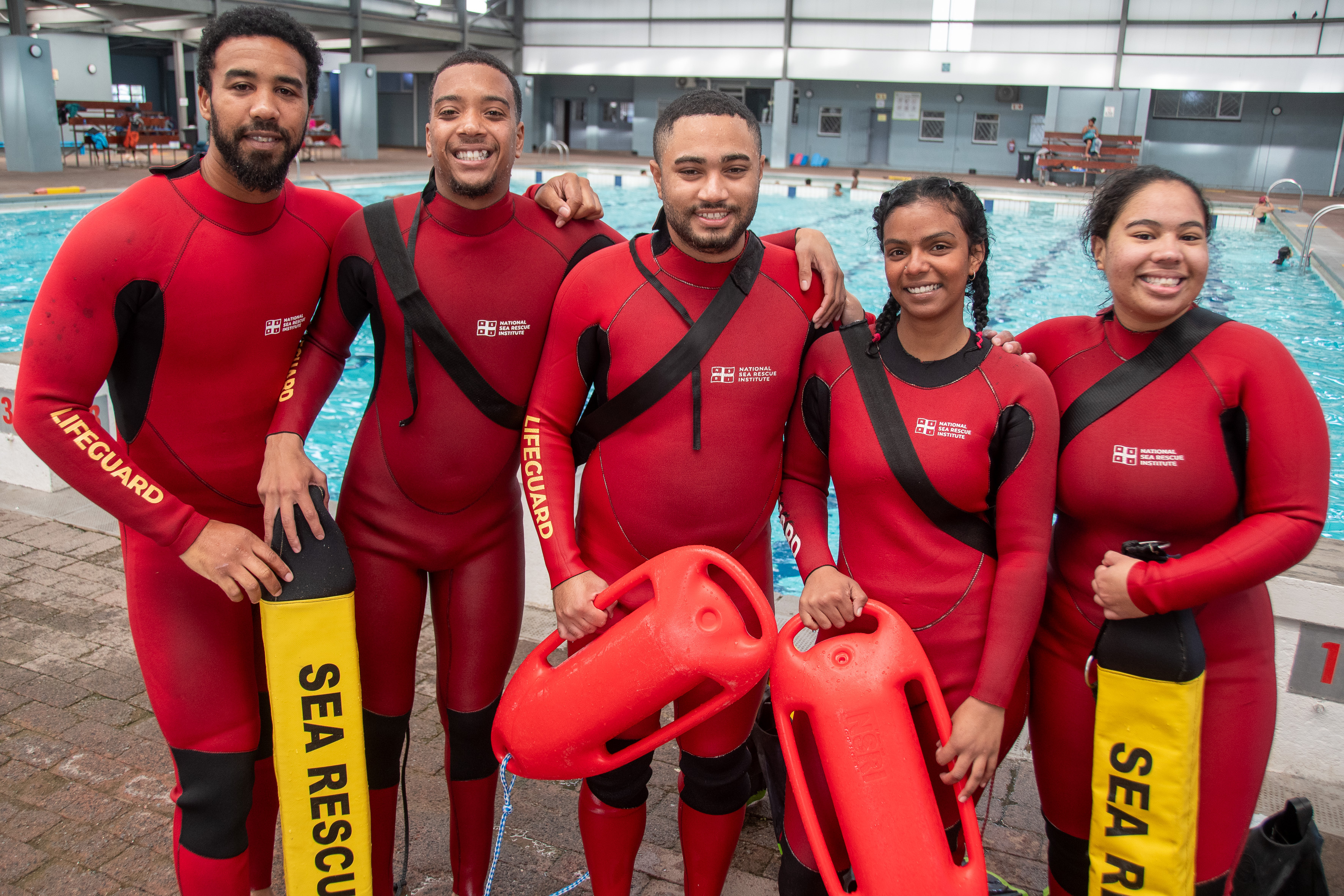
When NSRI Lifeguard Trainer Abijah Appolis arrived at Retreat swimming pool in Cape Town to begin the programme, he was unsure what level of swimming ability he would encounter. What quickly became clear, however, was the candidates’ determination.
“When we started, I saw that they wanted to do this and put the effort in,” he says.
Over five days, the candidates worked through the demanding skills required of a pool lifeguard. All four successfully completed their CPR skills test, shallow-water rescue scenarios, spinal management and patient recoveries.
But perhaps their most striking progress happened in the water.
“The biggest improvement was in their swimming. From not being able to swim the 25-metre length of the pool to swimming 16 of those lengths,” says Abijah. “Even though the speed to make qualifying time is not quite there yet, they’ve still made large strides in progress.”
Their swimming fitness remains the final hurdle. The candidates will continue training before returning to complete the required timed swim assessment, along with their final theory and practical assessments.
For Rebecca, their progress is already an encouraging indication of their potential.
“What stands out isn't just that they've picked up the physical skills, it's the discipline and consistency they've shown moving from foundation fitness and theory through to practical rescue scenarios in a short, intensive programme,” she says.
That is also why the programme’s impact extends beyond the question of whether all four ultimately qualify as lifeguards.
NSRI Honorary Life Governor and NPO Cooperation Project Leader Keith Burchell sums up the broader ambition behind the partnership in six words: “Saving lives, changing lives, and creating futures.”
By equipping young people with water-safety knowledge, practical skills and opportunities to serve, the partnership is building capacity within the very communities where those skills can make a difference.
As Tasmin puts it: “Beyond the technical skills, they have become role models who can promote water safety, inspire others, and make a positive difference in their schools and communities.”
For these four YeboScouters, the next challenge is clear: keep swimming, keep training and get those qualifying times down.
And if their first five days in the pool are anything to go by, they have already shown they are prepared to work for it.

Raising the Alarm: The Importance of Rescue Communications
Read More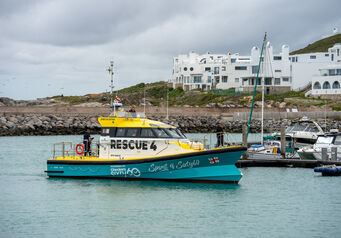
A gift celebrating a couple’s wedding anniversary. A tribute to a mother who quietly supported sea rescue. A husband’s thank you to the wife who helped him through recovery. These are some of the stories carried by Rescue 4, the ...
The National Sea Rescue Institute (NSRI) today announced the winner of its Monthly Giving draw and the winner of the second car in its 2026 Cars4Good competition, both held in support of the organisation's lifesaving work on South Africa's waters. ...

Melinda Snyman, NSRI St Lucia station commander, said: Shortly after 09h00, on Thursday morning, 8 October, a local fishing vessel capsized while attempting to launch through the surf at Cape Vidal, approximately 30 kilometres North of St Lucia. A S.T.A.R.T ...