


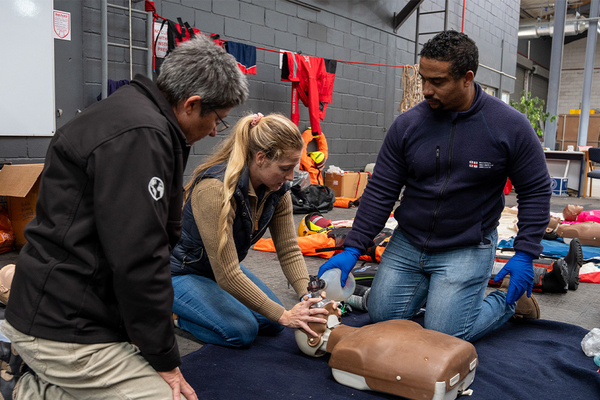
When someone steps forward to help in an emergency, the quality of their training can make all the difference. For the NSRI, ensuring that volunteers, crew members and communities receive the highest standard of first aid training has always been a priority.
Now, that commitment has reached an important new milestone.
After more than a year of dedicated work, the NSRI has officially received accreditation from the Quality Council for Trades and Occupations (QCTO) to deliver a Basic Emergency First Aid Responder (BFAR) Skills Programme, an NQF Level 2 registered qualification.
The achievement means successful learners will receive a nationally recognised certificate issued directly by the QCTO, while positioning the NSRI as an accredited first-aid training provider.
The first group to complete the accredited course consisted of Community Programmes Instructors, who attended training from 17 to 19 July. Their success marked the beginning of an exciting new chapter for the organisation.
Achieving accreditation required far more than simply updating an existing course. According to NSRI Lifeguard Operations Manager Rebecca Carter-Smith, the process meant creating an entirely new training framework that met rigorous national standards.
“The QCTO accreditation required us to develop a complete training package from scratch: a detailed curriculum aligned to occupational outcomes, assessment tools, facilitator guides, learner manuals, and quality assurance processes.”
One of the biggest challenges was finding the right balance between theory and practical application – “rigorous enough for QCTO accreditation, but specific and practical enough that our crew and volunteers could see exactly how it applied to what they do,” Rebecca explains.
The process also demanded significant personal growth.
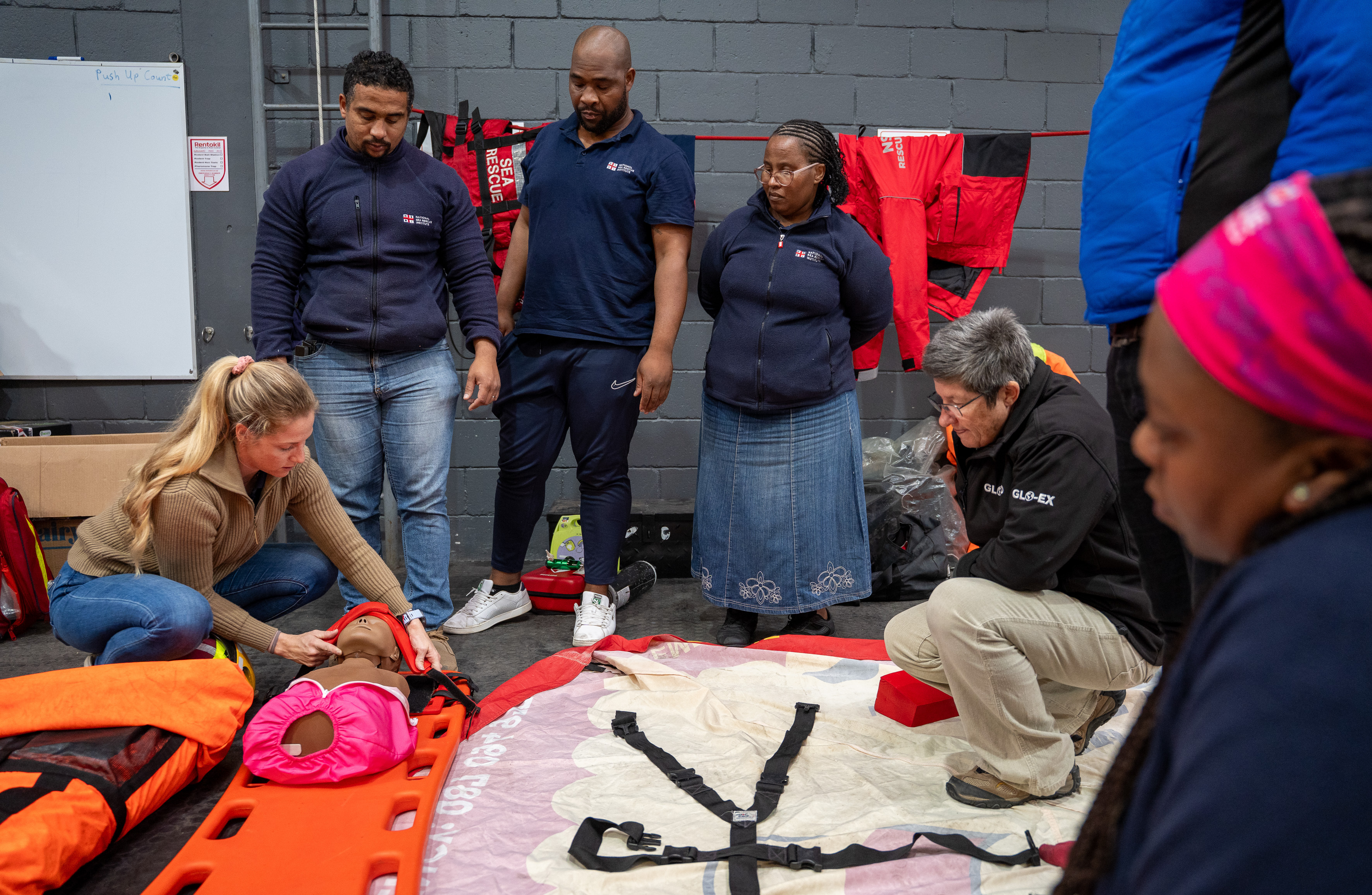
“I'll be honest, I'm not a curriculum design expert, so this was a huge learning curve,” Rebecca says. “Everything needed to be checked, verified, and tested to make sure it actually worked in practice and that we could run and administer it properly.”
While the accreditation recognises the quality of the NSRI's training systems, its greatest impact will be on the people who complete the course.
“It's transformative,” says Rebecca. “An NSRI internal certificate was valuable within our organisation, but a QCTO-registered qualification is nationally recognised and portable."
That means volunteers and crew members gain a qualification recognised by employers and health authorities across South Africa. At the same time, communities can be confident they are receiving training that meets nationally approved standards.
For NSRI Community Programmes Team and Projects Coordinator, Caville Abrahams, the benefits are already clear.
"Schools, community organisations, and other partners have often asked whether we could provide accredited first aid training. Now we can meet that need."
The accreditation also strengthens opportunities to expand life-saving skills into schools, workplaces and communities across the country.
KwaZulu-Natal Water Safety Coordinator and Community Programmes Manager, Siya Mthethwa, believes it complements the organisation's broader mission.
"While the NSRI is widely recognised for its leadership in water safety and rescue, this accreditation expands our impact by enabling us to build lifesaving skills beyond drowning prevention."
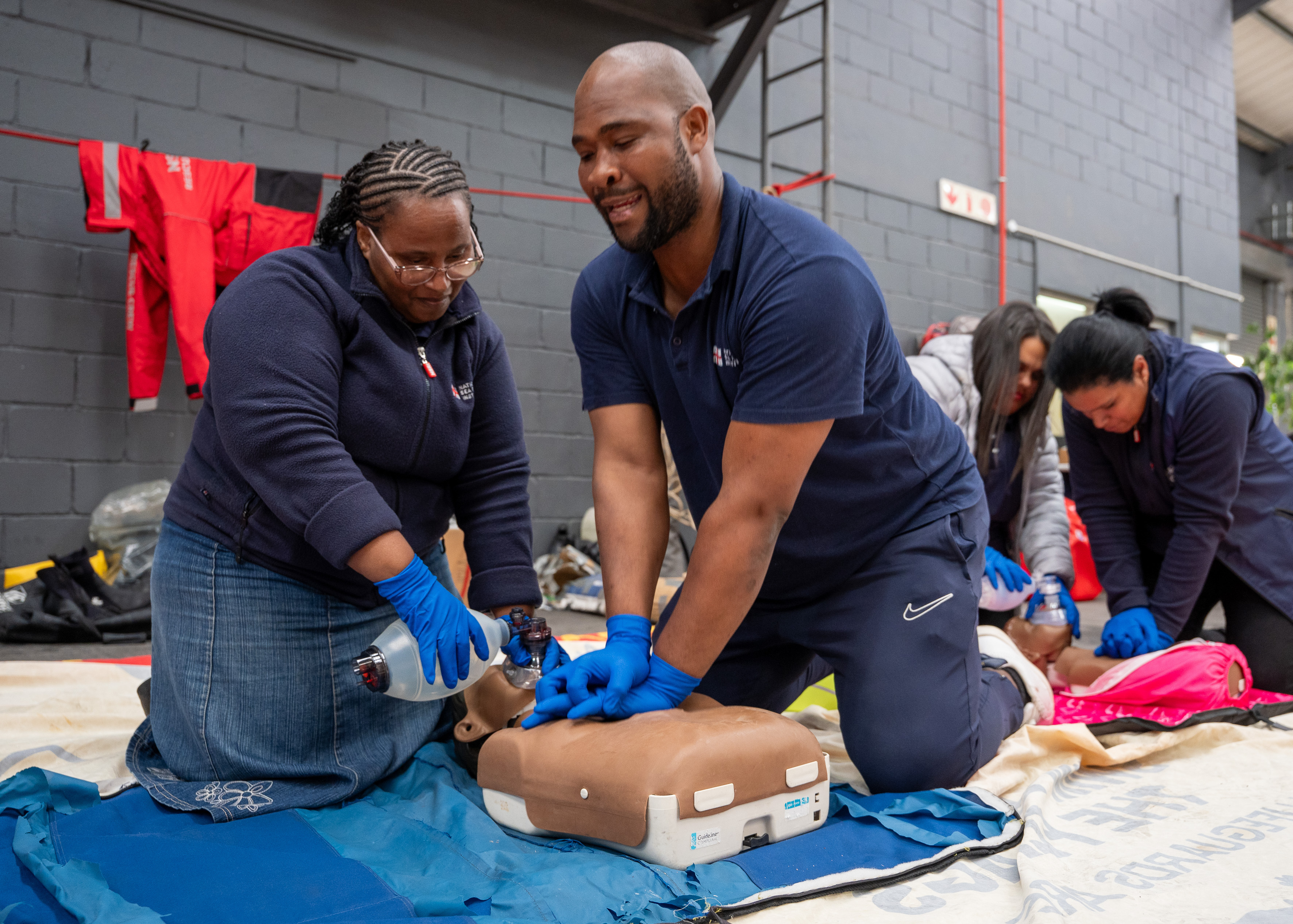
By combining accredited first aid training with existing water safety education and survival swimming programmes, the NSRI can help communities both prevent emergencies and respond effectively when they occur.
Looking ahead, Rebecca says the vision is to roll out accredited training across the NSRI's rescue station network before expanding further into community programmes.
Seeing the first group of instructors successfully complete the course confirmed that all the hard work had been worthwhile.
"It’s validation that the whole system works," she says. "Seeing them complete the training confirms we've built something real and assessable, not just paperwork."
Furthermore, it is an investment in stronger volunteers, more resilient communities and, ultimately, more lives saved.

Suzuki Drives Deeper Support for NSRI Operations
Read More
A gift celebrating a couple’s wedding anniversary. A tribute to a mother who quietly supported sea rescue. A husband’s thank you to the wife who helped him through recovery. These are some of the stories carried by Rescue 4, the ...
The National Sea Rescue Institute (NSRI) today announced the winner of its Monthly Giving draw and the winner of the second car in its 2026 Cars4Good competition, both held in support of the organisation's lifesaving work on South Africa's waters. ...

Melinda Snyman, NSRI St Lucia station commander, said: Shortly after 09h00, on Thursday morning, 8 October, a local fishing vessel capsized while attempting to launch through the surf at Cape Vidal, approximately 30 kilometres North of St Lucia. A S.T.A.R.T ...