


When people think of the NSRI, images of brave crews battling Cape storms often come to mind. But South Africa’s inland dam stations face a unique set of challenges that are just as demanding. From Gariep Dam to Hartbeespoort, these stations keep the country’s freshwater playgrounds safe, responding to emergencies that range from stranded boats to medical crises.
At Gariep Dam, Station Commander Ernie Griesel describes a typical day: “The most common incidents we respond to at Station 51 include towing yachts and motorboats that have run out of fuel or experienced engine problems. Storms can quickly turn the calm waters of the dam into dangerous conditions, and we are often called out to assist vessels in distress during sudden weather changes.”
The station also supports national events and runs drowning prevention programmes at schools and camps. “As Gariep Dam currently has no resident doctor and the nearest private hospitals are in Bloemfontein, about 200 km away, we also respond to land-based medical incidents, providing first aid and stabilisation while awaiting ambulance services.”
Operating inland brings its own set of challenges. “Fresh water has less buoyancy than salt water, which means there’s more drag on the hull of a boat and it takes more effort for someone in the water to stay afloat,” Ernie explains. “During the rainy season, sudden thunderstorms can create waves up to two metres high, forming close together and posing serious danger.” He adds, however, that their new 1800 JetRIB has significantly improved response times, allowing the crew to reach vessels in distress faster and more efficiently.
At Vaal Dam, Station Commander Bradley Naicker faces similar pressures. With 1 600 km of shoreline to monitor, social media and local clubs play a key role in spreading safety awareness.
“The weather conditions change so quickly with massive storms that at times give us up to 2 metre waves within seconds with high winds,” he notes. The vastness of the dam can make rescues complex, sometimes requiring crews to reach remote areas inaccessible to larger vessels. Flood response training has also become increasingly crucial as inland stations collaborate to manage swift water rescues.
Hartbeespoort Dam, Station 25, faces a different set of obstacles. Hyacinth infestations create treacherous conditions for boats, and the area sees a high volume of recreational traffic.
Station Commander Arthur Crew acknowledges the difficult aspects of his role: “The biggest incidents we deal with include serious storms and body recoveries, for various reasons. Some involve tragic circumstances, including people taking their own lives.”
He stresses the dangers of underestimating inland water, saying, “People don't always understand the risk in terms of the water. Thousands of people can be out on the water at one time, and when storms come up, they don't get off the water immediately, and that's also where they run into trouble.”
Despite these challenges, inland dam crews are well-equipped and highly trained. Boats are designed to handle freshwater conditions, which, while reducing corrosion, also require consideration for drag and altitude.
The crews’ readiness is key: from staying close to the station during busy holiday periods to monitoring radar for incoming storms, they are always prepared.
Whether it’s towing stranded yachts, rescuing swimmers in sudden storms, or responding to medical emergencies far from hospitals, South Africa’s inland NSRI stations prove that life-saving work is not just a coastal pursuit, it’s a nationwide commitment.
To keep South Africa’s dams safe, the NSRI relies on the dedication of volunteers. With training and guidance, community-minded individuals can join these teams, supporting life-saving operations and making a real difference for people on the water.
If you’re interested, you are welcome to contact any of the inland stations via the NSRI website.

Support the NSRI through the Woolworths MyDifference Programme Get back
Read More
Four nautical miles off the Port of Durban, NSRI Durban crew carried out a maritime medical evacuation on Saturday, 26 September, bringing an injured seafarer safely ashore for further treatment. ...

A man has died after getting into difficulty while bodyboarding at Kenton-on-Sea middle beach on Friday, 25 September, despite the efforts of three Good Samaritans and NSRI Port Alfred crew to save his life ...
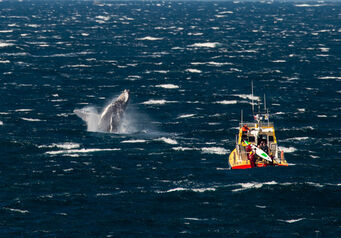
Congratulations to Charles Booysen, who took this cracking good photograph of a humpback whale breaching in False Bay, while a 73-year-old man who called for help by activating SafeTrx was rescued by Station 10 Simon’s Town volunteers on the 25th ...