


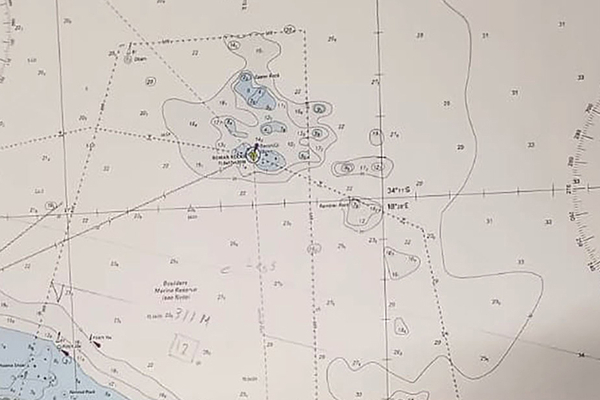
Over the past year, the NSRI has been part of an exciting project to strengthen search and rescue efforts along South Africa’s coastline – from the stormy seas of the Western Cape to the warm waters of KwaZulu-Natal.
With support from MarCOSIO (Marine and Coastal Operations for Southern Africa and the Indian Ocean) and in partnership with the Council for Scientific and Industrial Research (CSIR), the NSRI has run a series of hands-on training exercises designed to help crew members respond even faster and more effectively when someone is in trouble at sea.
These sessions brought together professional responders and volunteers, who practised everything from man-overboard rescues to vessel capsizes and night-time emergencies. The goal? To make sure that when the call comes in, we’re ready.
A big part of this training focused on using the latest tools and technology to speed up response times. Together with the CSIR team, the NSRI has helped develop new software that quickly calculates the best possible search area based on wind, weather, and ocean currents. This means that vital information can be sent to rescue boats in seconds, giving crews a better chance of finding someone quickly.
The NSRI also trained with real-time weather updates, current tracking, and AIS (Automatic Identification System) to track vessel movements. These tools make a huge difference when time is of the essence.
The ocean is constantly moving, and one of the most valuable parts of the training was learning how to better predict where people, vessels, or debris might drift. CSIR’s ocean scientists showed NSRI crews how to model these movements using data on tides, waves and wind, helping first responders make smarter decisions during a rescue.
NSRI volunteers were front and centre in every training session. Their local knowledge, commitment, and willingness to learn made a significant impact and reminded everyone just how vital volunteers are to saving lives along our coast. These exercises also allowed newer crew members to experience realistic rescue conditions in a safe and supportive setting.
As climate change and increased sea traffic bring more challenges to our coastline, it’s more important than ever to be prepared. Thanks to this collaboration between NSRI, CSIR, and MarCOSIO, we’re building a smarter, faster, and more connected response network — one that’s ready to protect everyone who works, travels, or plays along our shores.
This training has been a big step forward. With the right tools, people, and partnerships, the NSRI is working hard to ensure that no call for help ever goes unanswered.

A speed fine with a twist: NSRI surprises households with creative campaign
Read More
Norman Rautenbach, NSRI Richards Bay station commander, said: At 14h29, Monday, 19 October, NSRI Richards Bay duty crew were placed on alert to prepare for a maritime medical evacuation operation for 3 male seafarers injured onboard a 292-meter bulk carrier ...

A 48-year-old man from Belgium is expected to be discharged from hospital today after a non-fatal drowning incident at a remote beach between Brenton-on-Sea and Buffalo Bay on Monday afternoon. The man, on a cycling holiday with his family, is ...

On Saturday morning, NSRI Port Nolloth volunteers on a routine training exercise responded when a local mining vessel raised concern for three of her crew who had gone ashore on their RHIB (rigid hull inflatable boat) and not been heard ...