


NSRI training manager Graeme Harding shares insights from the International Mass Rescue Conference in Gothenberg Sweden.
On 12 June, rescue professionals from all over the world travelled to Gothenberg, Sweden, to attend the two-day International Mass Rescue Conference, hosted by The Swedish Sea Rescue Society – and NSRI’s training manager Graeme Harding was among them.
The theme was 'Sharing Experiences in Challenging Times', and provided opportunities to learn from mass rescue operation case studies on a global scale, examining the challenges and assessing the impact on search-and-rescue (SAR) responders, as well as reviewing the latest tools and technologies. Another theme was the safeguarding of SAR responders’ mental health and conducting safe SAR operations during a pandemic.
The NSRI prides itself on professional, progressive and world-class rescue operations and training, so, naturally, attending international events of this nature are an essential opportunity to gain exposure to any new and improved strategies, tools, equipment and training.
Harding was proud to note that NSRI operations are on par with international best practices. “I can say we can stand shoulder to shoulder with most of the rescue organisations worldwide, however as former NSRI operations manager Mark Hughes always says, continual improvement is key to success. We will be doing a major review of all of our mass rescue policies to plan for the worst, but hope for the best.”
“We have one of the busiest shipping routes around our country, not to mention the ferries that run in and around all of the major harbours,” says Harding. “Then there are all of our international airports, which have aircraft landing and taking off over the ocean, which means we have the possibility of a mass rescue incident happening in our territorial waters almost every day. My biggest learning from the conference is that we need to have a strong mass rescue plan for each region around our coastline. Obviously, we hope to never have to put it into effect. However, if we find ourselves in the position of needing one, it will need to be en pointe.”
As the next steps toward putting these plans in place are outlined, it’s reassuring to know that the NSRI is always looking to improve its rescue capacity.

An international collaboration
Read More
Melinda Snyman, NSRI St Lucia station commander, said: Shortly after 09h00, on Thursday morning, 8 October, a local fishing vessel capsized while attempting to launch through the surf at Cape Vidal, approximately 30 kilometres North of St Lucia. A S.T.A.R.T ...
Melinda Snyman, NSRI St Lucia station commander, said: Shortly after 09h00, on Thursday morning, 8 October, a local fishing vessel capsized while attempting to launch through the surf at Cape Vidal, approximately 30 kilometres North of St Lucia. A S.T.A.R.T ...
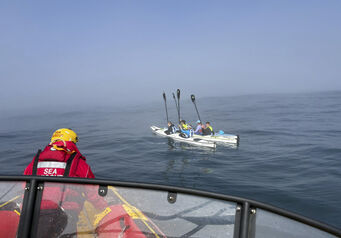
Five paddlers who became lost in dense fog off the Atlantic Seaboard on Tuesday, 13 October, are safe after a SafeTRX emergency alert from one of their group led NSRI crews to them 1.3 nautical miles off Clifton. ...