


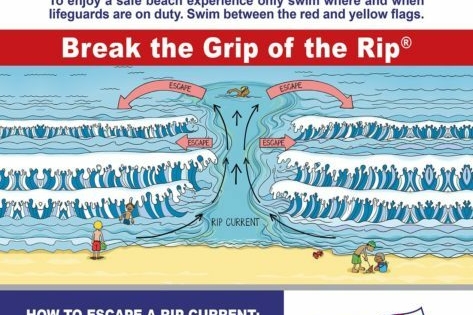
 NSRI are urging extreme public caution around the coast over this school holiday period and during the approaching long weekend.The FULL MOON SPRING TIDE peaks on Saturday the 31st March.(This is a Blue Moon - the second full moon of the month).NSRI are urging public safety awareness about Spring Tides around this approaching full moon Spring Tide to highlight safety around the coast and general safety to bathers, anglers coastal walkers and boaters around the coast as well as safety at inland rivers, dams and lakes and at swimming pools.With the approaching full moon Spring Tide beach bathers and shoreline anglers are most at risk.This full moon Spring Tide which peaks on Saturday 31st March means that from today until the middle part of next week the Spring Tides high tide and low tides will gradually start to increase in intensity, peaking on the 31st and then gradually decreasing in intensity until at least about the 5th April.NSRI, Lifeguards and the emergency services are on high alert.The National contact number to report a sea rescue emergency: 112 (from a cellphone) and we encourage anyone going to the beach anywhere around the coastline to look up the local sea rescue emergency number on our web page www.nsri.org.za and save both of the sea rescue emergency numbers to your phones.Rip currents will be stronger during this period and we are urging bathers to only go to beaches where and when lifeguards are on duty, obey the instructions of the lifeguards and swim within the safe demarcated zones that lifeguards post using their red and yellow flags and obey the instructions of the lifeguards and law enforcement authorities at our beaches.Spring Tide happens twice every month, at full moon and at new moon.Spring Tides bring a higher than normal high tide and a lower than normal low tide, causing stronger than normal rip currents, for a few days leading up to the full moon OR new moon, peaking on the day of the full moon OR new moon and lasting for a few days after the full moon OR new moon.There are two high tides and two low tides every day. During Spring Tide the twice daily high tides are higher than normal and the twice daily low tides are lower than normal and while rip currents are always present the Spring Tide creates stronger than normal rip currents.Rip Currents are caused when the water reaching the shoreline in waves, swells and sea currents retreats back into the sea and this is achieved in rip currents (a river of water retreating through the incoming swells back out into the sea).There are two types of rip currents, permanent rip currents - found alongside islands, rocky outcrops jutting into the sea, at river mouths, in between reefs and alongside harbour walls and piers, are found constantly occurring in the same place allowing the water reaching the shoreline to retreat back into the sea in the permanent rip current and then there are temporary rip currents - found along beach fronts (along the shoreline) and they are forever changing their position and are unpredictable and can form suddenly along a beach front without warning at different places along the shore front throughout the day.During Spring Tide these permanent rip currents and temporary rip currents are stronger than normal and although rip currents at all times pose a danger to bathers they pose the greatest danger during the Spring Tide.Bathers are at risk of being swept out to sea by rip currents while swimming or wading in water along the beach front. Even bathers wading in shallow water who find themselves trapped in a rip current that forms suddenly are at risk of being swept out to sea by rip currents.WHAT TO DO IF CAUGHT IN A RIP-CURRENT:Bathers caught in a rip current should not panic. Simply stay afloat by treading water (moving your arms and legs in circular movements), don’t try to swim against the current as it will only cause you exhaustion and let the current sweep you out to sea but at your first opportunity swim parallel to the beach front until you are free of the rip current and then use the incoming waves to get back to shore.While this is happening scream for help and wave to alert people on the beach to raise the alarm.ADVICE TO BATHERS and ANGLERS:Swim at beaches only where lifeguards are on duty and obey the instructions of the lifeguards and only swim within the safe swimming zones lifeguards mark (using their red and yellow flags).Children should have responsible adult supervision around coastal and inland waters.Anglers fishing along the shoreline, particularly along rocks on the shoreline, are at greatest risk during the Spring Tide where incoming waves during the high tides engulf higher than normal over rocks.Anglers should not turn their back to the sea and should be vigilant and cautious of the wave action at all times while fishing.ADVICE FOR BOATING SAFETY:Boaters, paddlers, sail boarders and anyone launching any kind of craft onto water should wear their life-jackets at all times while on water and carry easily accessible safety equipment - red distress flares, communications cellphone or VHF radio with fully charged batteries in water tight plastic sleeves, a waterproof torch, highly visible neon coloured clothing, a referee whistle worn around the neck, and let a responsible person know your time of departure, your exact intended route and your estimated return time and check in with the responsible person on your safe return. (If you are overdue the responsible person should raise the alarm without hesitation).All coastal paddlers and boaters are urged to download the free cellphone application NSRI RSA SafeTrx which allows a user to program their route into the cellphone app and in an emergency alert sea rescue authorities who can determine the exact position of the user in an emergency.ESSENTIAL SAFETY TIPS:Everyone living along the coast or visiting the coast should have their local Sea Rescue Emergency phone number programmed in their phone.1 Swim at beaches where and when lifeguards are on duty.Lifeguards are on duty at selected beaches between 10 and 6pm on weekends and during the week in summer school holidays. Listen to their advice and talk to them about safety on the beach that you are visiting. They are the experts on that beach. If lifeguards are not on duty do not swim.


Trawler takes on water at moorings:
Read More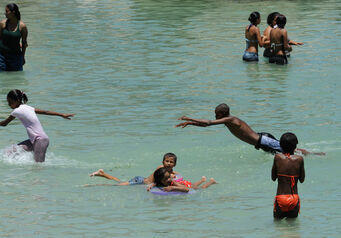
As the weather improves and school holidays start, the National Sea Rescue Institute (NSRI) has seen an increase in rescue activity along parts of South Africa’s coastline and urges the public to take water safety precautions when visiting beaches, swimming ...
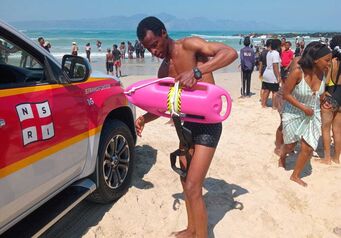
Two NSRI rescue swimmers battled extremely strong rip currents to pull a swimmer to safety at Monwabisi on Sunday, 20 September, after NSRI Strandfontein crew spotted him in trouble while carrying out routine equipment checks at the station's auxiliary satellite base. ...

NSRI Port Alfred and Kenton-on-Sea, together with Police and local security partners, are continuing an extensive search operation after a 20-year-old man went missing while night fishing on the banks of the Kariega River. ...
