


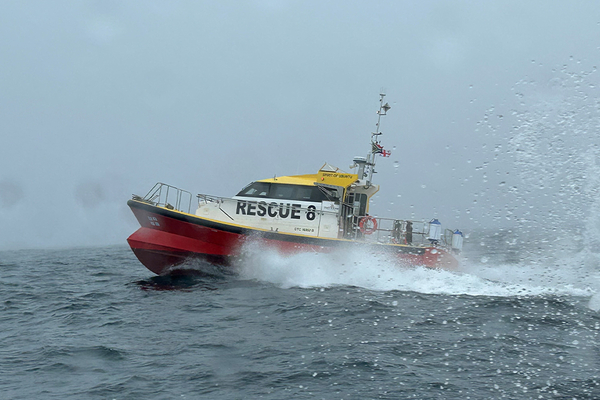
Eight years ago, Alick Rennie became the first of a new generation of Offshore Rescue Craft (ORCs) to join the NSRI fleet. Today, with eight ORCs built and the programme completed, the vessel that helped usher in a new era of offshore rescue provides a fitting starting point for looking back at what has been achieved.
The programme represented a significant undertaking for the NSRI: replacing an ageing Class 1 fleet with modern rescue vessels capable of meeting the evolving demands of rescue operations across South Africa.
NSRI Chief Operating Officer Brett Ayres says the decision grew from the realisation that the organisation’s Class 1 fleet, made-up of vessels dating back to the early 1980s, was reaching the point where another round of refurbishment was no longer the best long-term solution.
The NSRI therefore chose to invest in modern technology, improved seakeeping and greater crew safety and comfort.
“Broadly, the decision to invest in these vessels was certainly the correct one,” says Brett.
The NSRI also opted for a larger 14.8-metre vessel, which offers increased capability but requires greater investment in infrastructure and crew training.
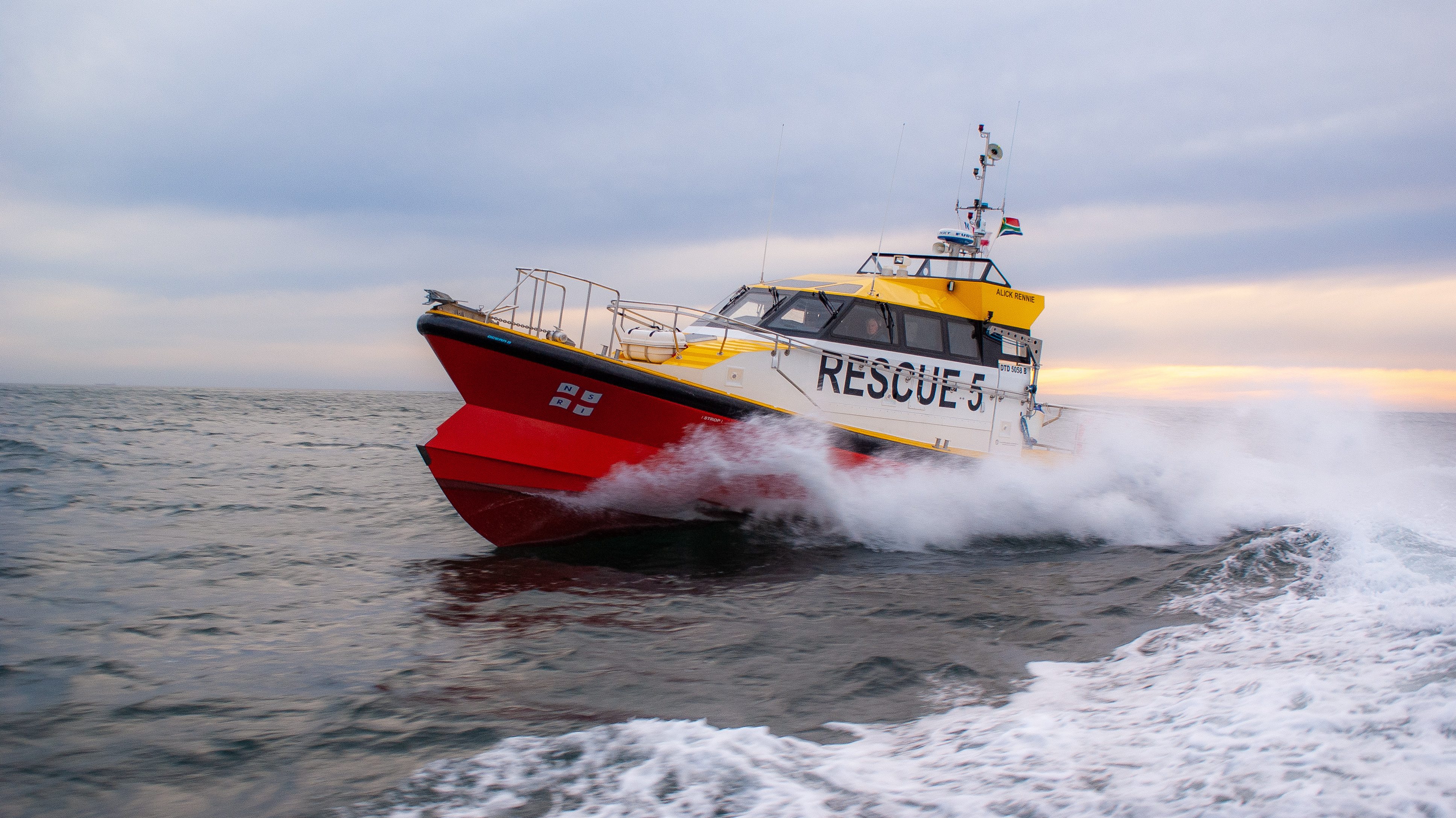
The first ORC, Alick Rennie, was built entirely in France and established the benchmark for the programme. The second had its hull built in France before being fitted out in South Africa, while the rest of the fleet were built entirely locally.
“The build quality in South Africa certainly is world-class,” Brett says. “The South African vessels are excellent.”
The value of the new vessels quickly became evident in real-world operations.
One development that coincided with the introduction of the ORCs was a substantial increase in maritime medical evacuations. The ORC’s greater deck space, handling characteristics, and ability to work alongside large ships have made the vessels particularly well-suited to these operations.
They can also travel further offshore and maintain speed in rougher conditions, while improved seakeeping and shock-absorbing seating reduce the physical strain on volunteer crews during long rescues.
“They’re at the top of their class,” Brett says. “They’re out at sea virtually every week, if not a couple of times a week, both on training and for rescue operations.”
For Clifford Ireland, who was involved in the ORC build programme from its earliest stages, seeing the project reach this point carries special significance.
“The ORC build was a very big project that I was involved in from day one, and to see the last boat actually be launched and go down and sail in Cape Town harbours, it’s almost like your children have grown up,” he says.
Clifford adds that the scale of the ambition was daunting at the outset.
“Some of the days were like, ‘Is this going to happen? The cost of it is just so much. Can we afford it? Are we going to get this done?’”
Eight vessels later, the answer is clear.
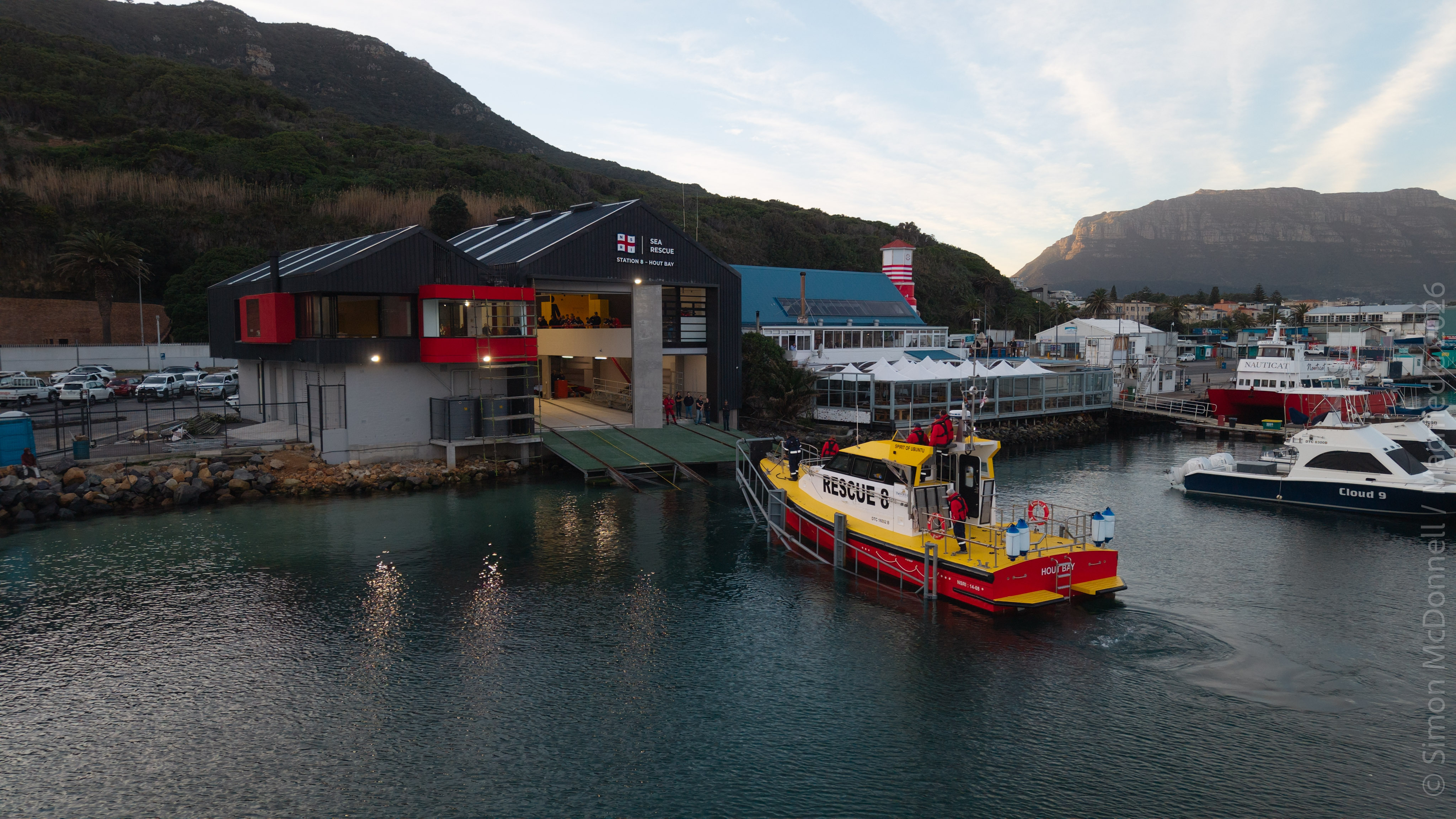
The NSRI has invested more than R300 million in the ORC vessels and the infrastructure required to accommodate them. Designed for an operational lifespan of around 40 years, they represent an investment intended to serve rescue crews and communities for decades.
The focus now shifts to maintaining the vessels and, crucially, developing the volunteer crews needed to use their capabilities fully.
“It needs to be run by a crew of highly trained people,” Brett says. “Volunteers are the lifeblood of what the organisation is about and making sure we capacitate volunteers for today and for tomorrow into the future is really the next big focus area.”
From Alick Rennie entering service eight years ago to a fleet of eight ORCs today, the programme marks the successful completion of one of the NSRI’s most significant long-term investments, and the beginning of decades of service still to come.

In Memory of Graham Howes: New Rescue Vessel to Carry His Legacy
Read More
A gift celebrating a couple’s wedding anniversary. A tribute to a mother who quietly supported sea rescue. A husband’s thank you to the wife who helped him through recovery. These are some of the stories carried by Rescue 4, the ...
The National Sea Rescue Institute (NSRI) today announced the winner of its Monthly Giving draw and the winner of the second car in its 2026 Cars4Good competition, both held in support of the organisation's lifesaving work on South Africa's waters. ...

Melinda Snyman, NSRI St Lucia station commander, said: Shortly after 09h00, on Thursday morning, 8 October, a local fishing vessel capsized while attempting to launch through the surf at Cape Vidal, approximately 30 kilometres North of St Lucia. A S.T.A.R.T ...