


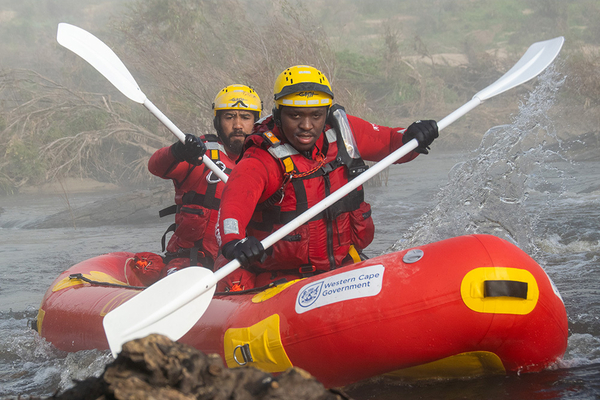
When floodwaters rise, rescuers face an environment that can change in seconds. Water moves with relentless force, familiar landscapes disappear beneath it, and hazards are often hidden below the surface.
For the NSRI, these conditions are becoming an increasingly important part of rescue preparedness. In July, volunteers and operational personnel took part in a Swiftwater Rescue Course facilitated by NSRI VSC Training Team, building the specialist skills needed to operate more safely and effectively in fast-moving water.
Swiftwater rescue was once a relatively specialised and localised capability. But as NSRI Head of Operations Charl Maritz explains, the organisation is seeing a growing need to prepare more stations’ crews beyond their traditional operational environment.
“Inland flooding is no longer an occasional event. It's a recurring operational reality, particularly in the Western Cape interior and Garden Route.”
NSRI crews are increasingly being called on to assist during inland flooding, including stations not traditionally considered swiftwater-focused. That makes broader awareness of the risks, terminology and techniques of this type of rescue increasingly valuable.
The training also supports the NSRI’s broader evolution from sea rescue to a wider water-rescue and drowning-prevention mandate. At the same time, it prepares crews to work effectively alongside emergency services, Disaster Risk Management teams and municipalities during large-scale incidents.
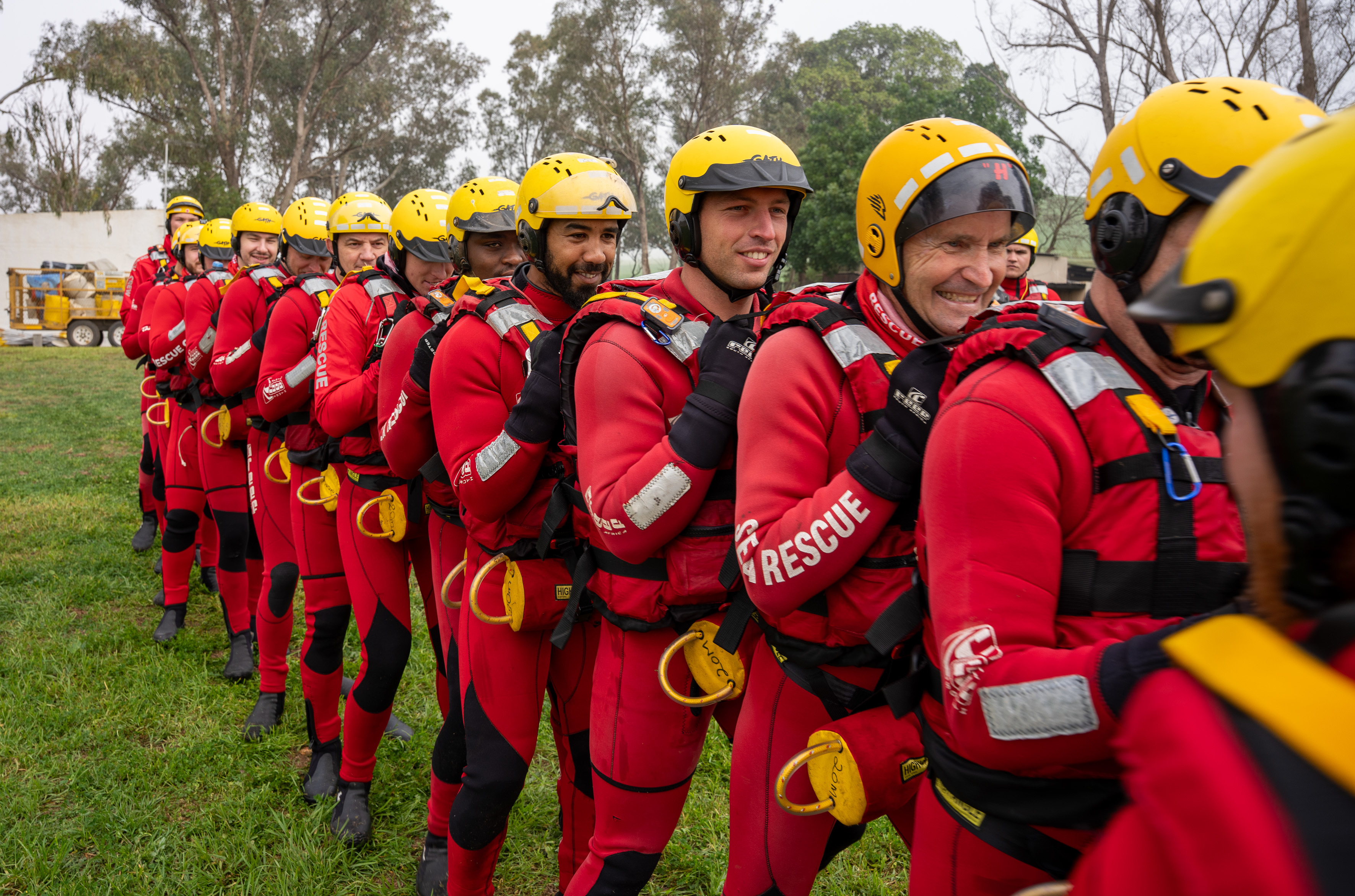
For Station 42 Kleinmond volunteer Geoffrey H. Garrett Jr, the course followed a very real introduction to floodwater rescue.
His first floodwater call-out took him to Worcester, where the sheer scale of the flooding left a lasting impression.
“I can still picture these huge flat areas of brown water in places where it simply didn’t make sense for water to be,” he recalls.
At the time, trust in his station commander, who was also his coxswain, training officer and the senior crew around him helped him operate confidently despite the unfamiliar conditions.
While floodwater and swiftwater rescue are distinct disciplines, many of the principles, skills, and approaches to risk assessment are transferable. The July course subsequently gave him a clearer framework for understanding what he had experienced.
“One of the biggest things the course gave me was a better ability to read the water – understanding features such as eddies, upstream and downstream Vs, and what surface features may be telling you about hazards underneath.”
Two lessons were reinforced throughout: “stay calm” and “less is more”.
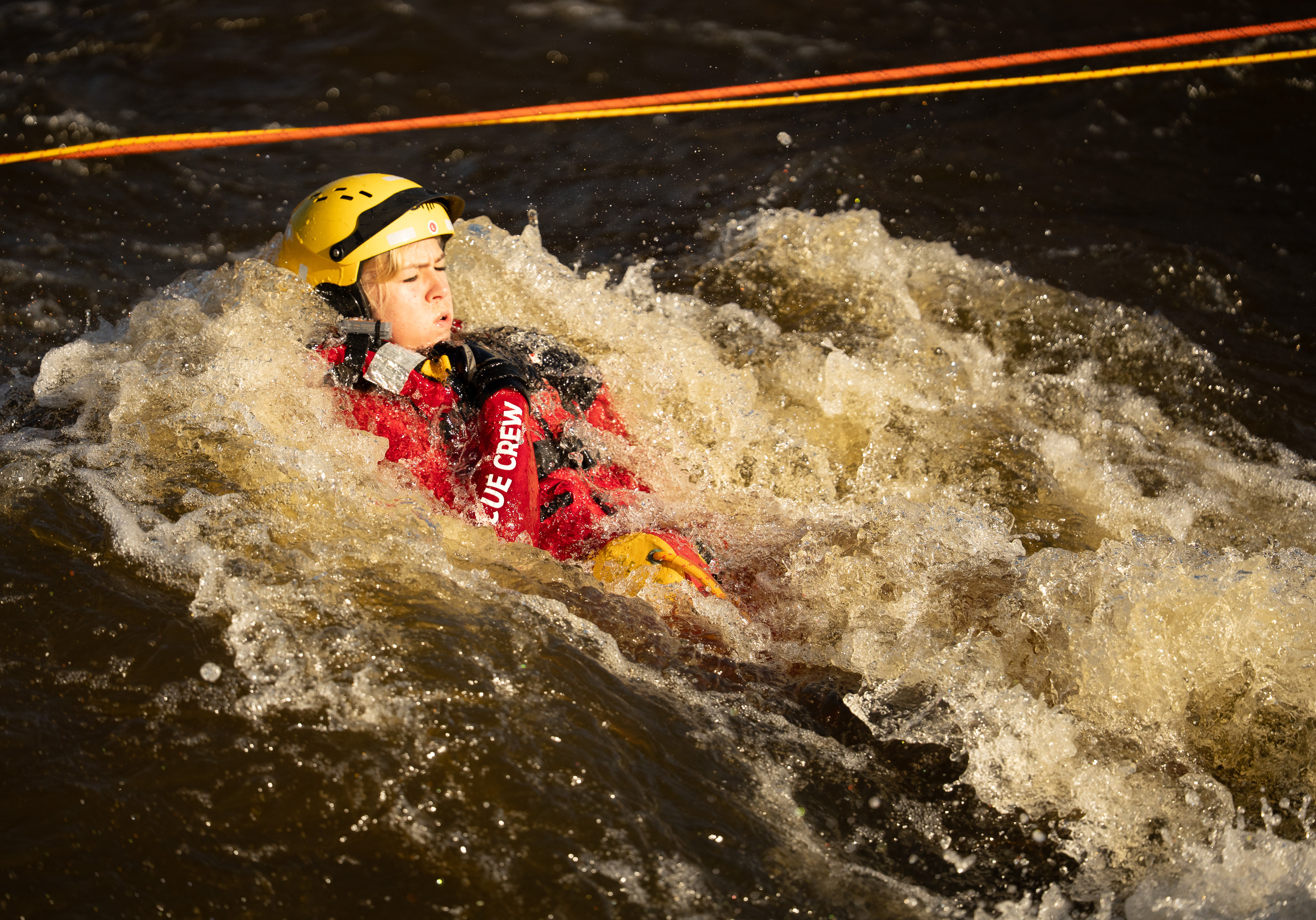
For Geoffrey, both capture an important reality of rescue work: good decisions are not always about doing more, but about understanding the environment, communicating clearly and avoiding unnecessary complexity.
His biggest takeaway, however, was “probably humility”.
“The course certainly gave me more tools, but it also showed me how much I still don’t know and how much there still is to learn.”
He adds: “The other major takeaway for me is communication. It’s about crews having the same language, terminology and signals, and being able to communicate clearly and calmly when things are moving quickly.”
The course took place in demanding conditions. Participants were introduced to river hydrology, rescue techniques, mechanical advantage systems, incident management and the hazards posed by features such as weirs and strainers.
For NSRI lifeguard Abijah Appolis, learning to read rivers and identify their features and dangers was particularly valuable. While swiftwater rescue is not a regular part of his lifeguarding environment, the lessons in incident management, buddy systems and decision-making are highly transferable.
As he puts it: “So the more you know, the better the decisions.”
Station 30 Agulhas volunteer Liza Pannell also found the course both physically and mentally demanding, from cold conditions and heavy water flow to difficult terrain and hazardous rocks.
“The reality of the hazards associated with swift water was made very clear to us on the first night of the course,” she says. “It creates a mindset of, ‘I need to know what I'm doing here,’ because the consequences of poor decisions can be severe.”
She also describes it as one of the most enjoyable and rewarding courses she has attended.
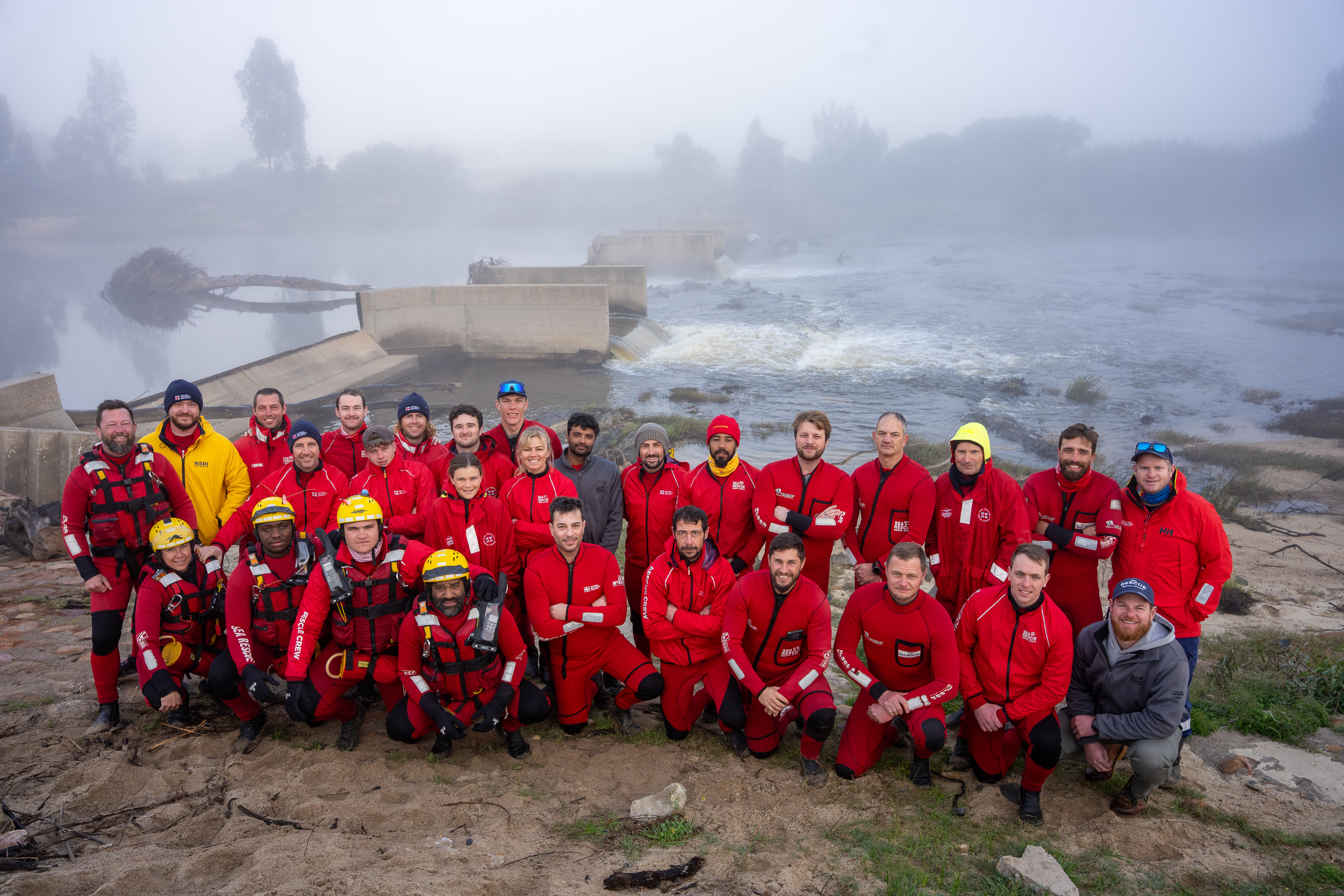
For all participants, realistic training is what turns knowledge into capability when a genuine emergency unfolds.
“Realistic training not only builds competence, but also confidence,” Liza says.
That preparation matters because swiftwater rescue leaves little room for error. As flooding becomes a more regular operational challenge, courses such as this ensure that when NSRI crews are called into unfamiliar, fast-moving and unforgiving environments, they arrive with shared knowledge, practised skills and the judgement to know how – and when – to use them.

How the NSRI Used World Drowning Prevention Day 2026 to Share Life-saving Skills Across SA
Read More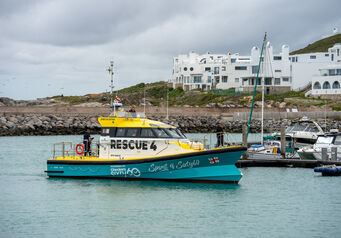
A gift celebrating a couple’s wedding anniversary. A tribute to a mother who quietly supported sea rescue. A husband’s thank you to the wife who helped him through recovery. These are some of the stories carried by Rescue 4, the ...
The National Sea Rescue Institute (NSRI) today announced the winner of its Monthly Giving draw and the winner of the second car in its 2026 Cars4Good competition, both held in support of the organisation's lifesaving work on South Africa's waters. ...

Melinda Snyman, NSRI St Lucia station commander, said: Shortly after 09h00, on Thursday morning, 8 October, a local fishing vessel capsized while attempting to launch through the surf at Cape Vidal, approximately 30 kilometres North of St Lucia. A S.T.A.R.T ...