


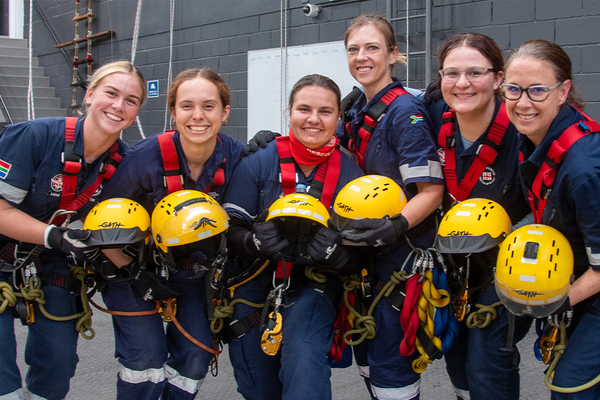
There is no single path to becoming an NSRI volunteer.
Some answer the call by launching rescue craft into rough seas. Others teach children to survive in water before an emergency ever happens. Some keep rescue operations running from shore, while others quietly maintain lifesaving equipment on the beaches they love.
This Women's Month, the NSRI celebrates four remarkable women whose stories remind us that saving lives is about far more than dramatic rescues. It is about compassion, commitment and choosing to make a difference wherever your skills are needed.
For NSRI Station 6 Gqeberha volunteer Sheryll Grobler, volunteering began with a simple desire to serve. Nearly two decades later, that decision has become a way of life.
While many imagine sea rescue as simply driving a boat, Sheryll knows that every successful rescue depends on countless moving parts working together.
"It's not just that you're learning to helm a boat. You're learning to manage yourself and a crew, and to work under pressure."
Among her most memorable moments was helping free a whale entangled in rope.
"That feeling that you're in the right place at the right time for the right moment that that animal's going to swim off and go on and live a happy long life was so gratifying."
But for Sheryll, the real reward lies in the preparation that goes into every successful outcome.
"The consistent training that we do, learning the limits of our own selves, the limits of the people around us, that's a skill."
Her advice to anyone considering volunteering is simple: "Just come. It's the family that you never knew you had."
While Sheryll responds to emergencies, Nathi Ndamase works to prevent them from happening in the first place.
As an NSRI Survival Swimming Instructor, she helps children and adults overcome one of the biggest barriers to water safety – fear.
"We take it for granted because we're so used to it, but most people have a fear of water," she says.
Nathi initially thought volunteering meant joining a rescue boat crew but later discovered another side of the NSRI's work.
"Survival Swimming lessons are for people who've never done it before. It's not about teaching techniques; it’s just about teaching a lifesaving skill that you can take with you everywhere you go, and even teach others."
Watching nervous beginners slowly gain confidence is what keeps her coming back.
"When you see someone moving from fear of water to confidence in the water, that for me goes a long way."
She hopes that more people will give their time to teaching others.
"If we can make time and commit to teach at least one child, then we will be saving lives. There will be less drowning in our country."
Not every volunteer has to love the ocean. In fact, Ilhaam Adams openly admits: "Me and the ocean are not very good friends."
Having survived near-drowning experiences as a child, she never imagined she would one day become Shore Controller at NSRI Station 16 Strandfontein.
She first arrived simply because her son wanted to join the NSRI.
Today, she ensures rescue operations run smoothly by managing rescue vessel launch paperwork, maintaining records and supporting crews from the control room. She also passes on practical skills, from tying knots to safety knowledge, to youngsters she transports when she’s not volunteering.
"Even though I don't enter the water, I can still help people. It's important to give back because I can make a difference in somebody else's life."
Her story is a powerful reminder that every rescue depends on far more than those who launch the boats.
For Theresa Pakulski, everything changed after witnessing two teenage girls get swept into a rip current at Woodbridge Island.
At the time, there was no Pink Rescue Buoy nearby.
"I phoned the NSRI to say there was no flotation device. It is a hotspot. Please could we provide pink rescue buoys there."
When asked if she would volunteer to care for the buoys, her answer was immediate: "Absolutely."
Today, Theresa checks and maintains the Pink Rescue Buoys at Woodbridge Island and Lagoon Beach in Cape Town, carrying a spare buoy and repair kit in her car so they're always ready when needed.
She believes the programme shows the power of community action.
"Anybody, from any walk of life, with any experience level, can help make sure that those Pink Rescue Buoys are up and checked and serviced and ready to save a life."
For Theresa, the impact goes beyond the equipment itself.
"We’re creating superheroes out of ordinary people. And you experience that when there has been a rescue."
This Women's Month, Sheryll, Nathi, Ilhaam and Theresa remind us that there is no single way to save a life, and we thank them for it.



NSRI Volunteer Dylan Kotze's Epic Round-The-World Adventure
Read More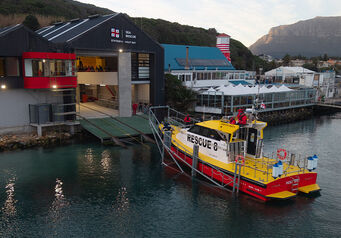
After years of research, design, local boatbuilding and fundraising, the National Sea Rescue Institute's (NSRI) newest Offshore Rescue Craft (ORC), Spirit of Ubuntu, has completed her journey from Table Bay and arrived at her new home at Station 8 Hout Bay. ...
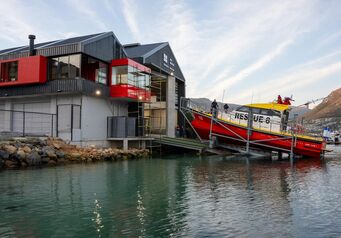
The National Sea Rescue Institute’s (NSRI) newest Offshore Rescue Craft (ORC), Spirit of Ubuntu, has completed her journey from Table Bay and arrived at her new home at NSRI Station 8 Hout Bay yesterday, 19 August 2026. ...
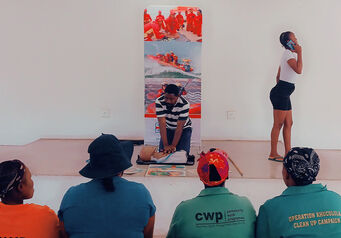
Congratulations to NSRI Community Programmes Instructor Mncedisi Hlalatu, who wins August’s Photo of the Month with his capture of a CPR lesson in progress. The lesson took place at KwaSokhulu Village in Mbonambi during a community programme, where Mncedisi was ...