


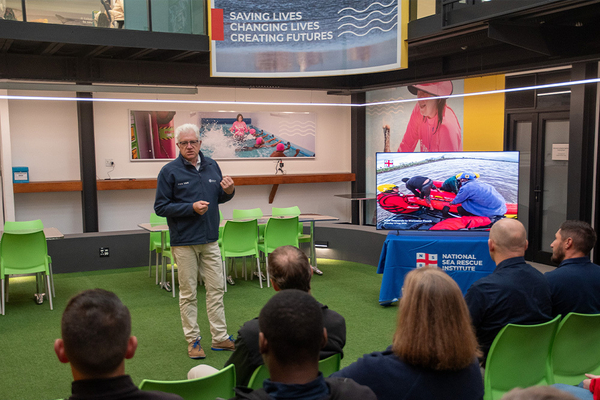
When Western Cape Premier Alan Winde visited the NSRI Volunteer Support Centre in Cape Town in May, it was an opportunity to thank the volunteers who had helped communities devastated by flooding across the Western and Eastern Cape.
But it was also a reminder of how rescue is changing, and of how people are adapting to meet those new challenges.
The floods brought together volunteers from seven NSRI rescue stations, working alongside Disaster Risk Management, EMS Metro Rescue, SAPS, municipal rescue services and other disaster-response organisations to help bring stranded families to safety.
For NSRI Chief Executive Officer Mike Vonk, one of the most remarkable aspects of the response was not only the scale of the operation, but the people behind it.
"Our volunteers are teachers, business owners, accountants, students, and parents. Men and women, young and some not so young. They have jobs, families and commitments of their own, but have chosen to invest hundreds of hours in training so that when the call comes, they are ready," he said.
"That diversity of background, united by a common purpose to make an impact and save lives, is one of the NSRI's greatest strengths."
While many people associate the NSRI with rescues at sea, the recent floods highlighted another growing part of the organisation's work: responding to increasingly complex inland flood emergencies.
Volunteers operated in freezing conditions, navigating fast-moving floodwaters, damaged infrastructure and limited communications. The operation also highlighted how rescue requirements are evolving.
"We are seeing a clear shift from traditional swift-water rescue to more complex urban flood response. This includes rescues in streets, homes, informal settlements and built-up areas, often with difficult access and unpredictable hazards," Mike explained.
"That requires different thinking, different equipment and ongoing adaptation."
The floods tested not only equipment and systems, but also the ability of volunteers from different stations and backgrounds to work together in rapidly changing conditions.
"Being constantly mindful of risk to rescuers, managing fatigue, reading changing water conditions, and making careful operational decisions under pressure, that combination of heart and discipline is what defines our NSRI volunteers."
Large-scale emergencies rely on more than rescue crews alone.
"Partnerships are absolutely critical," Mike said. "No single organisation can respond to an event of this scale alone, and it would be wrong to try."
He believes the success of the response came from relationships built long before the floods arrived.
"What makes that coordination work is trust built well before the disaster, shared protocols, established relationships and a clear understanding of each agency's role."
For volunteers on the ground, that cooperation ensured help could reach communities quickly and safely despite the challenging conditions.
For crews returning from days of flood operations, Premier Winde's visit provided a chance to reflect on what had been achieved.
As a former NSRI volunteer himself, the Premier understood the training, commitment and sacrifice required to respond when communities are in crisis.
"The heart of the NSRI is its volunteers. To see volunteers from so many stations willing to respond is something I deeply appreciate," he said.
Mike added that bringing volunteers together after such an intense operation was valuable in its own right.
"It allowed them to process, learn and reflect together, which is important after an event of this intensity."
Although rescue operations have ended, the dangers created by flooding remain.
Damaged roads, weakened bridges, unstable ground and compromised infrastructure continue to pose risks long after floodwaters have receded.
Mike urged motorists and residents to remain cautious.
"Please do not drive through flooded roads or roads that have been closed following a flood event. It takes very little moving water to sweep a vehicle off a road. What looks like a shallow crossing can be enough."
As affected communities continue rebuilding, the floods have highlighted not only the importance of preparedness and partnerships but also the strength of a volunteer network ready to adapt when new challenges emerge.
"The floods may have passed," Mike said, "but the consequences have not.

From Station Kid to Regional Operations Manager: Danie Verwey's NSRI Journey
Read More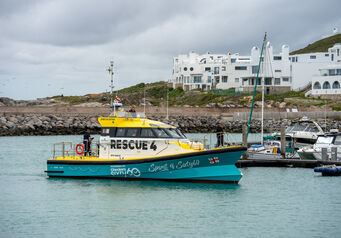
A gift celebrating a couple’s wedding anniversary. A tribute to a mother who quietly supported sea rescue. A husband’s thank you to the wife who helped him through recovery. These are some of the stories carried by Rescue 4, the ...
The National Sea Rescue Institute (NSRI) today announced the winner of its Monthly Giving draw and the winner of the second car in its 2026 Cars4Good competition, both held in support of the organisation's lifesaving work on South Africa's waters. ...

Melinda Snyman, NSRI St Lucia station commander, said: Shortly after 09h00, on Thursday morning, 8 October, a local fishing vessel capsized while attempting to launch through the surf at Cape Vidal, approximately 30 kilometres North of St Lucia. A S.T.A.R.T ...