


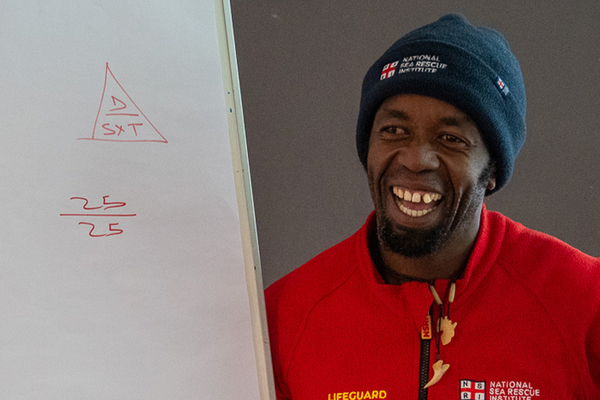
When an NSRI crew heads out on a rescue, every second counts – and every skill matters. Behind the scenes, a dedicated team of Training Officers ensures that each volunteer is prepared for the unpredictable challenges in the water.
Before 2012, training was handled at the station level. This approach had one glaring issue: the quality of instruction varied widely. “Training was mostly done on station,” explains Graeme Harding, a key figure in developing the national training team. “Some stations were way above standard, others way below. We noticed this during a regional training session and realised that with higher standards required by the South African Maritime Safety Authority, we needed a more consistent approach.”
The turning point came when the NSRI decided to professionalise and standardise NSRI training nationwide. Initially, four regional trainers volunteered extra hours to upskill stations. But it soon became clear that part-time support could not achieve the needed levels of training and assessment.
“We employed two full-time training officers, myself and Hans-Daniel Hyman, which was the start of the training team we now have at the Volunteer Support Centre,” Graeme says. The challenge was more than just logistics; it required cultural change. Some longstanding crew members were hesitant initially, but with patience, persistence, and dedication, the results speak for themselves.
Today, Bruce Sandmann heads the Training Department and has overseen a recent expansion of the team. The department now includes senior training officers paired with junior coxswain assistants, giving the programme more reach and support.
Bruce explains that one of the main challenges remains the transfer of knowledge. “We’ve lost many long-term experienced crew members, which leaves stations short of mentors.” He adds, however, that their system provides support wherever possible. “The training department sets the standard and curriculum, but the basics start at the station level with volunteer training officers. Our team supports them, provides resources, and helps candidates advance through every stage, from initial learning to final assessment.”
The impact of this evolution is clear. Standardised training is now delivered consistently across the country. Advanced courses allow crews to experience different sea conditions, whether taking Class 4 Coxswains up the coast in JetRIBs or refining Swiftwater and Maritime Extrication skills.
“Coxswain skills have improved hand over fist,” Graeme says. “Young people, male and female, are blossoming into true leaders with amazing skills. Above all, I’m proud of the trainers, past and present, for embracing the massive responsibility of keeping our crews safe and focused.”
The NSRI’s Training Officers have come a long way from a patchwork of station-based instruction to a coordinated, professionalised force that ensures every crew member is prepared for real-life rescues. They are, in every sense, the backbone of the organisation, quietly shaping the people and skills that save lives at sea.

Meet the NSRI’s face-to-face fundraising team
Read More
Norman Rautenbach, NSRI Richards Bay station commander, said: At 14h29, Monday, 19 October, NSRI Richards Bay duty crew were placed on alert to prepare for a maritime medical evacuation operation for 3 male seafarers injured onboard a 292-meter bulk carrier ...

A 48-year-old man from Belgium is expected to be discharged from hospital today after a non-fatal drowning incident at a remote beach between Brenton-on-Sea and Buffalo Bay on Monday afternoon. The man, on a cycling holiday with his family, is ...

On Saturday morning, NSRI Port Nolloth volunteers on a routine training exercise responded when a local mining vessel raised concern for three of her crew who had gone ashore on their RHIB (rigid hull inflatable boat) and not been heard ...