


NSRI crews are seeing a worrying trend across South Africa’s coastline: An increase in drowning in progress (DIP) incidents.
These are situations where someone is actively in danger of drowning, and immediate response is crucial.
“Once again, a large part of our operational demand for NSRI stations to get involved is with drownings in progress calls,” says Brett Ayres, NSRI’s Executive Director of Rescue Services.. He adds that anecdotally, the proportion of these calls has grown over the years based on a few factors: being made aware of them, being in more places, and more people using or being exposed to the water.
While greater public participation in water-based activities is a positive sign of beach access and engagement, it also reminds us of the need for water safety awareness. In areas like Saldanha and Shelly Point, where DIP calls have become more common, NSRI Stations have developed a close relationship with West Coast Ambulance services to ensure a fast and coordinated response.
While NSRI teams stand ready, prevention remains a shared responsibility. Rocky Bay’s station commander, Kevin Fourie, highlights several recurring risk factors. These include people swimming outside of lifeguarded hours, often at informal beach gatherings, or choosing unsafe locations simply for convenience – like tidal pools or rocky areas not designed for bathing. Alcohol use, lack of awareness around rip currents, and not following lifeguard guidance can all contribute to these emergencies.
To help prevent drownings and empower bystanders to assist before emergency services arrive, the NSRI has installed Pink Rescue Buoys at high-risk beaches and drowning hotspots nationwide. These brightly coloured flotation devices are intended for public use in emergencies and have already played a vital role in saving 216 lives that we know of.

NSRI’s response capability is grounded in intense, ongoing training. Lifeguard Manager Mthetheleli Kweyama explains that teams are well-versed in scene management, swift water rescue, and maritime emergency care. Response vehicles are stocked with critical gear, including oxygen, AEDs, and rescue buoys.
According to crew member Etienne Van Zyl, Durban’s Station 5 prioritises monthly, scenario-based DIP exercises in the surf. “These sessions include a brisk run followed by a swim into the surf zone with a torpedo buoy to recover a 'casualty' and bring them back to shore.” Their team also trains alongside local lifeguards and maintains fitness and first aid readiness.
Whether responding from a station or directly from the shoreline, NSRI crews are prepared. “When I respond to drowning in progress, the first thing I do is call an ambulance,” says Fourie. He always keeps a rash vest, swim shorts, and a torpedo buoy on hand to ensure he can react immediately when needed. This level of readiness is echoed across stations. “Our rescue swimmers are trained to always enter the water with flotation,” says Van Zyl. “They have been issued torpedo buoys, and keep a pair of swim fins and personal protection equipment in their vehicles for quick deployment from the shore.”
With a growing number of people enjoying South Africa’s waters, the NSRI remains committed to readiness and raising awareness – turning potential tragedies into successful rescues, one call at a time.

Celebrate Volunteer Recognition Day — Honouring the Heartbeat of the NSRI
Read More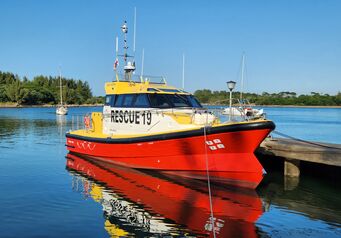
Norman Rautenbach, NSRI Richards Bay station commander, said: At 14h29, Monday, 19 October, NSRI Richards Bay duty crew were placed on alert to prepare for a maritime medical evacuation operation for 3 male seafarers injured onboard a 292-meter bulk carrier ...

A 48-year-old man from Belgium is expected to be discharged from hospital today after a non-fatal drowning incident at a remote beach between Brenton-on-Sea and Buffalo Bay on Monday afternoon. The man, on a cycling holiday with his family, is ...

On Saturday morning, NSRI Port Nolloth volunteers on a routine training exercise responded when a local mining vessel raised concern for three of her crew who had gone ashore on their RHIB (rigid hull inflatable boat) and not been heard ...