


The NSRI has made significant strides in sustainability, focusing on reducing its environmental impact while maintaining operational effectiveness.
On 24 October, the world acknowledges the International Day of Climate Change, reminding us of the critical need to address our environmental challenges. In recent months, South Africa has faced severe flooding, highlighting the urgent consequences of climate change. As extreme weather events become more frequent, organisations like the NSRI are not only focusing on their immediate rescue missions but are also committed to sustainable practices that mitigate further environmental harm.
Sustainability initiatives at the NSRI
Willem de Waal, who oversees all building-related capital projects for the NSRI, explains that the organisation has been proactive in reducing its environmental footprint. Acknowledging the two significant areas of impact – operational rescue craft and the rescue bases – the NSRI has implemented several innovative strategies.
Regarding its fleet, the NSRI transitioned from traditional two-stroke outboard engines to more efficient and environmentally friendly four-stroke engines for their Rigid Inflatable Boats (RIBs). In addition, the engines on the new ORC all-weather lifeboats - a 15-metre, 18-ton rescue vessel - enhance fuel economy and adhere to the United States Environmental Protection Agency's Tier 3 emission regulations, which effectively limit tailpipe pollution and fuel vapour emissions to nearly zero.
A comprehensive Environmental Management Plan (EMP) is in place for the rescue bases to ensure compliance with South African environmental legislation. This plan encompasses vital areas such as water, soil, waste, energy management, biodiversity, and ecosystem conservation. New bases are equipped with LED lighting and rainwater harvesting tanks to minimise water use, directing wastewater into proper systems instead of allowing it to flow into nearby water bodies.
Inverter and battery systems are also installed at new bases to counter potential power outages, a common concern given the region's load-shedding issues. However, installing solar panels at these coastal sites is economically unfeasible due to the harsh marine environment and low power usage.

Conversely, the NSRI's head office in Milnerton, situated away from the coastline, has made significant investments in solar energy. With around 160 staff members, the electrical demand is considerably higher than that of the rescue bases. Initial designs for the building included LED lighting and timers for the air-conditioning systems to reduce energy consumption during off-hours.
In November 2021, Emergent Energy installed 36 solar panels on the roof, providing a peak capacity of around 15-16 kW. On good summer weekends, the building can operate independently during the day. Over 2022 and 2023, solar energy accounted for 18% of the building's overall consumption, with the contribution rising to an impressive 45% by September 2024, following the installation of an additional 78 panels.
This increased capacity not only alleviates reliance on the grid but also generates a surplus that can be sold back, enhancing the NSRI's financial stability and its ability to honour its donors.
Looking ahead
As the NSRI continues to navigate the challenges posed by climate change, its commitment to sustainability remains unwavering. By adopting environmentally friendly practices and technologies, the NSRI protects the environment and reinforces its capacity to respond effectively to emergencies in a changing climate. With ongoing efforts to improve its operational sustainability, the NSRI exemplifies how organisations can take meaningful action toward a more resilient and sustainable future.

Teenager saves two lives with Pink Rescue Buoy
Read More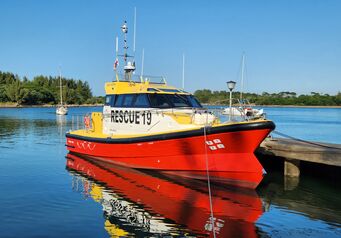
Norman Rautenbach, NSRI Richards Bay station commander, said: At 14h29, Monday, 19 October, NSRI Richards Bay duty crew were placed on alert to prepare for a maritime medical evacuation operation for 3 male seafarers injured onboard a 292-meter bulk carrier ...

A 48-year-old man from Belgium is expected to be discharged from hospital today after a non-fatal drowning incident at a remote beach between Brenton-on-Sea and Buffalo Bay on Monday afternoon. The man, on a cycling holiday with his family, is ...

On Saturday morning, NSRI Port Nolloth volunteers on a routine training exercise responded when a local mining vessel raised concern for three of her crew who had gone ashore on their RHIB (rigid hull inflatable boat) and not been heard ...